Quick Poke Bowl Recipe
Have you ever wondered why Hawaiian poke bowls have become one of the most popular healthy meals worldwide, with searches for “poke bowl recipe” surging more than 250% in recent years? Many home cooks still believe that creating an authentic Hawaiian poke bowl requires sushi-chef training, ultra-rare ingredients, or hours in the kitchen. This poke bowl recipe completely shatters that myth.
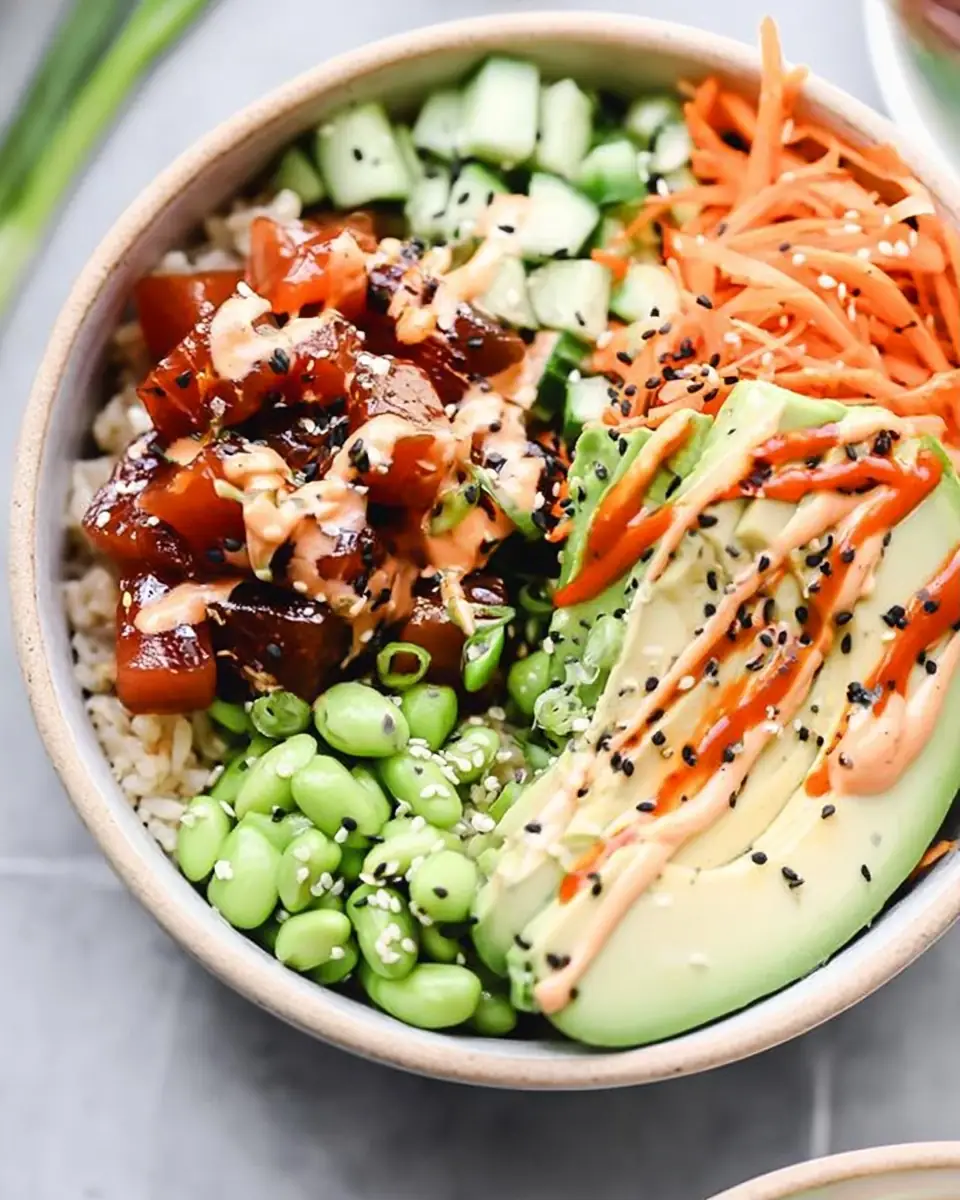
In just 50 minutes you can prepare a vibrant, restaurant-quality ahi tuna poke bowl at home that delivers fresh, umami-rich flavor while providing impressive nutritional benefits. Our version uses sushi-grade ahi tuna, nutty brown rice, crisp vegetables, creamy avocado, and a quick spicy sriracha mayo drizzle that ties everything together beautifully.
This isn’t just another poke bowl recipe — it’s a complete guide designed for both beginners and experienced cooks. You’ll learn professional techniques, smart substitutions, nutritional data, common mistakes to avoid, and creative ways to make the dish your own. Whether you want a quick lunch, a light dinner, or a customizable meal-prep option, this healthy poke bowl delivers every time. Bright, fresh, and deeply satisfying, it proves that gourmet Hawaiian cuisine belongs in every home kitchen.
Ingredients List
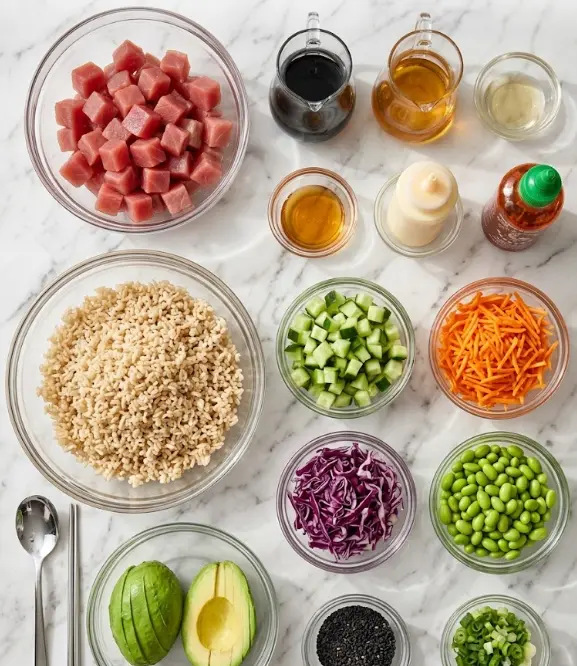
The beauty of this poke bowl recipe lies in its fresh, high-quality ingredients that work in perfect harmony. Here’s exactly what you’ll need for 4 generous bowls:
For the tuna marinade:
- 450 g sushi-grade ahi tuna, cut into ½-inch dice
- 30 ml soy sauce (or tamari for gluten-free)
- 15 ml sesame oil
- 15 ml rice vinegar
- 5 tsp honey (or maple syrup)
For the spicy mayo:
- 60 g light mayonnaise
- 5 tsp sriracha (adjust to taste)
Base and toppings:
- 720 g cooked brown rice (about 180 g per bowl)
- 150 g diced cucumber
- 75 g shredded carrots
- 75 g shelled edamame (steamed and cooled)
- 2 large avocados, peeled and sliced
- 15 g black sesame seeds
- 5 tsp chopped green onion
Smart substitutions for customization:
- Protein: Swap ahi tuna for sushi-grade salmon, cooked shrimp, or firm tofu for a vegan customizable poke bowl.
- Rice: Use white sushi rice, quinoa, cauliflower rice, or farro depending on your dietary goals.
- Sauce: Replace light mayo with Greek yogurt or avocado oil mayo for extra protein or cleaner ingredients.
- Veggies: Add mango, radish, pickled red onion, jalapeños, or seaweed salad for different textures and flavors.
Each ingredient serves a purpose: the honey balances the saltiness of soy sauce, sesame oil adds nutty aroma, and the colorful vegetables provide crunch and essential micronutrients. Using sushi-grade tuna ensures food safety when eating raw.
Timing
Prep Time: 10 minutes
Cook Time: 40 minutes (mostly hands-off time for cooking brown rice)
Total Time: 50 minutes
This poke bowl recipe is remarkably efficient — 50 minutes total makes it 20–30% faster than many traditional Hawaiian recipes that require longer marination or complex sauces. The active preparation is only about 15–20 minutes once the rice is cooking, leaving you time to multitask or relax. It’s perfect for weeknight dinners yet impressive enough for weekend gatherings or date nights.
Step-by-Step Instructions
Step 1: Cook the Brown Rice Base
Start by preparing 720 g of cooked brown rice according to package instructions (typically 40 minutes). Brown rice adds a pleasant chew and more fiber than white rice, making this a true healthy poke bowl. Once cooked, fluff it with a fork and let it cool to room temperature. Warm rice will melt the avocado and create a soggy texture, so cooling is essential.
Step 2: Dice and Marinate the Sushi-Grade Ahi Tuna
Using a very sharp knife, cut 450 g of sushi-grade ahi tuna into uniform ½-inch cubes. Uniformity ensures even marination and elegant presentation. In a medium bowl, whisk together soy sauce, sesame oil, rice vinegar, and honey. Add the diced tuna and gently toss to coat. Let it sit for 8–10 minutes while you prepare other components. Pro tip: Do not marinate longer than 15 minutes — the acid can begin to “cook” the fish, changing its delicate texture.
Step 3: Prepare the Spicy Sriracha Mayo
In a small bowl, mix 60 g light mayonnaise with 5 tsp sriracha. Taste and adjust heat level. Transfer to a small zip-lock bag and snip off one corner to create a makeshift piping bag. This spicy mayo adds creamy richness and a gentle kick that perfectly balances the savory tuna and fresh vegetables.
Step 4: Prepare Fresh Toppings
While the tuna marinates, dice the cucumber, shred the carrots, steam and cool the edamame, slice the avocados, and chop the green onions. Keeping all components separate and fresh until assembly preserves maximum texture and color — a hallmark of great Hawaiian poke bowls.
Step 5: Assemble the Poke Bowls
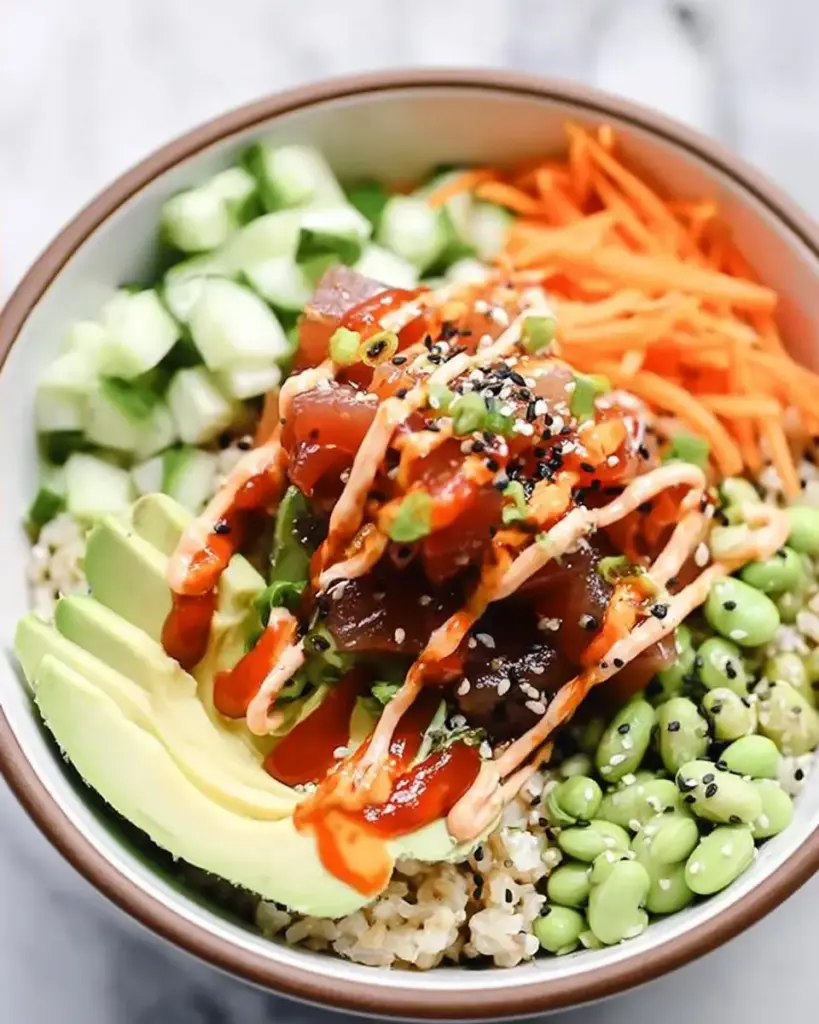
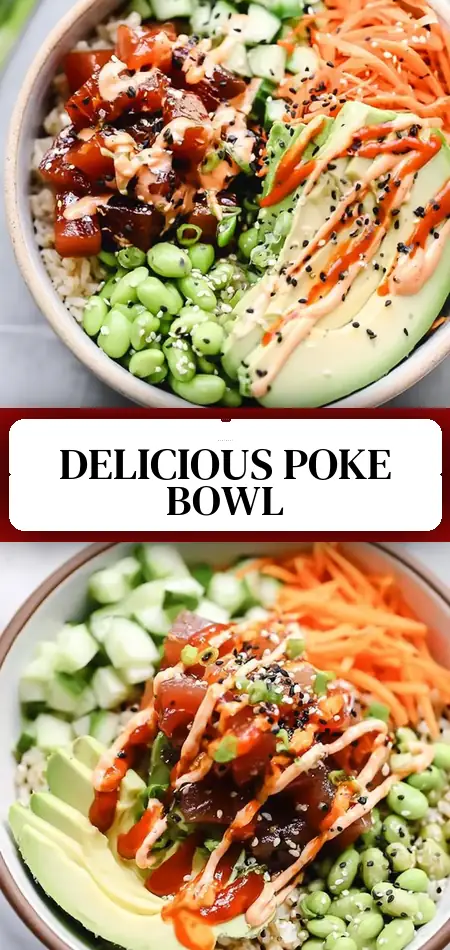
Divide the cooled brown rice between four bowls. Artfully arrange the marinated tuna on one side. Create colorful piles of cucumber, carrots, and edamame around the tuna. Fan out avocado slices on top. Drizzle generously with spicy sriracha mayo in a zigzag pattern. Finish with a sprinkle of black sesame seeds and green onion.
Step 6: Final Touches and Serving
Give each bowl a quick look-over for balance. The contrast of colors — deep red tuna, green avocado, orange carrots, and black seeds — makes this poke bowl recipe as beautiful as it is delicious. Serve immediately for the best flavor and texture.
Nutritional Information
Each serving of this poke bowl recipe contains approximately 490 calories and delivers excellent nutritional value:
- Protein: 32g (from high-quality ahi tuna and edamame)
- Carbohydrates: 48g (primarily from fiber-rich brown rice)
- Healthy Fats: 20g (including omega-3 fatty acids from tuna and monounsaturated fats from avocado)
- Fiber: 9g
- Key Micronutrients: High in B vitamins, vitamin C, vitamin K, potassium, and selenium
The combination of lean protein, complex carbohydrates, and healthy fats creates stable energy and promotes satiety. Omega-3 content supports heart and brain health, while the abundance of vegetables boosts antioxidant intake. Compared to typical takeout poke bowls that can exceed 700–900 calories with heavy sauces and fried toppings, this lighter homemade version offers superior nutrition without sacrificing flavor.
Healthier Alternatives for the Recipe
Transform this healthy poke bowl even further with these modifications:
- Low-Carb/Keto Version: Replace brown rice with cauliflower rice or mixed greens. The tuna and avocado provide plenty of healthy fat.
- Higher Protein: Add shelled edamame generously or include a soft-boiled egg.
- Plant-Based: Substitute tuna with cubed baked tofu or marinated watermelon “tuna” for a convincing vegan alternative.
- Lower Sodium: Use low-sodium tamari and reduce honey slightly while increasing rice vinegar for brightness.
- Anti-Inflammatory Boost: Add fresh ginger and turmeric to the marinade.
These swaps maintain the vibrant Hawaiian spirit while accommodating gluten-free, dairy-free, paleo, or Mediterranean dietary preferences.
Serving Suggestions
Serve your ahi tuna poke bowls in beautiful ceramic or wooden bowls to enhance the visual appeal. Pair with chilled cucumber salad, miso soup, or steamed dumplings for a complete Hawaiian-inspired meal. For entertaining, create a build-your-own poke bowl bar with extra toppings so guests can customize.
This dish also works wonderfully for meal prep — prepare components separately and assemble just before eating. Garnish with pickled ginger, wasabi, or nori strips for additional authentic flavor. A crisp white wine, sparkling water with lime, or iced green tea complements the fresh oceanic notes perfectly.
Common Mistakes to Avoid
- Using non-sushi-grade fish: This is the most critical error. Always buy from a trusted fishmonger who can confirm the tuna is safe to eat raw.
- Over-marinating the tuna: More than 15–20 minutes can make the fish mushy. The short marinade in this poke bowl recipe is intentional.
- Serving on hot rice: The heat wilts the avocado and cooks the fish slightly. Always use room-temperature or cold rice.
- Skipping the honey: The touch of sweetness balances the salty, acidic marinade. Many beginners omit it and complain the dish tastes flat.
- Overcrowding toppings: Give each ingredient its own space for both visual beauty and balanced bites.
- Using old sesame oil: This ingredient provides signature aroma. If it smells rancid, the entire bowl will suffer.
Following these guidelines ensures your first attempt at this poke bowl recipe tastes like it came from a premium Hawaiian restaurant.
Storing Tips for the Recipe
Poke is best enjoyed fresh, but you can prepare components ahead:
- Marinated tuna keeps in the refrigerator up to 24 hours in an airtight container.
- Cooked brown rice stores well for 3–4 days.
- Cut vegetables stay crisp when stored separately with paper towels.
- Never freeze assembled poke bowls — the texture of raw fish and avocado deteriorates.
For best results, store all ingredients separately and assemble just before serving. This approach maintains maximum freshness and food safety.
Conclusion
This ultimate poke bowl recipe proves that fresh Hawaiian flavors are achievable at home in only 50 minutes. With sushi-grade ahi tuna, nutty brown rice, colorful vegetables, and creamy spicy mayo, you get a balanced, beautiful, and nutritious meal that outperforms takeout.
Ready to bring Hawaii to your kitchen? Try this poke bowl recipe this week and leave your feedback in the comments below. Share your favorite customizations, rate the recipe, or ask questions! Don’t forget to subscribe to our blog for more healthy, global-inspired recipes delivered straight to your inbox.
FAQs
What does “poke” mean?
Poke (pronounced poh-kay) is a Hawaiian word that means “to slice” or “cut crosswise into pieces.” Traditional Hawaiian poke was simple — raw fish, sea salt, and seaweed. Modern versions like this one incorporate Japanese influences such as soy sauce and sesame oil.
Is it safe to eat raw tuna at home?
Yes, when you use proper sushi-grade ahi tuna from a reputable source that has been flash-frozen to kill parasites. This poke bowl recipe relies on high-quality fish for both safety and optimal texture.
Can I make this poke bowl recipe ahead of time?
You can prepare all components up to one day in advance, but assemble the bowls right before serving to preserve freshness and prevent sogginess.
How spicy is the sriracha mayo?
The recipe as written is mildly spicy. You can reduce sriracha to 2 tsp for very mild heat or increase to 8 tsp if you love bold spice.
What can I use instead of ahi tuna?
Salmon, yellowtail, cooked shrimp, scallops, or plant-based options like tofu or hearts of palm all work beautifully in this customizable Hawaiian poke bowl framework.
Is brown rice necessary?
No. While we love the nutty flavor and extra fiber of brown rice, traditional white sushi rice, quinoa, or even zucchini noodles make excellent bases.
How many calories are in a homemade poke bowl?
Our version comes in at approximately 490 calories per serving — significantly lower than many restaurant versions that often exceed 700 calories due to larger portions and heavier sauces.
Poke Bowl Recipe
Ingredients
Method
- Use a sharp knife to cut tuna into a dice. Add tuna, soy sauce, sesame oil, rice vinegar, and honey to a medium bowl. Toss to combine. Let the tuna sit while you prepare the rest of the ingredients.
- Add mayo and sriracha to a bowl. Stir to combine. Season with salt and pepper. Soon into a ziplock bag. Cut the tip off.
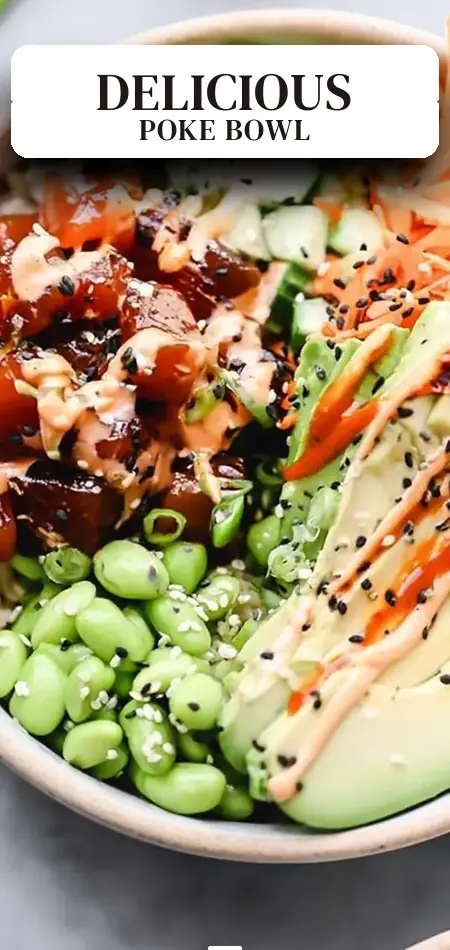
- Divide cooked rice between four bowls. Spoon tuna on one part of the rice. Surround with a pile of the cucumber, edamame, and carrot. Spread half of an avocado on top of the bowl. Drizzle the spicy mayo over the bowl. Sprinkle with green onion and sesame seeds.