Quick Thai Chicken Quinoa Buddha Bowls
What if the secret to a vibrant, restaurant-quality dinner wasn’t hours of cooking or expensive takeout, but a colorful, nutrient-dense bowl that comes together in just 35 minutes while delivering bold Thai flavors and impressive health benefits?
This Thai chicken quinoa buddha bowl recipe challenges the common belief that healthy meals must be bland or time-consuming. In fact, searches for “Buddha bowls” and “quinoa bowl recipes” have grown over 120% in the past three years as people seek satisfying, customizable meals that balance protein, fiber, and fresh vegetables.
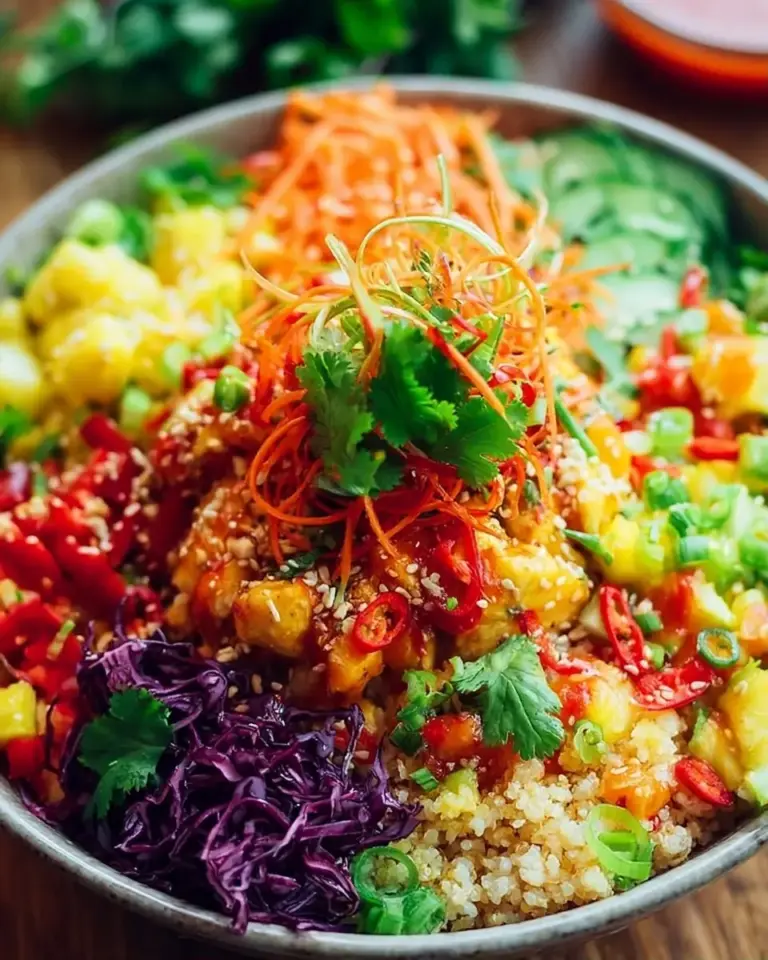
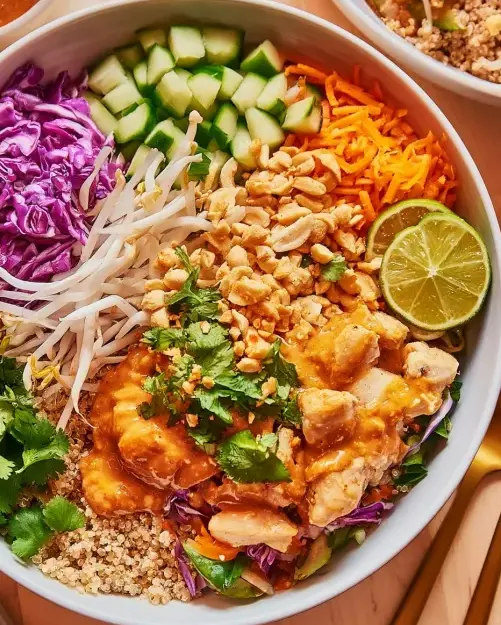
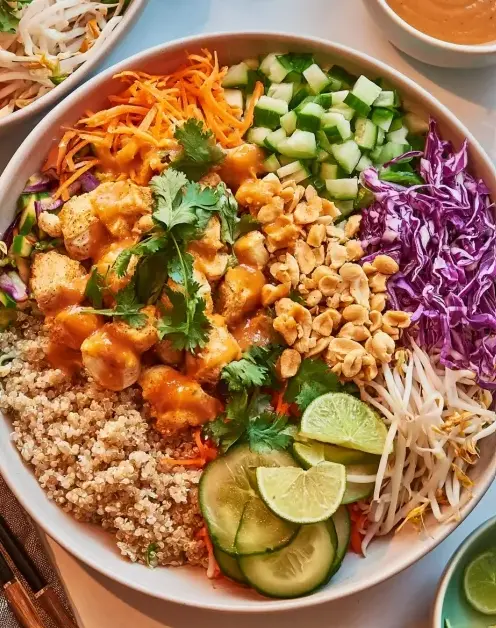
Our Thai chicken quinoa buddha bowl recipe features tender bites of chicken thighs coated in a lightly thickened sambal oelek sauce, served over fluffy quinoa and piled high with crisp Persian cucumbers, shredded red cabbage, carrots, bean sprouts, fresh cilantro, and crunchy roasted peanuts. Everything is finished with a creamy, tangy peanut sauce that ties the dish together with the perfect mix of spicy, sweet, nutty, and bright notes.
Also known as a Thai peanut chicken quinoa bowl, spicy Thai Buddha bowl, or healthy quinoa buddha bowl with peanut sauce, this recipe is gluten-adaptable, packed with protein, and endlessly customizable. In this complete guide you’ll find the exact recipe, step-by-step instructions, nutritional data, healthier variations, common pitfalls, storage tips, and expert serving ideas to help you master this Thai chicken quinoa buddha bowl recipe on your first try.
Ingredients List
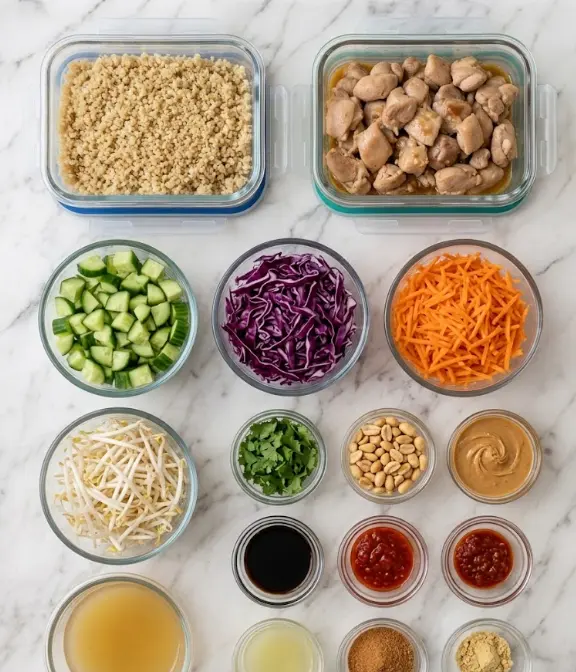
This Thai chicken quinoa buddha bowl recipe uses accessible ingredients that create layered Thai-inspired flavor. Quantities serve 4 generous bowls.
For the chicken and sauce base:
- 450 g (1 lb) boneless skinless chicken thighs, cut into bite-sized pieces
- 8 g (1 Tbsp) arrowroot starch (or tapioca starch or cornstarch)
- 60 ml (¼ cup) chicken broth
- 30 ml (2 Tbsp) sambal oelek (adjust to taste for heat level)
- 1–2 Tbsp avocado oil (or neutral oil) for cooking
For the bowls:
- 185 g cooked quinoa (approximately ¾–1 cup cooked per bowl; start with roughly ¾ cup uncooked quinoa to yield this amount)
- 3 Persian cucumbers, chopped (or 1 English cucumber)
- 150 g (about 2 cups) red cabbage, shredded
- 75 g (about ¾ cup) carrots, shredded or julienned
- 100 g (about 2 cups) bean sprouts
- 15 g (½ cup) fresh cilantro, chopped
- 50 g (⅓ cup) roasted peanuts, roughly chopped
For the creamy peanut sauce:
- 60 g (¼ cup) creamy peanut butter (natural or regular)
- 60 ml (¼ cup) low-sodium soy sauce (or tamari for gluten-free)
- 30 ml (2 Tbsp) sambal oelek
- Juice of 2 limes (about 60 ml or ¼ cup)
- 30 g (2 Tbsp) coconut sugar (or brown sugar)
- 10 g (2 tsp) ground ginger (or 1 Tbsp fresh grated ginger)
Smart Substitutions:
- Protein: Swap chicken thighs for chicken breast, tofu, or tempeh for vegetarian/vegan versions.
- Grain: Use brown rice, farro, or cauliflower rice instead of quinoa.
- Nut-free: Replace peanut butter with sunflower seed butter and peanuts with pumpkin seeds.
- Lower sodium: Choose low-sodium broth and coconut aminos instead of soy sauce.
- Spice level: Reduce sambal oelek for milder palates or add fresh Thai chilies for extra heat.
The combination of sambal heat, lime brightness, creamy peanut sauce, and crunchy vegetables creates the signature balance that makes Thai cuisine so addictive.
Timing
Prep Time: 15 minutes
Cook Time: 20 minutes
Total Time: 35 minutes
This Thai chicken quinoa buddha bowl recipe is approximately 50% faster than traditional Thai curries or stir-fries that often require 60–75 minutes. The efficiency comes from quick-cooking bite-sized chicken, one-skillet sauce thickening, and a blender peanut sauce that comes together in seconds. Perfect for busy weeknights when you want something nutritious without sacrificing flavor.
Step-by-Step Instructions
Cook the Quinoa
Prepare the quinoa according to your preferred method (stovetop, rice cooker, or Instant Pot) and set it aside. Fluff with a fork once cooked. Pro tip: Rinse quinoa thoroughly before cooking to remove any bitterness, and cook in broth instead of water for extra savory depth that complements the Thai flavors.
Prepare the Chicken
Cut the chicken thighs into bite-sized pieces and place them in a large bowl. Add the arrowroot starch (or cornstarch) and toss thoroughly until every piece is lightly coated. This creates a silky texture when cooked and helps the sauce cling beautifully.
Mix the Sambal Sauce
In a small bowl, whisk together the chicken broth and 30 ml sambal oelek until smooth. Set aside. This simple two-ingredient mixture becomes a glossy, spicy glaze that coats the chicken perfectly.
Cook the Chicken
Heat a large skillet over medium heat and add 1–2 tablespoons of avocado oil. Once shimmering, add the coated chicken pieces in a single layer. Cook undisturbed for 3–4 minutes until golden brown on one side, then stir and continue cooking until browned and cooked through, about 6–7 minutes total.
Stir in the sambal oelek mixture and cook for about 1 minute until the sauce thickens and coats the chicken. Remove from heat immediately to prevent overcooking. The arrowroot creates a beautiful glossy finish reminiscent of your favorite Thai takeout.
Blend the Creamy Peanut Sauce
Add all peanut sauce ingredients (peanut butter, low-sodium soy sauce, sambal oelek, lime juice, coconut sugar, and ground ginger) to a blender or food processor. Blend until smooth and creamy. If the sauce is too thick, add water 1 tablespoon at a time until it reaches a pourable consistency. Taste and adjust — more lime for brightness or sambal for heat. This sauce is the star of the Thai chicken quinoa buddha bowl recipe.
Assemble the Bowls
Divide the warm quinoa among four bowls. Artfully arrange the chopped cucumbers, shredded red cabbage, shredded carrots, and bean sprouts around the edges. Add the cooked chicken in the center. Generously drizzle with the creamy peanut sauce. Sprinkle with chopped cilantro and roasted peanuts. Garnish with extra peanuts, cilantro, and lime wedges if desired.
Personalized tip: Let everyone assemble their own bowls at the table. This interactive approach works especially well with kids or picky eaters and turns dinner into a fun, customizable experience.
Nutritional Information
Per serving (1 of 4 bowls) based on the tested recipe:
- Calories: 454
- Protein: 32–35g (primarily from chicken thighs and quinoa)
- Carbohydrates: 38g
- Dietary Fiber: 7g (supports digestion and sustained energy)
- Sugars: 12g (mostly from coconut sugar and natural vegetable sugars)
- Fat: 22g (healthy fats from peanuts, peanut butter, and avocado oil)
- Key micronutrients: High in vitamin C from vegetables and lime, plus iron and magnesium from quinoa
Compared to typical Thai restaurant bowls that can exceed 700–900 calories with higher sodium and added sugars, this homemade Thai chicken quinoa buddha bowl recipe offers excellent macro balance. The combination of lean protein, complex carbs from quinoa, and fiber-rich vegetables makes it both satisfying and blood-sugar friendly.
Healthier Alternatives for the Recipe
This versatile Thai chicken quinoa buddha bowl recipe adapts beautifully to different dietary needs:
- Lower carb: Reduce quinoa and double the vegetables, or serve over spiralized zucchini or cauliflower rice.
- Higher protein: Add a fried egg on top or increase chicken to 600g. Edamame also boosts protein while adding complementary texture.
- Lower calorie: Use chicken breast instead of thighs, reduce peanut butter slightly, and load up on non-starchy vegetables like bell peppers or snap peas.
- Vegan Thai Buddha bowl: Replace chicken with crispy baked tofu or tempeh. Use vegetable broth and ensure peanut butter is free of additives.
- Nut-free: Swap peanut butter for sunflower seed butter and use toasted sunflower seeds or pumpkin seeds instead of peanuts.
- Anti-inflammatory boost: Add fresh turmeric to the peanut sauce and increase ginger and cilantro for additional wellness benefits.
These modifications prove you can enjoy the same vibrant Thai flavors while meeting specific health goals or pantry limitations.
Serving Suggestions
Make your Thai chicken quinoa buddha bowl recipe the highlight of any meal with these ideas:
- Classic presentation: Serve in wide, shallow bowls to showcase the rainbow of vegetables.
- Thai-inspired feast: Pair with fresh spring rolls or a simple cucumber salad on the side.
- Meal-prep style: Layer ingredients in glass jars with quinoa at the bottom, vegetables in the middle, chicken on top, and sauce packed separately.
- Family-friendly: Set up a Buddha bowl bar with all toppings in separate dishes so everyone can customize spice levels and vegetable preferences.
- Elevated dinner party: Serve smaller portions as starters or add grilled shrimp alongside the chicken for a surf-and-turf Thai bowl.
A final squeeze of fresh lime and extra cilantro just before eating brightens every bite and enhances the authentic Thai experience.
Common Mistakes to Avoid
Even straightforward recipes have pitfalls. Here’s what to watch for in this Thai chicken quinoa buddha bowl recipe:
- Skipping the starch coating — Tossing the chicken with arrowroot creates a silky texture and helps sauce adhesion. Don’t skip this step.
- Overcooking the chicken — Thigh pieces cook quickly. Remove from heat as soon as the sauce thickens to keep the meat juicy.
- Making the peanut sauce too thick — It should be pourable. Add water gradually and blend again until it drizzles nicely.
- Using old quinoa — Quinoa can taste bitter if not rinsed well before cooking. Always rinse until the water runs clear.
- Adding sauce too early — Wait until bowls are assembled before drizzling peanut sauce to maintain the beautiful colors of the fresh vegetables.
Avoiding these mistakes ensures your bowls look as stunning as they taste.
Storing Tips for the Recipe
This Thai chicken quinoa buddha bowl recipe excels for meal prep:
- Refrigerator: Store components separately in airtight containers for up to 4 days. Keep the peanut sauce in a jar and the fresh vegetables in produce containers with paper towels to maintain crispness.
- Make-ahead strategy: Cook quinoa and chicken up to 3 days ahead. Prepare peanut sauce up to 5 days ahead — it thickens in the fridge but loosens with a splash of warm water.
- Freezer: The chicken and quinoa freeze well for up to 2 months. Thaw overnight in the refrigerator. Fresh vegetables and peanut sauce do not freeze well.
- Reheating: Warm quinoa and chicken gently in the microwave or skillet with a splash of broth. Always add cold vegetables, herbs, and sauce after reheating to preserve texture and freshness.
Proper storage keeps the vibrant colors, crunchy textures, and bold flavors intact for easy grab-and-go lunches.
Conclusion
This Thai chicken quinoa buddha bowl recipe delivers a colorful, protein-rich, flavor-packed meal with tender sambal chicken, fluffy quinoa, crisp vegetables, and creamy peanut sauce in only 35 minutes. Balanced, customizable, and far healthier than takeout, it’s perfect for weeknight dinners or meal prep.
Ready to create your own Thai-inspired masterpiece? Try this Thai chicken quinoa buddha bowl recipe this week and share your favorite variations or toppings in the comments below. Leave a review, upload your bowl photos, and subscribe for more nutritious, data-driven recipes delivered straight to your inbox.
FAQs
Can I make this Thai chicken quinoa buddha bowl recipe ahead of time?
Yes. Prepare all components up to 4 days in advance and store separately. Assemble just before eating to keep vegetables crisp and sauce fresh.
Is this recipe very spicy?
It has moderate heat from sambal oelek. Reduce or eliminate sambal in both the chicken sauce and peanut dressing for a mild version suitable for children or sensitive palates.
What can I use instead of quinoa?
Brown rice, white rice, farro, or cauliflower rice all work beautifully. Adjust cooking times accordingly based on your chosen base.
Is this Thai chicken quinoa buddha bowl recipe gluten-free?
It can be. Use tamari or coconut aminos instead of soy sauce, and confirm your sambal oelek brand is gluten-free. Arrowroot starch is naturally gluten-free.
Can I make this recipe vegetarian or vegan?
Absolutely. Replace chicken with extra-firm tofu, tempeh, or chickpeas. Use vegetable broth in the sauce. The peanut dressing is already plant-based.
How do I adjust the peanut sauce consistency?
If too thick, add warm water one tablespoon at a time and blend again. For a thinner dressing perfect for drizzling, use up to ¼ cup additional liquid.
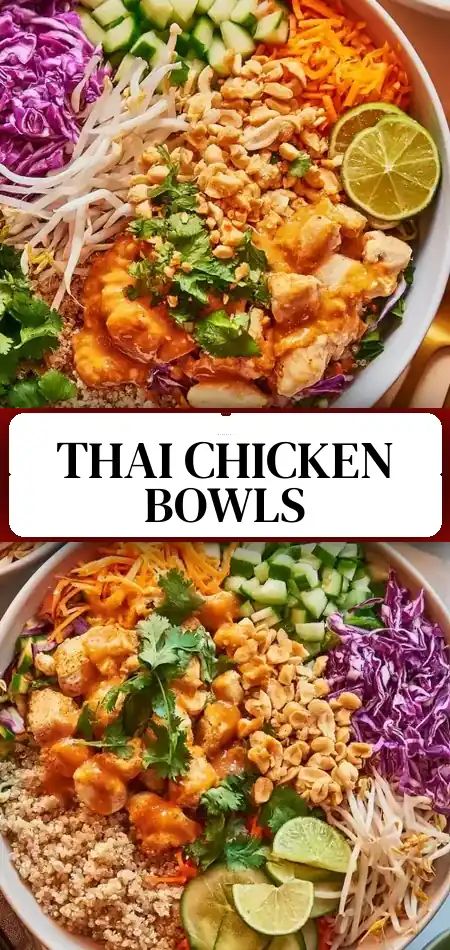
Thai Chicken Quinoa Buddha Bowls
Ingredients
Method
- Cook the quinoa according to your preferred method and set it aside.
- Cut the chicken thighs into bite-sized pieces and add them to a large bowl alongside the arrowroot starch. Toss to fully combine.
- In a small bowl, whisk together the chicken broth and the sambal oelek.
- Heat a large skillet over medium heat, and add in 1-2 tablespoons of avocado oil.
- Once the oil is hot, add in the chicken and cook until browned, about 6-7 minutes.
- Stir in the sambal mixture until it thickens, about one minute. Remove from heat and set aside.
- In a blender, add all ingredients for the creamy peanut sauce and blend until smooth and creamy. Adjust consistency with water if necessary.
- Assemble the bowls by adding quinoa, followed by cucumbers, cabbage, bean sprouts, carrots, cilantro, and roasted peanuts.
- Top with chicken and pour the peanut sauce on top. Garnish with more peanuts and cilantro if desired.