Simple Korean BBQ Chicken Bowls
What if restaurant-quality Korean BBQ could appear on your table in just 30 minutes—without a special grill, long marinating times, or hard-to-find ingredients—while delivering 38 grams of protein and only 580 calories per serving?
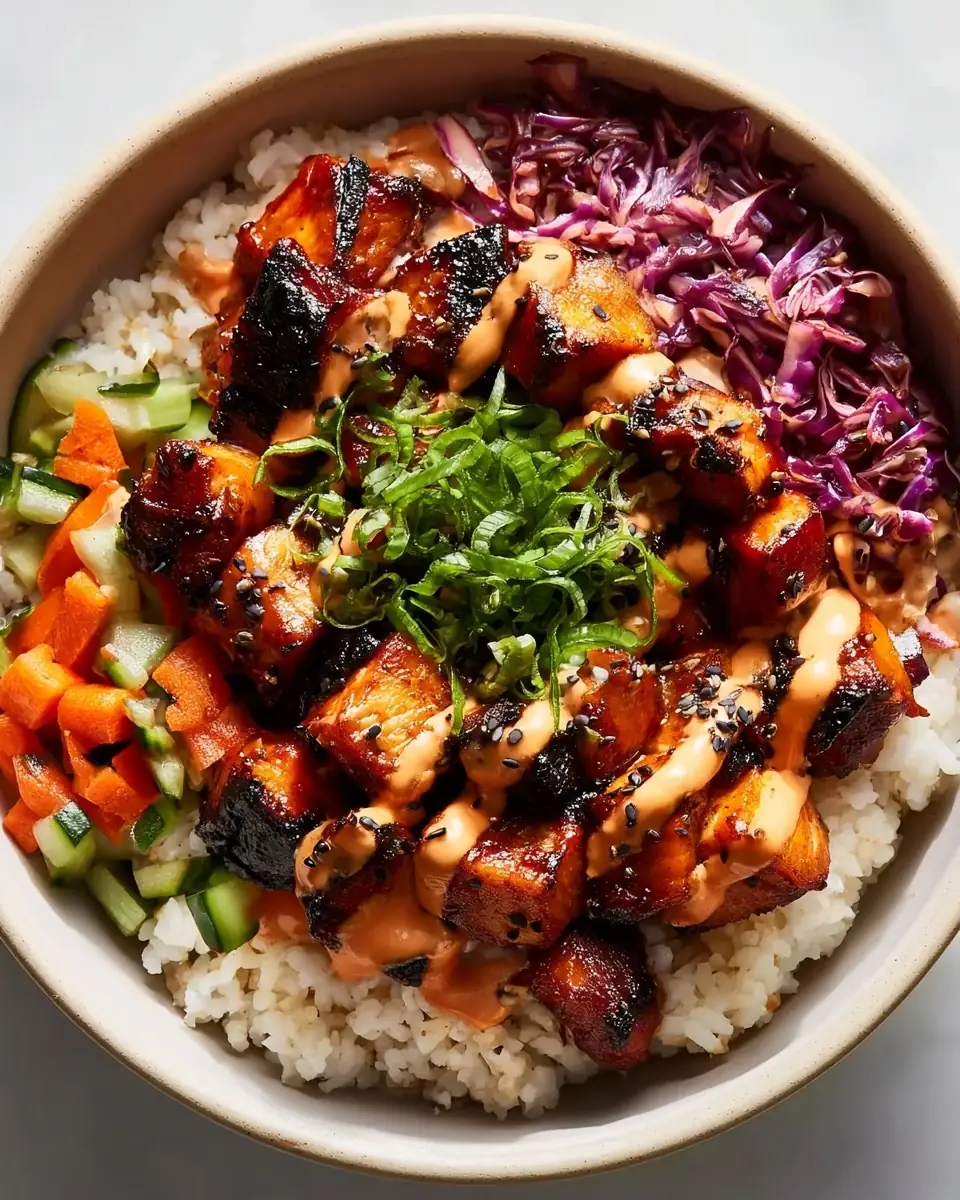
Most home cooks believe bold, umami-packed Korean dishes require hours of preparation or specialty equipment. This Korean BBQ chicken bowls recipe proves otherwise. Tender chunks of chicken thighs are coated in a sweet-spicy gochujang glaze, then nestled over fluffy rice alongside crisp cucumbers, shredded carrots, edamame, and optional kimchi. The combination creates the perfect balance of caramelized heat, fresh crunch, and savory depth that defines great Korean-inspired meals.
With its efficient 30-minute timeline and impressive nutritional profile, these Korean BBQ chicken bowls are ideal for busy weeknights, weekend meal prep, or when you’re craving takeout flavors without the cost or calories. This comprehensive guide includes every detail you need: exact steps with pro tips, nutritional data, healthier swaps, common pitfalls, and storage strategies. Whether you’re new to gochujang or a Korean cuisine fan, these bowls will quickly become a repeatable favorite.
Ingredients List
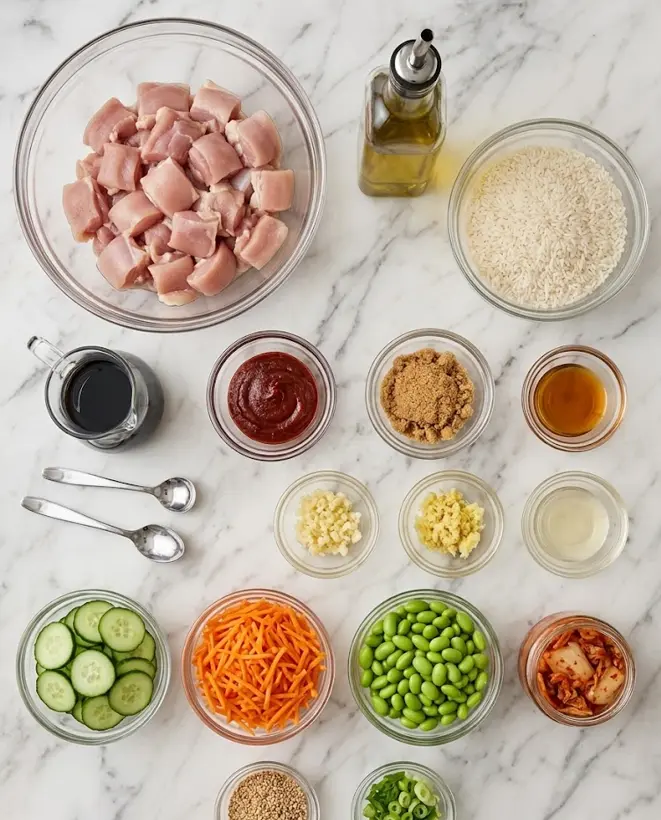
Creating authentic-tasting Korean BBQ chicken bowls relies on a handful of bold, accessible ingredients that deliver maximum flavor impact. Here’s everything needed for 4 hearty bowls:
For the gochujang chicken marinade:
- 680 g boneless, skinless chicken thighs, cut into 1-inch pieces
- 60 ml low-sodium soy sauce
- 45 g gochujang (Korean chili paste)
- 28 g brown sugar, packed
- 15 ml sesame oil
- 3 cloves garlic, minced
- 5 g fresh ginger, grated
- 5 ml rice vinegar
For the base and toppings:
- 720 g cooked rice (white, brown, or jasmine)
- 100 g cucumber, thinly sliced
- 100 g shredded carrots
- 150 g cooked edamame, shelled
- 120 g kimchi (optional but recommended)
- 10 g sesame seeds, for garnish
- 15 g green onions, sliced, for garnish
Smart Substitutions:
- Chicken thighs: Use chicken breast for a leaner option or tofu/tempeh for a vegetarian version.
- Gochujang: Adjust quantity for heat preference; a milder chili garlic sauce works in a pinch.
- Brown sugar: Honey, maple syrup, or coconut sugar for different sweetness profiles.
- Rice: Cauliflower rice for lower carbs or quinoa for added protein and nutrients.
- Vegetables: Swap or add shredded cabbage, avocado, or radish for variety and color.
- Soy sauce: Tamari or coconut aminos for gluten-free diets.
These ingredients create the signature Korean flavor harmony—sweet, spicy, savory, and fresh—that makes Korean BBQ chicken bowls so satisfying.
Timing
This Korean BBQ chicken bowls recipe is perfectly suited for weeknights:
- Prep Time: 15 minutes (whisking marinade, chopping vegetables)
- Cook Time: 15 minutes (searing chicken while rice warms or is pre-cooked)
- Total Time: 30 minutes
That’s roughly 25–30% faster than typical Korean-inspired rice bowl recipes that often require 40–45 minutes plus extended marinating. The parallel workflow is key: prepare the marinade and vegetables while the chicken sits, then cook everything quickly in one skillet. Even including the recommended 30-minute marinate, active time remains minimal.
Step-by-Step Instructions
Preparing the Bold Gochujang Marinade
In a medium bowl, whisk together the gochujang, low-sodium soy sauce, sesame oil, packed brown sugar, minced garlic, grated ginger, and rice vinegar until completely smooth. The mixture should be glossy and fragrant with a beautiful reddish-orange hue.
Pro Tip: Gochujang provides fermented depth and gentle heat. Whisk vigorously so the sugar fully dissolves—this ensures even caramelization later.
Marinating the Chicken for Maximum Flavor
Add the 1-inch chicken thigh pieces to the marinade and toss thoroughly until every piece is well coated. Cover and refrigerate for at least 30 minutes (or up to 4 hours for deeper flavor penetration).
Personalized Tip: If you’re short on time, even 15 minutes at room temperature will impart good flavor, though the full 30 minutes allows the enzymes in the ginger and vinegar to tenderize the meat slightly.
Cooking the Caramelized Korean BBQ Chicken
Heat a large skillet over medium-high heat. Add the marinated chicken in a single layer (cook in batches if necessary to avoid overcrowding). Sear for 3–4 minutes per side until the chicken is cooked through, deeply caramelized on the edges, and reaches an internal temperature of 165°F (74°C). The sugars in the marinade will create a beautiful sticky glaze.
Actionable Trick: Resist stirring too often during the first few minutes. Letting the chicken sit undisturbed promotes the Maillard reaction responsible for those crave-worthy browned bits that define great Korean BBQ chicken bowls.
Assembling the Korean BBQ Chicken Bowls
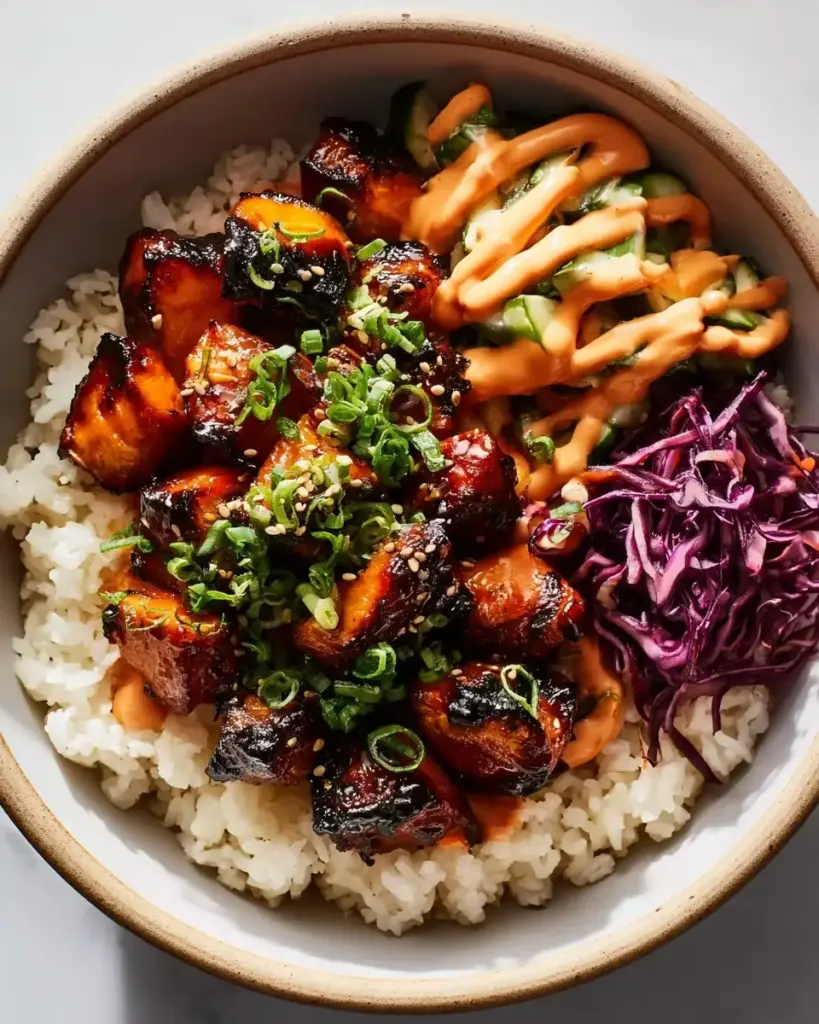
Divide the warm cooked rice among four wide, shallow bowls. Arrange the Korean BBQ chicken in the center, then artfully place the thinly sliced cucumber, shredded carrots, shelled edamame, and kimchi in colorful sections around the chicken. Sprinkle generously with sesame seeds and sliced green onions.
Expert Tip: Warm the rice slightly if it’s been refrigerated—this helps it absorb any extra glaze that drips from the chicken.
Nutritional Information
Each serving of these Korean BBQ chicken bowls contains approximately 580 calories. Here’s the detailed breakdown per bowl:
- Calories: 580
- Protein: 38–42 g (driven by 170 g of chicken thighs plus protein-rich edamame)
- Carbohydrates: 58–64 g (mainly from rice and the natural sugars in the glaze and vegetables)
- Fat: 18–22 g (primarily healthy unsaturated fats from sesame oil and chicken)
- Fiber: 6–8 g
- Key Micronutrients: Excellent source of Vitamin A (from carrots), Vitamin C, iron, and probiotics if using kimchi.
The fermented gochujang and kimchi support gut health, while the lean protein and fiber promote satiety. Compared to restaurant Korean bowls that frequently exceed 900 calories with added sugars and oils, this homemade version offers authentic taste with far better nutritional balance—making it an outstanding high-protein weeknight option.
Healthier Alternatives for the Recipe
These Korean BBQ chicken bowls are highly adaptable for various dietary needs while preserving their signature bold flavor:
- Lower Sodium: Use reduced-sodium soy sauce and cut the added salt in any rice preparation.
- Lower Carb/Keto-Friendly: Replace rice with cauliflower rice and reduce brown sugar or use a sugar-free alternative.
- Higher Protein: Increase chicken to 800 g or add a soft-boiled egg to each bowl.
- Dairy-Free & Gluten-Free: The base recipe is dairy-free; substitute tamari for soy sauce to make it gluten-free.
- Lower Calorie: Use chicken breast instead of thighs and increase the proportion of non-starchy vegetables.
- Anti-Inflammatory Focus: Add extra ginger and serve with fermented kimchi for additional gut and immune support.
These modifications allow the recipe to fit Mediterranean, gluten-free, or calorie-conscious eating patterns without sacrificing the addictive gochujang glaze.
Serving Suggestions
Make your Korean BBQ chicken bowls even more appealing with these versatile ideas:
- Build-Your-Own Bar: Set out all toppings separately for family dinners or casual gatherings—great for picky eaters.
- Meal Prep: Portion into divided containers for grab-and-go lunches that stay fresh for days.
- Side Pairings: Serve with steamed broccoli, quick cucumber salad, or roasted seaweed sheets.
- Spice Level Customization: Offer extra gochujang or sriracha on the side for those who love more heat.
- Beverage Matches: Pair with iced barley tea, sparkling water with lime, or a light Korean beer.
- Elevated Presentation: Serve in deep ceramic bowls and finish with a drizzle of extra sesame oil for shine.
The recipe’s flexibility makes it perfect for both quick solo dinners and relaxed entertaining.
Common Mistakes to Avoid
Even straightforward recipes have pitfalls. Here are the top mistakes when making Korean BBQ chicken bowls:
- Not marinating long enough: Less than 30 minutes results in milder flavor—plan ahead for best taste.
- Overcrowding the skillet: This causes steaming instead of caramelization. Cook in batches for those signature crispy edges.
- Using cold rice straight from the fridge: Warm rice better integrates with the hot chicken and glaze.
- Skipping the single-layer sear: Crowding prevents the beautiful sticky glaze from forming properly.
- Overcooking the chicken: Thighs are forgiving, but drying them out reduces juiciness—use a meat thermometer.
- Forgetting fresh garnishes: The sesame seeds, green onions, and crisp vegetables provide essential texture and brightness.
Avoiding these ensures your bowls taste and look like they came from a Korean restaurant.
Storing Tips for the Recipe
These Korean BBQ chicken bowls excel for meal prep:
- Refrigerator: Store chicken, rice, and vegetables in separate airtight containers for up to 4 days. The cooked chicken with glaze reheats especially well.
- Reheating: Warm chicken and rice gently in a skillet with a splash of water or in the microwave. Add fresh cucumber and garnishes after reheating to maintain crunch.
- Make-Ahead Strategy: Prepare the marinade and chop vegetables up to 24 hours in advance. Cook the chicken fresh for maximum caramelization.
- Freezing: The chicken and rice freeze well for up to 2 months. Thaw overnight and reheat gently. Avoid freezing fresh vegetables or kimchi.
Proper separation of components preserves texture, flavor, and food safety while simplifying busy weeknights.
Conclusion
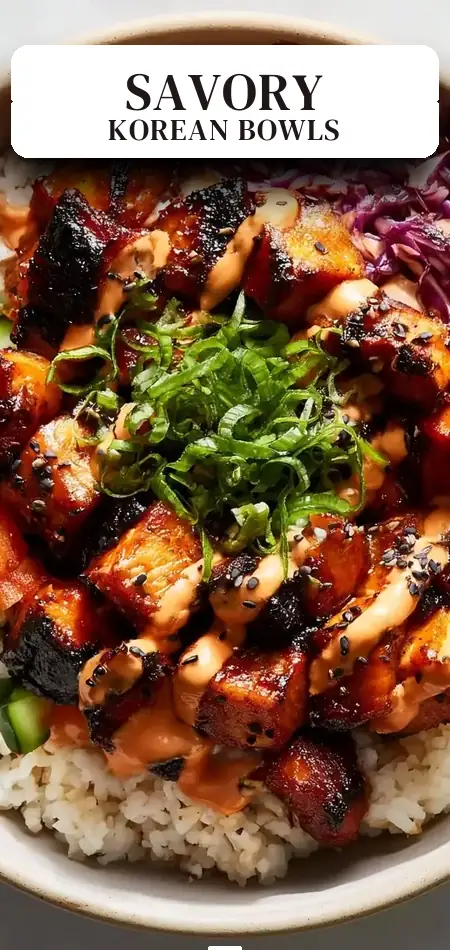
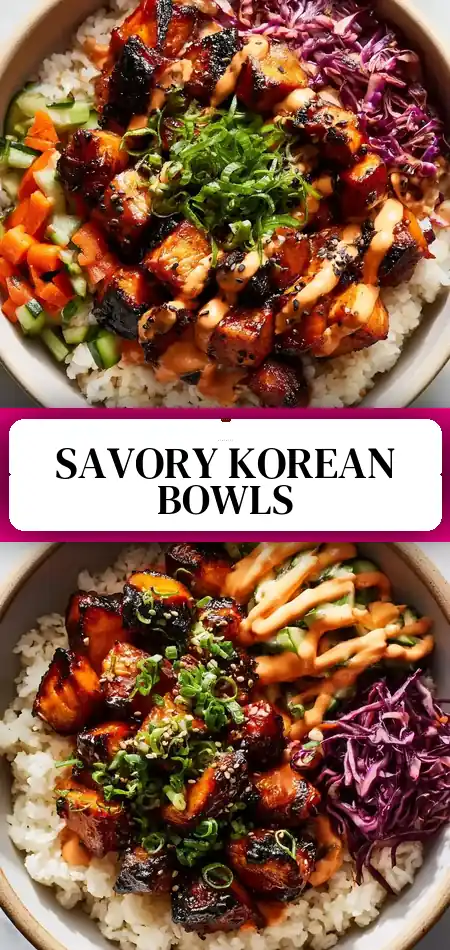
These Korean BBQ chicken bowls combine caramelized gochujang chicken, fluffy rice, crisp vegetables, and bright garnishes for a flavorful, protein-packed meal ready in 30 minutes. Balanced, customizable, and better than takeout, they prove weeknight dinners can be exciting and nutritious.
Ready to bring bold Korean flavors home? Try this Korean BBQ chicken bowls recipe tonight and share your experience in the comments. Tell us how you adjusted the spice or which toppings you loved most—we read every review! Subscribe for more easy, globally-inspired, high-protein recipes delivered straight to your inbox.
FAQs
How spicy are these Korean BBQ chicken bowls?
The heat level is moderate thanks to the gochujang. Reduce the amount for milder flavor or add extra chili flakes if you prefer more kick.
Can I make Korean BBQ chicken bowls ahead for meal prep?
Yes. Prepare components separately and store up to 4 days. Assemble fresh or pack into containers for easy reheating.
What can I substitute for gochujang?
A mixture of sriracha, miso paste, and a touch of sugar approximates the sweet-spicy fermented flavor, though authentic gochujang is best.
Is this recipe gluten-free?
It can be. Use tamari instead of soy sauce and verify that your gochujang and other ingredients are gluten-free certified.
Can I use chicken breast instead of thighs?
Absolutely. Breasts work well but tend to be slightly drier—marinate the full 4 hours and avoid overcooking.
What’s the best rice to use for Korean BBQ chicken bowls?
Short-grain or jasmine rice holds up well to the glaze. Brown rice adds extra fiber and a nutty flavor.
How do I store leftover kimchi and vegetables?
Keep them in separate containers in the refrigerator. The fresh vegetables stay crispest when added just before serving.
Korean BBQ Chicken Bowls (Easy Weeknight Recipe!)
Ingredients
Method
- In a medium bowl, whisk together the gochujang, low-sodium soy sauce, sesame oil, brown sugar, minced garlic, grated ginger, and rice vinegar until smooth.
- Add the bite-sized chicken pieces to the marinade and toss to coat completely. Cover and refrigerate for at least 30 minutes, or up to 4 hours.
- Heat a large skillet over medium-high heat. Add the chicken in a single layer (work in batches if needed) and cook for 3-4 minutes per side, until cooked through and caramelized.
- Divide the cooked rice among four bowls. Top with the Korean BBQ chicken, then arrange the cucumber, carrots, edamame, and kimchi around the chicken. Garnish with sesame seeds and green onions before serving.