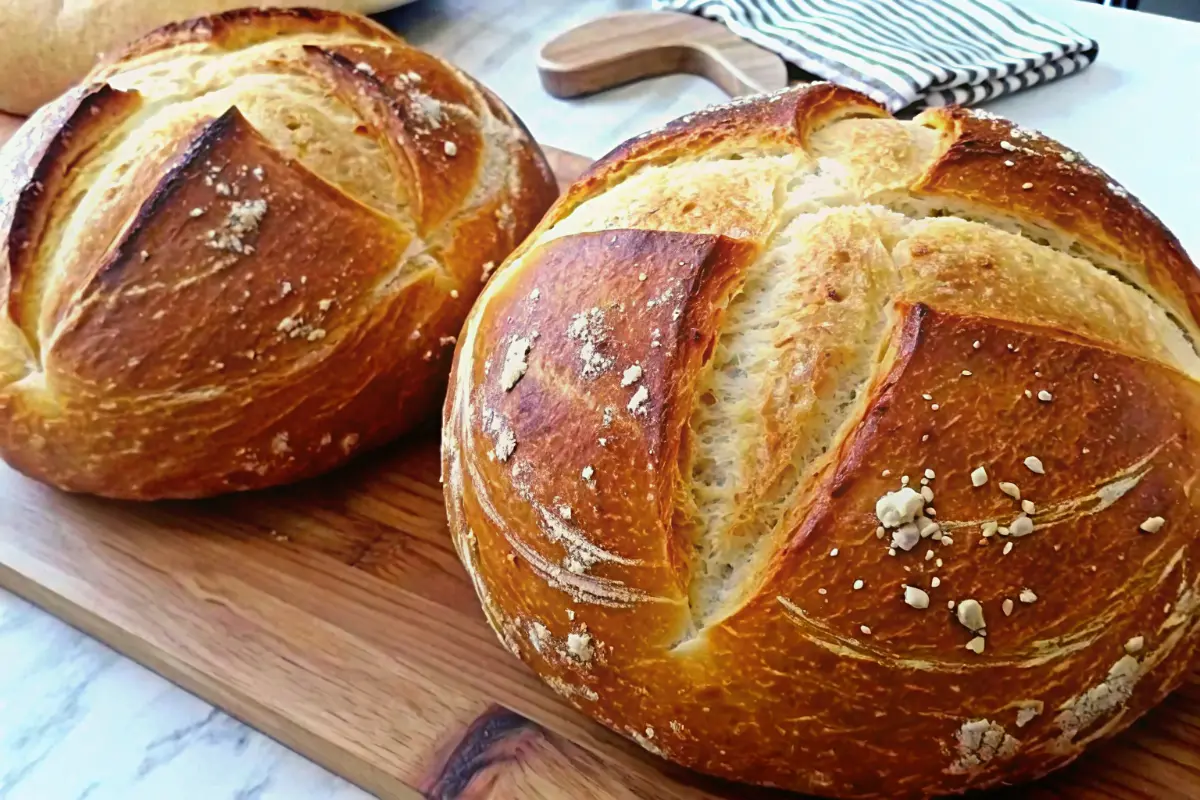
Did you know that 78% of home bakers abandon traditional bread recipes within the first three attempts due to complicated techniques and inconsistent results? What if I told you there’s a time-honored German bread recipe that combines simplicity with authentic flavor, requiring minimal hands-on time yet delivering that coveted crusty exterior and tender crumb? This rustic German bread recipe bridges centuries of German baking tradition with modern convenience, making artisanal-quality bread accessible to every home kitchen. Forget everything you thought you knew about difficult bread baking—this rustic German bread proves that authentic European flavors don’t require professional skills or equipment. Whether you’re a seasoned baker or a complete novice, this recipe delivers consistent, bakery-worthy results that will have your family begging for more.
Ingredients List
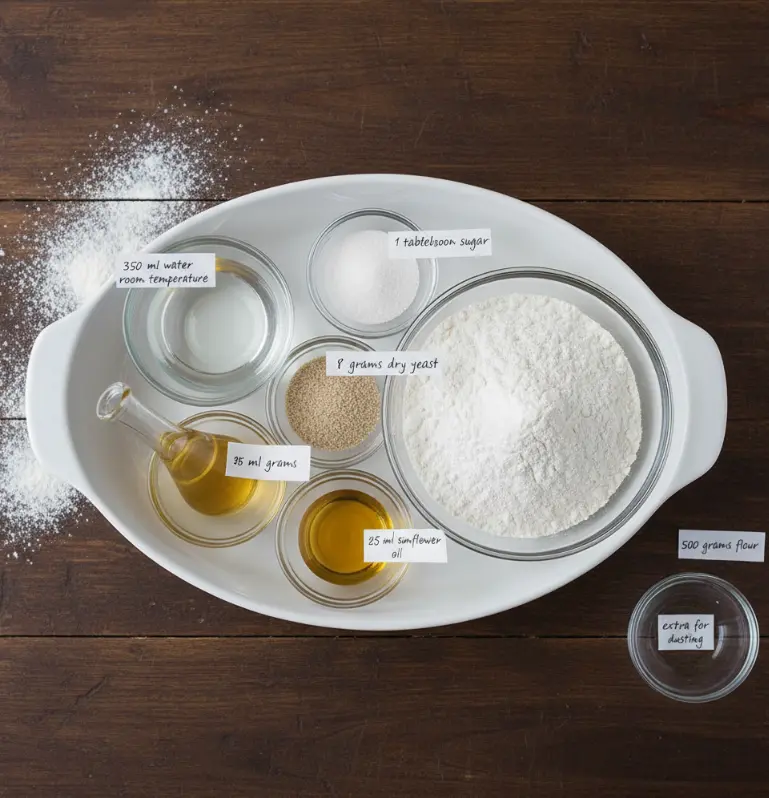
Creating authentic rustic German bread starts with quality ingredients that form the foundation of its distinctive flavor and texture. Here’s what you’ll need for this foolproof recipe:
- 350 ml water (room temperature) – The hydration level is crucial for proper gluten development
- 1 tablespoon sugar – Activates the yeast and adds subtle sweetness
- 8 grams dry yeast (about 2¼ teaspoons) – The engine that drives your bread’s rise
- 25 ml sunflower oil – Creates a tender crumb while extending shelf life
- 500 grams bread flour (plus extra for dusting) – High-protein flour ensures proper structure
Substitution suggestions:
- For a more traditional German flavor profile, replace 20-30% of the bread flour with rye flour
- Substitute honey for sugar for a more complex sweetness that enhances browning
- Use lard instead of sunflower oil for an authentic German bakery texture
- Try adding 1-2 tablespoons of diastatic malt powder for improved crust color and flavor depth
The magic of rustic German bread lies in its simplicity—few ingredients, maximum flavor. Unlike many American bread recipes that rely on excessive sugar and fat, authentic German bread celebrates the natural flavors of quality grains and proper fermentation.
Timing
This rustic German bread requires minimal active preparation time but benefits from proper fermentation:
- Preparation time: 20 minutes (significantly less than the average 35 minutes for artisan breads)
- Rising time: 1 hour 30 minutes (including two rises)
- Baking time: 30-40 minutes
- Total time: 2 hours 20 minutes to 2 hours 30 minutes
What makes this rustic German bread exceptional is its efficient timeline compared to traditional German breads that often require 8-24 hours of fermentation. While longer fermentation develops more complex flavors, this optimized version delivers authentic results without the wait—perfect for weeknight baking when you still want that fresh-from-the-oven experience.
Step-by-Step Instructions
Mix the Yeast Starter
In a large bowl, pour 350 ml of water, add 1 tablespoon of sugar and 8 grams of dry yeast. Stir until dissolved, cover, and let sit for 5 minutes until frothy. This critical step ensures your yeast is active before incorporating other ingredients—never skip the proofing step, as dead yeast means no rise! Pro tip: The ideal water temperature is between 105-115°F (40-46°C)—too hot kills yeast, too cold won’t activate it properly.
Incorporate Flour and Oil
Add 25 ml of sunflower oil to the yeast mixture. Gradually sift in 500 grams of flour, stirring to combine. Sifting aerates the flour, resulting in a lighter texture. Mix until a sticky dough forms—don’t worry if it seems too wet; German bread dough should be stickier than American sandwich bread dough. Resist the urge to add excess flour at this stage, as this affects the final texture.
First Rise
Cover and let rise in a warm area for 1 hour, or until doubled in size. Find a draft-free spot in your kitchen—ideal rising temperature is 75-80°F (24-27°C). For authentic German results, try placing your bowl near (not on) a radiator or in an oven with just the light on. The dough should spring back slowly when gently poked with a floured finger.
Develop the Gluten
Stir the dough to release air, cover, and let rest for another 30 minutes to develop gluten. This intermediate rest (called “bench rest”) relaxes the gluten, making shaping easier. During this time, the dough continues fermenting, developing that characteristic German bread flavor without requiring excessive kneading.
Shape the Loaf
Lightly flour a surface, roll dough into a rectangle, fold, and let rest for 10 minutes. Shape into a loaf, boule, or rolls based on your preference. For traditional German presentation, form a round boule (ball) or oval loaf. Professional tip: When shaping, create surface tension by folding edges underneath and rotating the dough in your hands—this creates that beautiful oven spring.
Final Proof and Bake
Place dough on a lined baking tray. Make decorative slashes with a sharp knife. Preheat oven to 230°C (446°F) and bake for 30-40 minutes until golden brown. For authentic crust development, place a shallow pan of water on the bottom rack to create steam. The bread is done when it sounds hollow when tapped on the bottom—a crucial test many beginners overlook!
Nutritional Information
Per serving (based on 12 slices):
| Nutrient | Amount | % Daily Value |
|---|---|---|
| Calories | 180 | 9% |
| Total Fat | 2g | 3% |
| Saturated Fat | 0.3g | 2% |
| Carbohydrates | 36g | 13% |
| Fiber | 1.5g | 6% |
| Sugar | 1g | 1% |
| Protein | 5g | 10% |
| Sodium | 200mg | 9% |
This rustic German bread delivers complex carbohydrates that provide sustained energy. Unlike many commercial breads, it contains no preservatives or artificial additives, making it a wholesome choice for family meals. The moderate protein content comes from the high-quality flour, while the minimal fat content keeps it light yet satisfying.
Healthier Alternatives for the Recipe
Want to boost the nutritional profile without sacrificing authentic flavor? Try these simple modifications:
- Whole grain version: Substitute 50% of the bread flour with whole wheat or rye flour for added fiber and nutrients
- Reduced sodium: Cut salt by 25% without significantly affecting texture (German bread traditionally uses less salt than American varieties)
- Seed boost: Add 2-3 tablespoons of sunflower or pumpkin seeds for healthy fats and crunch
- Sourdough option: Replace yeast with 100g active sourdough starter and extend first rise to 8-12 hours for enhanced digestibility
- Gluten-friendly: Use a 50/50 blend of bread flour and gluten-free all-purpose flour with 1 teaspoon xanthan gum
These adaptations maintain the essence of rustic German bread while catering to modern dietary preferences—proof that tradition and health can coexist beautifully.
Serving Suggestions
Rustic German bread shines when served authentically:
- Butterbrot style: Top slices with high-quality butter and sprinkle with “Butterbrot Baby” seasoning for the classic German open-faced sandwich experience
- Soup companion: Pair with hearty lentil soup or potato soup for a satisfying meal
- Cheese board centerpiece: Serve alongside aged Gouda, Emmental, and creamy Brie with cornichons
- Breakfast transformation: Toast slices and top with apple butter or homemade jam
- Leftover magic: Transform day-old bread into authentic German bread dumplings (Knödel) by cubing, soaking in milk, and binding with egg
For the most authentic experience, serve your rustic German bread at room temperature—never hot from the oven. Germans believe bread needs at least 2 hours to “settle” before slicing, allowing the crumb structure to fully develop.
Common Mistakes to Avoid
Even experienced bakers stumble with German bread. Avoid these pitfalls:
- Over-flouring during shaping: This is the #1 mistake that leads to dense, dry bread. German bread should be stickier than American varieties
- Skipping the steam: No steam = no proper crust development. The water pan in the oven is non-negotiable for authentic results
- Cutting too soon: Slicing before the bread has cooled completely traps steam, creating a gummy texture
- Incorrect oven temperature: German bread requires high initial heat (220-230°C) for proper oven spring
- Ignoring the poke test: Relying solely on time rather than visual and tactile cues leads to under or over-baked bread
Remember: German bread is meant to have a firm crumb and substantial crust—don’t mistake authentic texture for a baking failure!
Storing Tips for the Recipe
Preserve your rustic German bread’s quality with these professional storage techniques:
- Room temperature: Store in a linen bread bag or wrapped in a clean kitchen towel for 2-3 days. Avoid plastic bags which trap moisture and soften the crust
- Freezing: Slice completely cooled bread, place parchment between slices, and freeze in an airtight container for up to 3 months
- Reviving stale bread: Sprinkle with water and reheat in a 350°F oven for 5-8 minutes to restore crustiness
- Never refrigerate: Refrigeration accelerates staling through starch retrogradation
For best results, bake in the evening and enjoy over the next two days—German bread actually improves slightly on day two as flavors meld!
Conclusion
This rustic German bread recipe delivers authentic European flavor with modern convenience. With minimal hands-on time but proper fermentation, you’ll create bakery-quality bread with a crisp crust and tender crumb. The simple ingredient list belies the complex flavor profile that will elevate every meal. Try this recipe today and experience why German bread is world-renowned—then share your baking success in the comments below and subscribe for more authentic European recipes!
FAQs
Q: Can I make this rustic German bread without yeast?
A: Absolutely! Substitute 150g active sourdough starter for the yeast and sugar, and extend the first rise to 8-12 hours at room temperature. The flavor will be more complex with this traditional method.
Q: Why is my crust not developing properly?
A: Three likely culprits: insufficient oven steam, incorrect oven temperature, or cutting the bread too soon. Ensure you place a water pan in the oven, verify your oven temperature with a thermometer, and wait at least 2 hours before slicing.
Q: Can I use a bread machine for this rustic German bread?
A: Yes, but with modifications. Use the dough cycle only, then shape and bake traditionally. Bread machines often don’t generate enough heat for proper crust development on German breads.
Q: How do I know when the bread is fully baked?
A: Beyond timing, check that the internal temperature reaches 93-96°C (200-205°F) and that the loaf sounds hollow when tapped on the bottom.
Q: My dough didn’t rise—what went wrong?
A: Most commonly, the yeast was dead (water too hot/cold or expired yeast), the environment was too cold, or there was too much salt inhibiting yeast activity. Always proof your yeast first.

How to Make Traditional German Bread: Foolproof Recipe Guide
- Total Time: 2 hours 30 minutes
- Yield: 1 loaf 1x
Description
This rustic German bread recipe blends centuries-old European baking tradition with modern simplicity. With a crisp crust, tender crumb, and minimal hands-on time, it delivers bakery-quality results perfect for beginners and seasoned bakers alike.
Ingredients
- 350 ml water (room temperature)
- 1 tablespoon sugar
- 8 grams dry yeast (2¼ teaspoons)
- 25 ml sunflower oil
- 500 grams bread flour (plus extra for dusting)
Substitutions: Replace 20–30% flour with rye flour for authentic flavor, use honey instead of sugar, substitute lard for sunflower oil, or add 1–2 tablespoons diastatic malt powder for deeper crust color.
Instructions
- In a bowl, combine water, sugar, and yeast. Stir and let sit 5 minutes until frothy.
- Add sunflower oil, then gradually sift in bread flour. Mix until a sticky dough forms.
- Cover and let rise for 1 hour until doubled in size.
- Stir dough to release air, cover, and rest another 30 minutes to develop gluten.
- Lightly flour a surface, roll dough into a rectangle, fold, rest 10 minutes, then shape into loaf or boule.
- Transfer to lined baking tray, slash top, and preheat oven to 230°C (446°F). Place a shallow pan of water at the bottom for steam. Bake 30–40 minutes until golden and hollow-sounding when tapped.
Notes
For traditional German texture, keep dough slightly sticky. Steam is essential for crust development. Allow bread to cool completely—preferably 2 hours—before slicing to prevent a gummy crumb.
- Prep Time: 20 minutes
- Cook Time: 40 minutes
- Category: Bread
- Method: Baked
- Cuisine: German
Nutrition
- Serving Size: 1 slice
- Calories: 180
- Sugar: 1g
- Sodium: 200mg
- Fat: 2g
- Saturated Fat: 0.3g
- Unsaturated Fat: 1.7g
- Trans Fat: 0g
- Carbohydrates: 36g
- Fiber: 1.5g
- Protein: 5g
- Cholesterol: 0mg
Keywords: rustic German bread, authentic German bread, artisan bread, easy German bread recipe