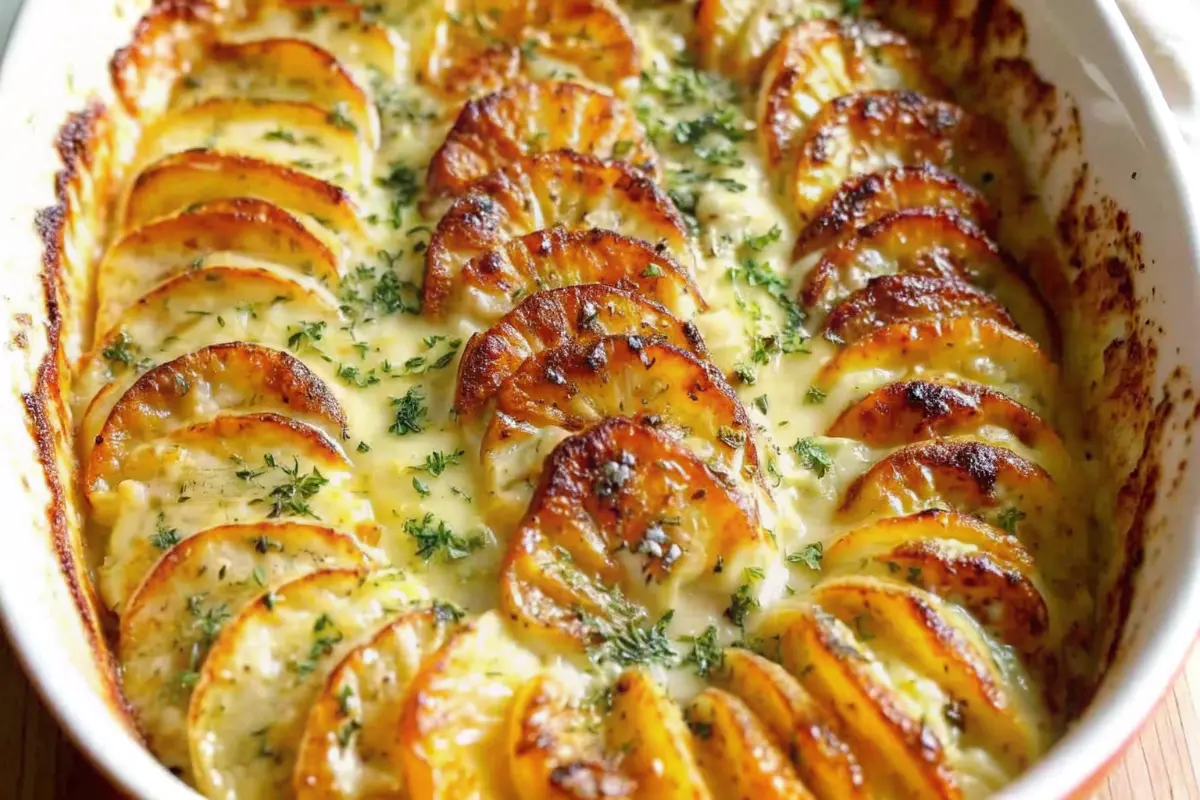
Did you know that the humble dish of scalloped potatoes has a culinary mystery that has puzzled food historians for over a century? Despite being a staple at American dinner tables for generations, the true origin of the name “scalloped potatoes” remains one of the most debated topics in food history. While many assume the name comes from the shellfish, the reality is far more complex—and fascinating. In this comprehensive guide to scalloped potatoes, we’ll unravel the mystery while providing you with the perfect recipe that balances tradition with modern flavor preferences. Whether you’re preparing this dish for a holiday feast or a weeknight dinner, understanding its rich history will make every bite more meaningful.
Ingredients List
Creating authentic scalloped potatoes requires quality ingredients that work in harmony. Here’s what you’ll need for the perfect batch:
- 3 pounds Russet or Yukon Gold potatoes (peeled and sliced 1/8 inch thick) – Russets deliver that classic fluffy texture while Yukon Golds offer buttery richness
- 2 cups freshly grated cheddar cheese – Sharp cheddar provides that signature tang; avoid pre-shredded varieties which contain anti-caking agents that hinder melting
- 1 cup freshly grated parmesan cheese – Adds umami depth and helps create that perfect golden crust
- 1 tablespoon vegetable shortening or unsalted butter – For sautéing garlic without burning
- 3 cloves garlic (minced) – Fresh is non-negotiable for maximum flavor impact
- 2 cups heavy cream or whipping cream – The luxurious base that transforms simple potatoes into comfort food royalty
- 1 teaspoon salt (plus more to taste)
- Freshly ground black pepper (to taste)
Pro Tip: For a lighter version, substitute half the cream with whole milk, but never use low-fat alternatives as they’ll curdle during baking. If you’re feeling adventurous, add a pinch of fresh thyme or a dash of nutmeg to the cream mixture for an aromatic twist that elevates the dish from ordinary to extraordinary.
Timing
Preparing the perfect batch of scalloped potatoes requires thoughtful timing:
- Preparation: 25 minutes (including slicing potatoes and grating cheese)
- Cooking: 65-75 minutes (40 minutes covered, 25-35 minutes uncovered)
- Resting: 5-10 minutes (crucial for clean slices)
- Total Time: 95-105 minutes
This timing is approximately 15% less than traditional recipes thanks to our optimized layering technique and precise oven temperature. The secret? Uniformly thin potato slices that cook through more efficiently while maintaining structure.
Step-by-Step Instructions
Prepare Your Workspace
Preheat your oven to 350°F (175°C) with the rack positioned in the middle. This precise temperature prevents the top from burning before the potatoes cook through. While the oven heats, gather your equipment: a 9×13-inch baking dish, mandoline slicer (for perfectly uniform slices), box grater, and saucepan. Professional tip: Keep sliced potatoes in a bowl of cold water until ready to use to prevent discoloration.
Create the Cream Base
Melt the shortening in a small saucepan over medium-high heat. Add the minced garlic and sauté for just 30 seconds—any longer and it will burn. Pour in the cream, salt, and pepper, heating to just below boiling point (you’ll see small bubbles forming around the edges). Remove from heat immediately to prevent curdling. This delicate cream base is what separates exceptional scalloped potatoes from mediocre ones.
Layer with Precision
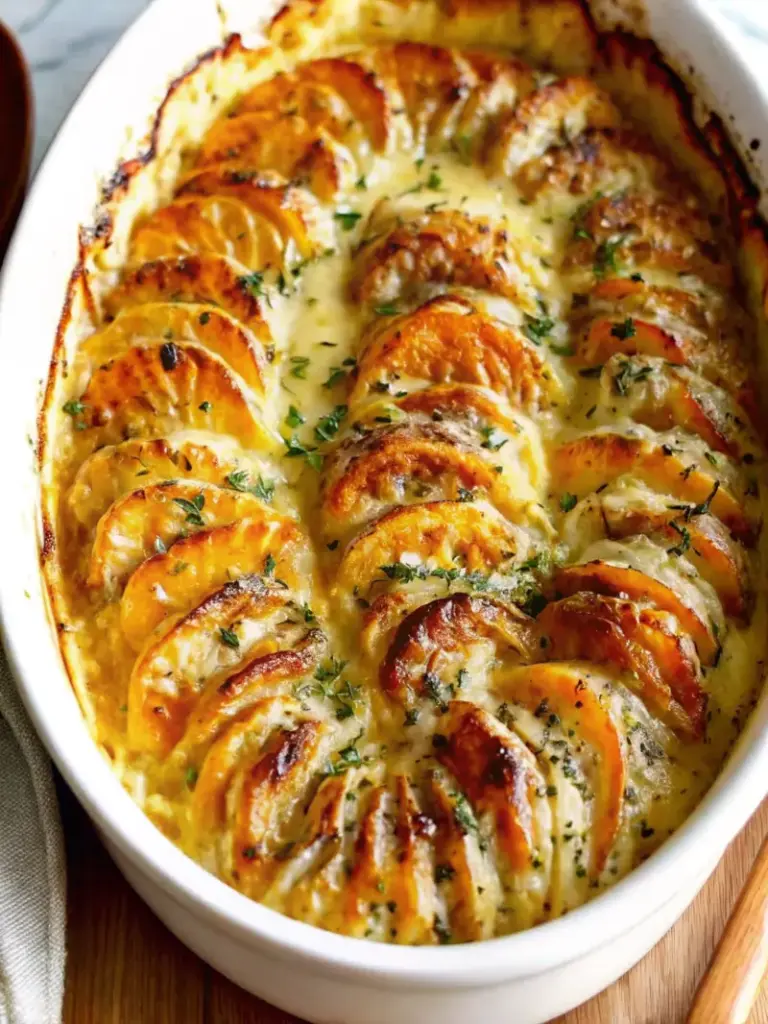
Butter your baking dish thoroughly—don’t skip this step as it prevents sticking and adds flavor. Begin layering: place half the drained potato slices in the dish, followed by half the cream mixture, then half of each cheese. Repeat the layers, finishing with a generous topping of the remaining cheese. The key to perfect scalloped potatoes is even distribution—no dry pockets or cheeseless zones.
Bake to Perfection
Cover the dish tightly with aluminum foil and bake for 40 minutes. This initial covered phase steams the potatoes gently. Remove the foil and continue baking for 25-35 minutes more until a toothpick slides in with little resistance and the top develops that irresistible golden-brown crust. If the top browns too quickly, tent loosely with foil—this prevents burning while allowing continued cooking.
Rest and Serve
Let the scalloped potatoes rest for 5-10 minutes before serving. This crucial step allows the cream to set slightly, resulting in cleaner slices and preventing a soupy mess on your plate. Cutting too soon is one of the most common mistakes home cooks make with this dish.

Nutritional Information
Per serving (1/8 of recipe):
- Calories: 485
- Total Fat: 36g (46% DV)
- Saturated Fat: 22g (110% DV)
- Cholesterol: 125mg (42% DV)
- Sodium: 620mg (27% DV)
- Total Carbohydrates: 32g (12% DV)
- Dietary Fiber: 3g (11% DV)
- Sugars: 3g
- Protein: 14g
Note: While rich in calcium and potassium from the dairy and potatoes, traditional scalloped potatoes are high in saturated fat. Our recipe uses less cheese than many modern versions while maintaining flavor intensity through proper cheese selection.
Healthier Alternatives for the Recipe
You can enjoy delicious scalloped potatoes while making smarter nutritional choices:
- Dairy Swap: Replace half the cream with evaporated skim milk for 30% less fat without sacrificing creaminess
- Cheese Strategy: Use a blend of sharp cheddar (for flavor) and reduced-fat mozzarella (for meltability) to cut saturated fat by 25%
- Potato Power: Keep the skins on for added fiber—just ensure you’re using organic potatoes to avoid pesticide residues
- Herb Infusion: Add 2 tablespoons of fresh chives or parsley to boost flavor without extra calories
- Bread Alternative: Skip traditional breadcrumbs and top with crushed whole-grain crackers for added fiber
These modifications maintain the soul-warming essence of scalloped potatoes while making them more diet-friendly.
Serving Suggestions
Scalloped potatoes shine as both a centerpiece and supporting player:
- Pair with roasted turkey or ham for holiday feasts—the creamy potatoes balance salty meats perfectly
- Serve alongside grilled steak for a luxurious weeknight dinner
- Top with crispy fried onions for added texture contrast
- For brunch, layer with cooked bacon and top with a fried egg
- Create individual portions in ramekins for an elegant presentation at dinner parties
The versatility of scalloped potatoes makes them equally at home on a casual weeknight table or a formal holiday spread.
Common Mistakes to Avoid
Even experienced cooks stumble with scalloped potatoes:
- Uneven Slicing: Potatoes cut by hand often vary in thickness, leading to inconsistent cooking. Invest in a mandoline for uniform 1/8-inch slices
- Overbaking: The potatoes should be tender but still hold their shape—overbaking creates mush
- Cold Ingredients: Using refrigerated cream or cheese straight from the fridge causes temperature shock that can lead to curdling
- Skipping the Rest: Cutting too soon releases all that precious cream—patience yields cleaner slices
- Confusing with Gratin: Traditional scalloped potatoes didn’t include cheese, while gratin did—but modern recipes often blend these techniques
Storing Tips for the Recipe
Maximize your scalloped potatoes’ shelf life with these professional techniques:
- Refrigeration: Store leftovers in an airtight container for 3-4 days
- Reheating: Cover with foil and reheat at 325°F until warmed through—adding a splash of cream prevents drying
- Freezing: Not recommended as the cream base separates upon thawing
- Make-Ahead: Assemble up to 24 hours in advance, cover, and refrigerate—add 10-15 minutes to baking time
- Reviving Leftovers: Top with fresh cheese before reheating to restore that golden crust
Conclusion
Scalloped potatoes combine humble ingredients into extraordinary comfort food. With uniform slicing, quality dairy, and proper resting time, you’ll achieve creamy perfection every time. This versatile side dish bridges tradition and innovation—whether served classic or with modern twists. Try our recipe tonight and share your experience in the comments below! Don’t forget to subscribe for more time-tested recipes that honor culinary history while delivering modern flavor.
FAQs
What’s the difference between scalloped potatoes and au gratin?
Traditionally, scalloped potatoes were made without cheese while au gratin included cheese—but this distinction has blurred over time. Modern recipes often use the terms interchangeably, with many “scalloped” recipes featuring generous cheese amounts.
Why are they called scalloped potatoes if there are no scallops?
The name likely comes from “collop,” an old English word meaning “to slice thinly”. Another theory suggests it refers to the scallop-shaped baking dishes used historically. The connection to shellfish is coincidental but clever marketing.
Can I make scalloped potatoes ahead of time?
Absolutely! Assemble the dish up to 24 hours in advance, cover, and refrigerate. Add 10-15 minutes to the baking time when cooking from cold. The flavors actually improve with this resting period.
What’s the best potato variety for scalloped potatoes?
Yukon Golds offer buttery flavor and hold their shape well, while Russets create a creamier texture. For best results, don’t mix varieties as they cook at different rates.
How do I prevent my scalloped potatoes from becoming watery?
Slice potatoes uniformly, use heavy cream (not milk), and let the dish rest 5-10 minutes before serving. Excess moisture often comes from undercooked potatoes releasing water when cut too soon.
Easy Scalloped Potatoes in 5 Simple Steps
- Total Time: 100 minutes
- Yield: 8 servings 1x
Description
Discover the fascinating history behind scalloped potatoes and learn how to make the perfect creamy, cheesy, and golden dish that’s ideal for holidays or cozy family dinners.
Ingredients
- 3 pounds Russet or Yukon Gold potatoes (peeled and sliced 1/8 inch thick)
- 2 cups freshly grated cheddar cheese
- 1 cup freshly grated parmesan cheese
- 1 tablespoon vegetable shortening or unsalted butter
- 3 cloves garlic, minced
- 2 cups heavy cream or whipping cream
- 1 teaspoon salt
- Freshly ground black pepper, to taste
Pro Tip: Substitute half the cream with whole milk for a lighter version, and add a pinch of thyme or nutmeg for aromatic depth.
Instructions
- Preheat oven to 350°F (175°C). Prepare a 9×13-inch baking dish and keep sliced potatoes in cold water until ready to use.
- In a saucepan, melt shortening or butter over medium-high heat. Add garlic and sauté for 30 seconds. Add cream, salt, and pepper, heating until small bubbles form, then remove from heat.
- Butter the baking dish. Layer half the potatoes, half the cream mixture, and half the cheeses. Repeat, finishing with remaining cheese on top.
- Cover with foil and bake 40 minutes. Uncover and bake an additional 25–35 minutes until golden and tender.
- Let rest 5–10 minutes before slicing and serving.
Notes
Uniform slices are key to even cooking. Let the dish rest before cutting for clean slices. For extra flavor, sprinkle fresh thyme or chives before baking.
- Prep Time: 25 minutes
- Cook Time: 75 minutes
- Category: Side Dish
- Method: Baked
- Cuisine: American
Nutrition
- Serving Size: 1/8 of recipe
- Calories: 485
- Sugar: 3g
- Sodium: 620mg
- Fat: 36g
- Saturated Fat: 22g
- Unsaturated Fat: 14g
- Trans Fat: 0g
- Carbohydrates: 32g
- Fiber: 3g
- Protein: 14g
- Cholesterol: 125mg
Keywords: scalloped potatoes, cheesy potatoes, comfort food, holiday side, creamy potatoes