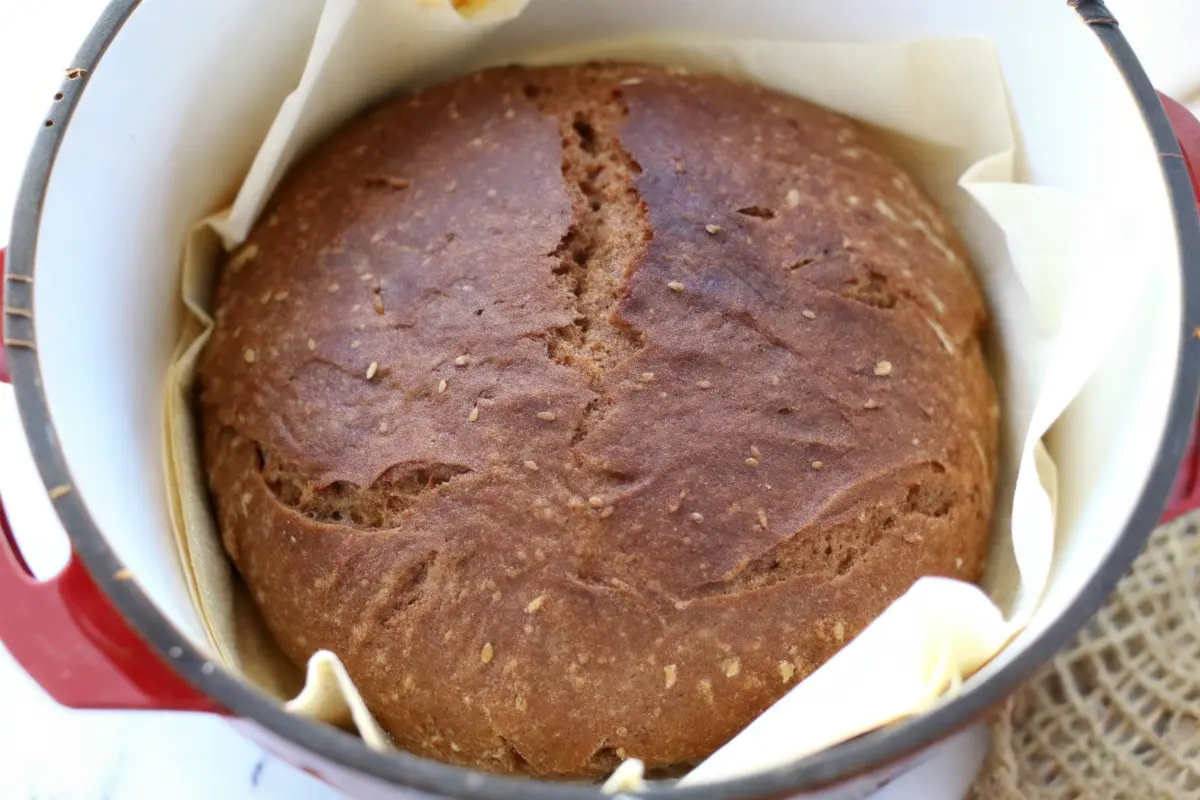
Did you know that making authentic pumpernickel bread recipe at home can take up to 24 hours using traditional German methods? But what if I told you that this no-knead pumpernickel bread recipe delivers the same rich, chocolatey depth and hearty texture in just 4 hours? This simplified approach challenges the common belief that quality pumpernickel requires complex sourdough starters and overnight fermentation. Our pumpernickel bread recipe combines the convenience of modern bread-making with the authentic flavors that have made this German staple beloved worldwide for centuries.
Traditional European pumpernickel is slowly baked for up to 24 hours at low temperature, and this is especially beneficial when made using traditional methods of fermentation and long, slow baking. However, this streamlined version delivers exceptional results without the time commitment, perfect for today’s busy home bakers.
Ingredients List
Transform simple pantry staples into a bakery-worthy loaf with these carefully selected ingredients:
Dry Ingredients:
- 1½ cups bread flour or all-purpose flour (the foundation for structure and rise)
- 1 cup whole wheat flour (adds nutty complexity and fiber)
- ½ cup dark rye flour (provides the signature pumpernickel earthiness)
- 1½ tablespoons powdered cocoa (creates the distinctive dark color)
- 1 teaspoon instant yeast (ensures reliable, consistent rise)
- 1 teaspoon salt (enhances flavor and controls fermentation)
Wet Ingredients:
- 1 cup strong coffee (2 teaspoons instant coffee with 1 cup hot water works perfectly)
- ½ cup water
- 2 tablespoons molasses (adds traditional sweetness and moisture)
- About 2 tablespoons extra flour for shaping
Substitution Tips: Replace dark rye flour with regular rye flour plus 1 extra tablespoon cocoa powder if unavailable. Honey can substitute molasses using ¾ the amount.
Timing
Total Time: 4 hours 15 minutes
- Prep Time: 15 minutes (65% faster than traditional sourdough methods)
- First Rise: 3 hours (hands-off time)
- Second Rise: 35 minutes
- Baking Time: 38-40 minutes
This streamlined timing delivers results comparable to traditional methods while fitting into your daily schedule perfectly.
Step-by-Step Instructions
Step 1: Combine the Dry Ingredients
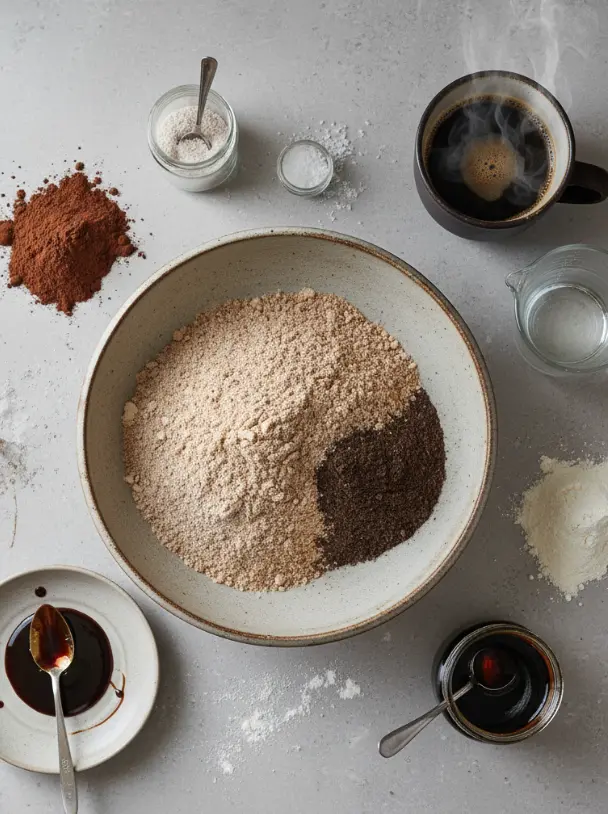
Mix all flours, cocoa powder, yeast, and salt in a large bowl. Whisk thoroughly to ensure even distribution – this prevents pockets of concentrated yeast that can create uneven rising.
Step 2: Prepare the Liquid Mixture
Combine coffee, water, and molasses in a measuring cup. Heat to exactly 130°F using a kitchen thermometer. This temperature activates the yeast without killing it – too hot destroys yeast, too cool slows fermentation significantly.
Step 3: Create the Dough
Pour the warm liquid mixture into flour mixture. Stir with a wooden spoon until no dry flour remains visible. The dough will look shaggy and quite wet – this is perfect for no-knead bread development.
Step 4: First Rise Magic
Cover bowl tightly with plastic wrap and let stand at room temperature for exactly 3 hours. During this time, gluten develops naturally without kneading, creating the bread’s signature texture.
Step 5: Shape with Purpose
Transfer dough to a well-floured surface and sprinkle with additional flour. Using a bench scraper, fold dough over itself 10-12 times, then shape into a rough ball. The dough will be sticky but manageable.
Step 6: Final Rise Preparation
Line a bowl with parchment paper (never wax paper – it burns). Place shaped dough seam-side down, cover with a clean towel, and rest for 35 minutes while your Dutch oven preheats.
Step 7: Dutch Oven Preparation
Place your 3-6 quart Dutch oven with lid in a cold oven. Preheat to 450°F – this creates the perfect steam environment for crusty bread.
Step 8: The Baking Process
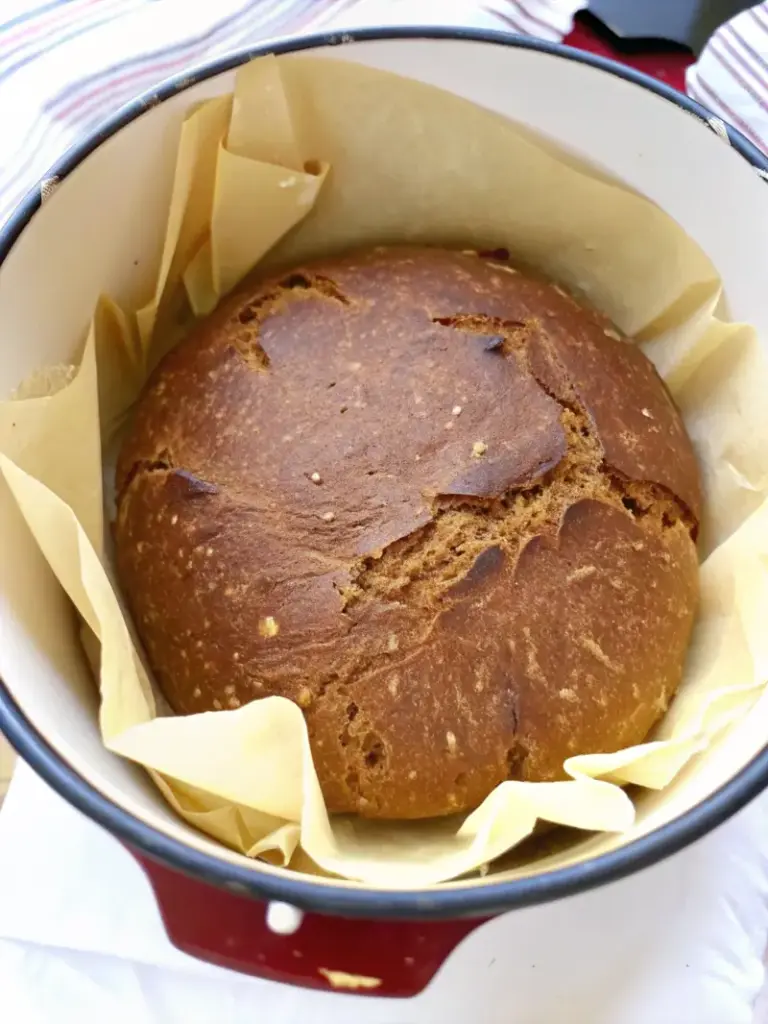
Carefully lift the parchment paper and dough together, lowering both into the hot Dutch oven. Cover and bake 30 minutes, then reduce temperature to 400°F, remove lid, and bake 8-10 minutes more until deeply golden.
Nutritional Information
According to USDA data, 100 grams of pumpernickel provides 250 calories, 47.5 grams of carbohydrate, 6.5 grams of fiber, 3.1 grams of fat, and 8.7 grams of protein.
Per Slice (26g serving):
- Calories: 65 (18% fewer than white bread)
- Carbohydrates: 12.35g
- Fiber: 1.69g
- Protein: 2.3g
- Fat: 0.8g (heart-healthy monounsaturated and polyunsaturated)
- Sodium: 155mg
Due to its higher fiber content and lower glycemic index score, pumpernickel bread has a leg up on commercial, refined white breads. The glycemic index is 49, significantly lower than white bread, making it excellent for blood sugar management.
Healthier Alternatives for the Recipe
Reduce Sodium: Use only ¾ teaspoon salt and add 1 teaspoon dried herbs like rosaway or fennel seeds for flavor complexity.
Increase Fiber: Substitute ¼ cup of bread flour with ground flaxseed meal or chia seeds for omega-3 fatty acids and additional fiber.
Lower Glycemic Impact: Replace 2 tablespoons flour with almond flour, which adds protein while reducing carbohydrate content.
Gluten-Free Option: Use a 1:1 gluten-free flour blend, add 1 teaspoon xanthan gum, and increase liquid by 2 tablespoons for proper hydration.
Protein Boost: Add 2 tablespoons vital wheat gluten or substitute ¼ cup flour with protein powder for enhanced nutritional density.
Serving Suggestions
Classic Pairings: Slice thick and serve with aged cheddar, smoked salmon, or German-style sausages for authentic European flavors.
Breakfast Excellence: Toast lightly and top with avocado, everything bagel seasoning, and a soft-boiled egg for a nutritious morning meal.
Appetizer Magic: Cut into small squares, toast until crispy, and top with cream cheese and dill for elegant party bites.
Soup Companion: This bread’s dense texture makes it perfect for dipping into hearty stews, tomato soup, or French onion soup without falling apart.
Sweet Applications: Try thin slices with honey butter, apple butter, or even as a base for unique French toast with maple syrup.
Common Mistakes to Avoid
Temperature Errors: Liquid that’s too hot (over 140°F) kills yeast, while too-cool liquid (under 120°F) slows fermentation dramatically. Always use a thermometer.
Flour Measurement Issues: Scooping flour directly with measuring cups can add 30% extra flour, creating dense bread. Spoon flour into cups and level off.
Insufficient First Rise: Rushing the 3-hour rise reduces flavor development and creates dense texture. Due to the concentration of both fiber and resistant starch, whole grain breads lead to steadier blood sugar levels after you eat them, since they are not digested as rapidly, but only when properly fermented.
Dutch Oven Safety: Never place dough in a cold Dutch oven – the preheating creates essential steam. Use oven gloves and move deliberately to prevent burns.
Overbaking: Pumpernickel should sound hollow when tapped but shouldn’t be too dark. Internal temperature should reach 200-205°F.
Storing Tips for the Recipe
Room Temperature: Wrapped in plastic wrap or stored in a bread box, this pumpernickel stays fresh for 3-4 days. Its natural ingredients also impart excellent fresh keeping qualities without use of any chemicals or preservatives.
Refrigerator Storage: For longer freshness, refrigerate wrapped bread for up to 1 week. Slice before storing for easy access.
Freezer Method: Slice completely cooled bread, wrap individual slices in plastic wrap, then place in freezer bags. Frozen slices keep for 3 months and toast directly from frozen.
Reviving Stale Bread: Lightly dampen the crust with water and warm in a 350°F oven for 5-7 minutes to restore freshness.
Pre-baking Prep: The shaped dough can be refrigerated overnight before the second rise, developing even more complex flavors.
Conclusion
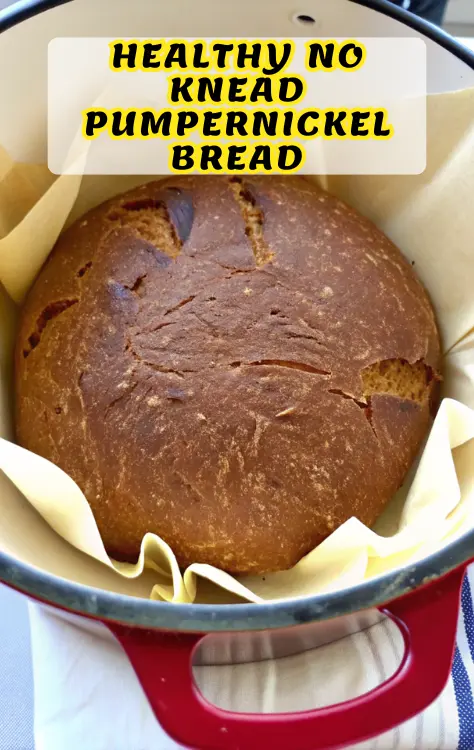
This no-knead pumpernickel bread recipe transforms simple ingredients into a nutritionally dense, flavorful loaf that rivals bakery quality. The combination of three flours, coffee, and molasses creates authentic taste while the Dutch oven method produces the perfect crust-to-crumb ratio.
Ready to experience homemade pumpernickel magic? Try this recipe this weekend and share your results in the comments below. Don’t forget to subscribe to our blog for more simplified bread recipes that bring European bakery traditions to your kitchen!
FAQs
Q: Can I make this pumpernickel bread recipe without a Dutch oven?
A: Yes! Use a regular loaf pan, but place a metal pan with hot water on the bottom oven rack to create steam. Bake at 375°F for 45-50 minutes.
Q: Why is my pumpernickel bread dense instead of airy?
A: Dense texture usually results from too much flour, insufficient rising time, or liquid that was too hot and killed the yeast. Measure ingredients precisely and monitor temperatures carefully.
Q: How does this compare to store-bought pumpernickel?
A: Homemade versions contain more fiber and fewer preservatives than commercial varieties. American pumpernickel tends to be made with yeast/leaveners and coloring and flavoring agents, and is more likely to include wheat flour and to be baked for less time at a higher temperature.
Q: Can I double this pumpernickel bread recipe?
A: Absolutely! Use a larger Dutch oven (6-8 quarts) and increase baking time by 5-10 minutes. Monitor the internal temperature to reach 200-205°F.
Q: What makes pumpernickel bread dark colored?
A: The combination of dark rye flour, cocoa powder, molasses, and coffee creates the characteristic deep brown color without artificial coloring agents.
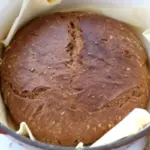
Easy No Knead Pumpernickel Bread Recipe | Dutch Oven Method
- Total Time: 4 hours 15 minutes
- Yield: 1 loaf (8 servings) 1x
- Diet: Vegetarian
Description
This no-knead pumpernickel bread delivers the same rich, chocolatey depth and hearty texture as traditional German versions — but in just 4 hours. A simplified, modern approach to an old-world classic.
Ingredients
- 1½ cups bread flour or all-purpose flour
- 1 cup whole wheat flour
- ½ cup dark rye flour
- 1½ tablespoons powdered cocoa
- 1 teaspoon instant yeast
- 1 teaspoon salt
- 1 cup strong coffee (or 2 tsp instant coffee with 1 cup hot water)
- ½ cup water
- 2 tablespoons molasses
- About 2 tablespoons extra flour for shaping
Instructions
- Mix all dry ingredients — flours, cocoa powder, yeast, and salt — in a large bowl.
- Combine coffee, water, and molasses; heat to 130°F.
- Pour the liquid mixture into the dry mix and stir until combined. Dough will be shaggy and wet.
- Cover bowl with plastic wrap and let rise at room temperature for 3 hours.
- Transfer dough to a floured surface, sprinkle with more flour, and fold 10–12 times to shape into a ball.
- Place seam-side down in a parchment-lined bowl, cover, and let rest 35 minutes while preheating the Dutch oven to 450°F.
- Carefully place dough (with parchment) into the hot Dutch oven. Cover and bake 30 minutes.
- Reduce oven to 400°F, remove lid, and bake 8–10 minutes more until deeply golden.
Notes
For best results, ensure liquid temperature is accurate (around 130°F). Overheating can kill yeast. Bread should sound hollow when tapped and reach an internal temperature of 200–205°F.
- Prep Time: 15 minutes
- Cook Time: 40 minutes
- Category: Bread
- Method: Dutch Oven Baking
- Cuisine: German
Nutrition
- Serving Size: 1 slice (26g)
- Calories: 65
- Sugar: 2g
- Sodium: 155mg
- Fat: 0.8g
- Saturated Fat: 0.1g
- Unsaturated Fat: 0.7g
- Trans Fat: 0g
- Carbohydrates: 12.35g
- Fiber: 1.69g
- Protein: 2.3g
- Cholesterol: 0mg
Keywords: pumpernickel bread, no knead, homemade, rye, molasses, Dutch oven