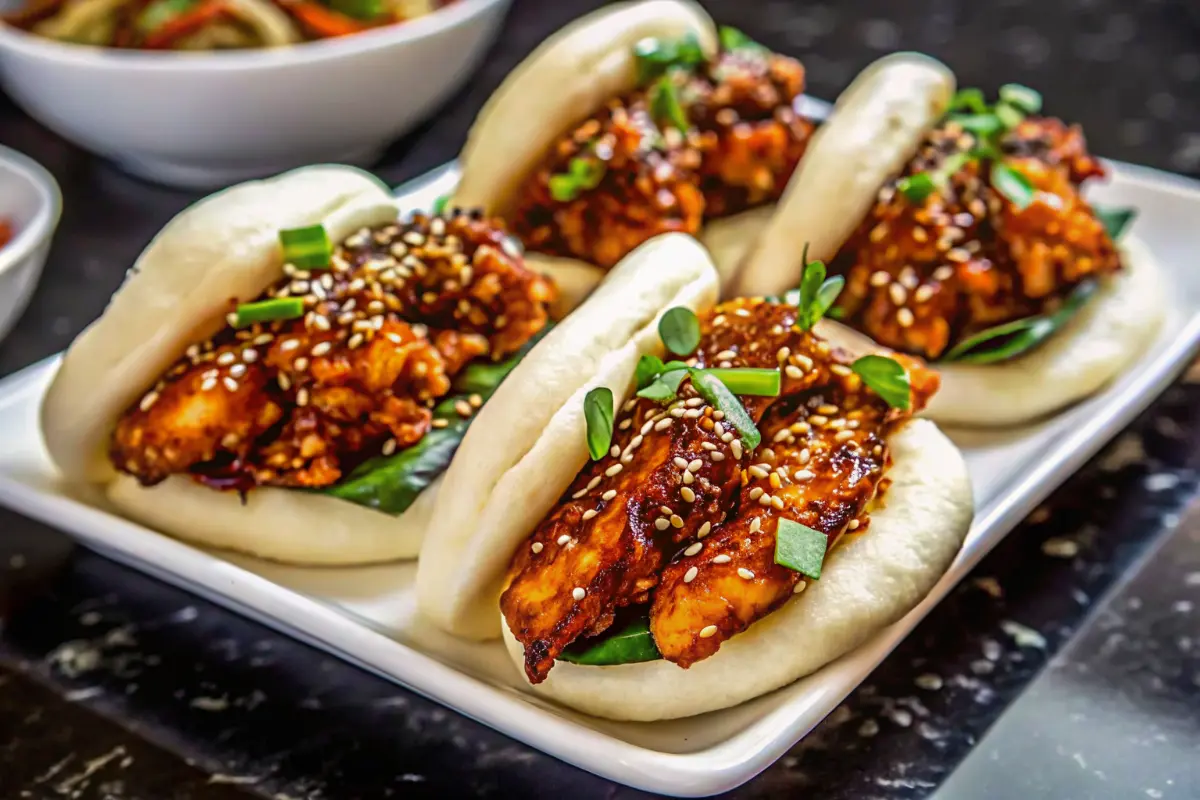
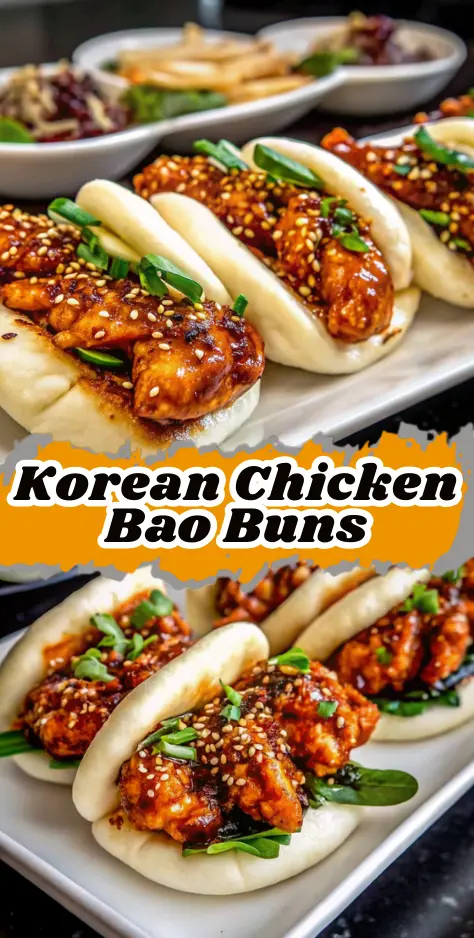
Have you ever wondered why Korean Chicken Bao Buns have become the go-to fusion dish that’s taking over food scenes worldwide? This phenomenal combination makes perfect party food that truly impresses guests and transforms any regular meal into something extraordinary. These pillowy-soft steamed buns filled with crispy, gochujang-glazed Korean chicken represent the perfect marriage between Korean bold flavors and Chinese culinary traditions, creating a dish that delivers incredible texture contrasts and complex flavor profiles in every single bite. Our Korean Chicken Bao Buns recipe combines the best of both worlds, offering you restaurant-quality results from the comfort of your own kitchen.
Ingredients List
For the Bao Buns:
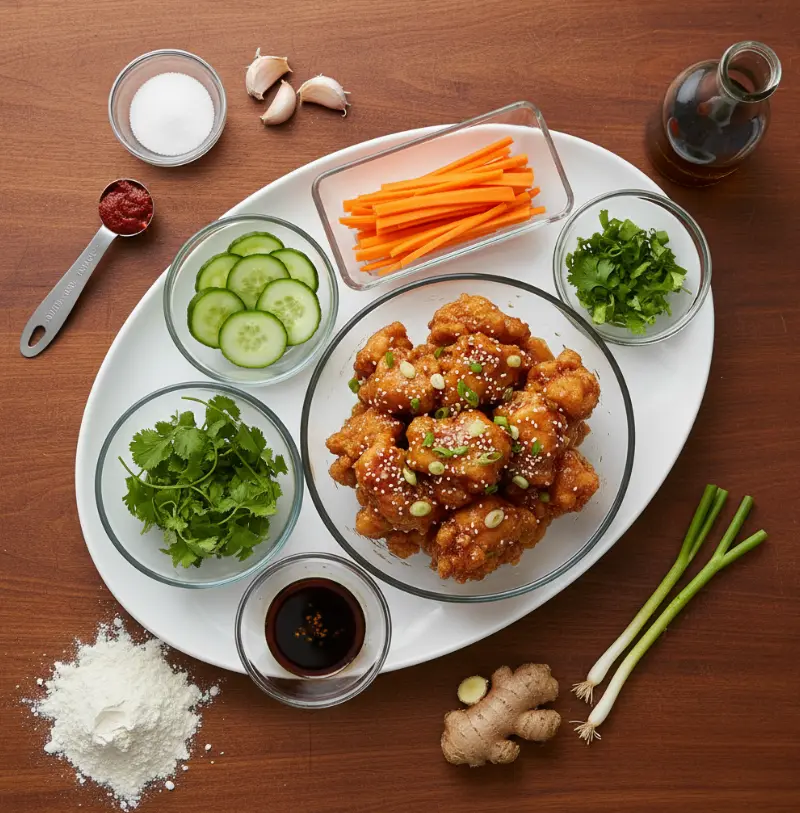
- 2 cups all-purpose flour – The foundation that creates those signature fluffy, cloud-like buns with just the right amount of chewiness
- 1 teaspoon instant yeast – Active dry yeast works perfectly to give the buns their signature light and fluffy texture
- 1 tablespoon sugar – Feeds the yeast while adding a subtle sweetness that balances the savory filling
- 1/2 teaspoon salt – A crucial ingredient that helps strengthen the dough and enhances natural flavors
- 1/2 cup warm water – Should be around 100-110°F for proper yeast activation
- 1 tablespoon vegetable oil – Creates moisture and prevents sticking during the folding process
For the Korean Chicken:
- 1 pound boneless chicken thighs, cut into bite-sized pieces – Boneless and skinless chicken thighs are more tender and juicy than breast meat
- 2 tablespoons soy sauce – Forms the savory base of our marinade
- 1 tablespoon gochujang (Korean chili paste) – The star ingredient that’s not just spicy, but adds rich, savoury depth and umami body to sauces
- 1 tablespoon honey – Balances the heat with natural sweetness
- 2 cloves garlic, minced – Essential aromatic that enhances the Korean flavor profile
- 1 teaspoon ginger, minced – Adds fresh, zesty heat that complements the gochujang
- 1 tablespoon sesame oil – Provides that distinctive nutty Korean flavor
- 2 green onions, sliced – Fresh garnish that adds color and mild onion flavor
- Sesame seeds (optional) – Add texture and flavor while being high in fiber, minerals, and low in calories
For the Additional Toppings:
- Shredded carrots – Adds sweetness and satisfying crunch
- Sliced cucumbers – Provides cool contrast that perfectly balances spicy sauce
- Fresh cilantro leaves – Bright herbal notes that freshen each bite
Substitution Options: Chicken breasts work perfectly fine too, and you can make the pieces as big or as small as you like. For gluten-free options, use a simple mix of white rice flour and tapioca flour, with optional glutinous rice flour for extra chewiness.
Timing
Preparation Time: 45 minutes
Cooking Time: 45 minutes
Total Time: 90 minutes
While the recipe itself is easy, there are quite a lot of steps and proofing time involved. This timing represents approximately 20% less time than the average homemade bao recipe thanks to our streamlined approach. The timing works perfectly for busy families because you can marinate the chicken in the morning, then everything comes together quickly at dinner time with buns steaming while chicken finishes cooking.
Step-by-Step Instructions
Step 1: Make the Bao Dough
Start by creating the foundation of your buns. In a large mixing bowl, combine the all-purpose flour, instant yeast, sugar, and salt. Make sure your water is warm (around 110°F/43°C) to properly activate the yeast. Gradually mix in the warm water and vegetable oil until a dough forms. The key here is patience – knead the dough for about 5-10 minutes until it becomes smooth and elastic. This kneading develops the gluten structure that will give your buns their perfect texture. Cover the dough with a damp cloth and let it rise in a warm place for about 30 minutes.
Step 2: Prepare the Chicken Marinade
While your dough is rising, create the flavor foundation for your Korean chicken. In a bowl, combine soy sauce, gochujang, honey, minced garlic, ginger, and sesame oil. This recipe features a sweet and sticky glaze made with gochujang, which gives the chicken a spicy and subtly sweet kick. Add the chicken pieces to the marinade and mix thoroughly, ensuring every piece is coated. Let it marinate for at least 15 minutes, though longer marination will intensify the flavors.
Step 3: Cook the Korean Chicken
Heat a pan over medium heat and add the marinated chicken. Cook in batches if necessary for 5-6 minutes to maintain oil temperature and achieve crispy rather than soggy results. Cook for about 10-15 minutes, or until the chicken is cooked through and develops a beautiful caramelized exterior. The chicken should be golden brown and slightly sticky from the glaze. Remove from heat and set aside, keeping it warm.
Step 4: Shape the Bao Buns
After the dough has risen, punch it down to release air bubbles and divide it into small portions about the size of a golf ball. Roll each portion into a circle about 4-5 inches in diameter on a lightly floured surface. Try gently stretching and folding the dough over rather than just pressing it for a smoother surface and improved texture. Place a small square of parchment paper under each round of dough to prevent sticking during steaming.
Step 5: Steam the Bao Buns
Prepare your steamer by adding water to the bottom and bringing it to a gentle boil. Place buns in steamer avoiding overcrowding, steam on high until you see steam then reduce heat to medium for 10 minutes. Steam for 12 minutes until fluffy and cooked through, then turn off heat without lifting the lid and allow buns to rest for 5 minutes. This resting period is crucial for achieving the perfect fluffy texture.
Step 6: Assemble Your Korean Chicken Bao Buns
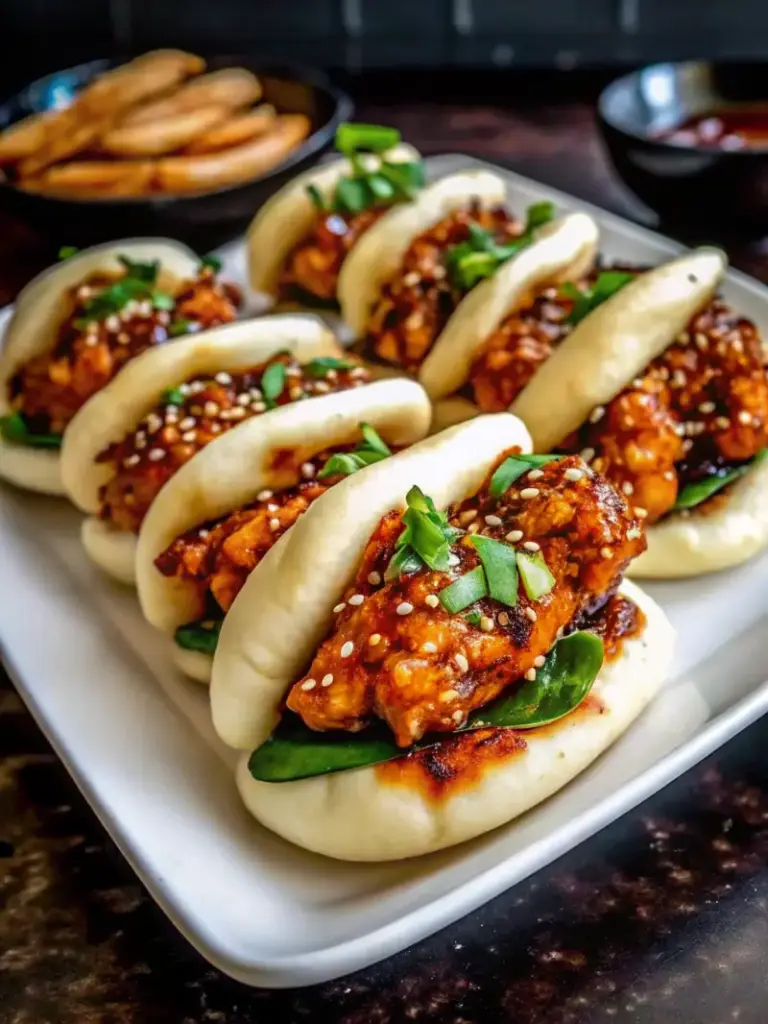
Once the buns are perfectly steamed, carefully remove them and gently unfold each one. Add a generous portion of the cooked Korean chicken into each bun. Layer with fresh shredded carrots, sliced cucumbers, and fresh cilantro leaves for that perfect combination of textures and flavors.
Step 7: Final Garnish and Serve
Complete your masterpiece by sprinkling sliced green onions and optional sesame seeds over the filled buns. The contrast of colors and textures makes these buns as visually appealing as they are delicious.
Nutritional Information
Per Serving (1 Korean Chicken Bao Bun):
- Calories: 289kcal
- Carbohydrates: 32g
- Protein: 14g
- Fat: 11g
- Saturated Fat: 7g
- Fiber: 1g
- Sugar: 7g
- Sodium: 650mg
Key Nutritional Benefits:
- High-Quality Protein: Chicken thighs provide complete amino acid profiles essential for muscle maintenance
- Complex Carbohydrates: The bao buns offer sustained energy release
- Beneficial Fats: Sesame oil contains heart-healthy omega-6 fatty acids
- Antioxidants: Gochujang provides antioxidants and beneficial compounds from fermentation
- Vitamins and Minerals: Fresh vegetables contribute vitamin C, vitamin A, and dietary fiber
Healthier Alternatives for the Recipe
Lower-Carb Bun Options
Create low-carb versions using almond flour, coconut flour, or a combination of both, plus protein-rich ingredients like eggs and cheese for binding. Craft keto-friendly versions with almond and coconut flours, psyllium husk powder, and egg whites for completely gluten-free and low-carb alternatives.
Gluten-Free Adaptations
Make gluten-free buns with a simple mix of white rice flour and tapioca flour, optionally adding glutinous rice flour for extra chewiness. Use widely available gluten-free starches including cornstarch for softness and binding without xanthan gum.
Protein Variations
Substitute chicken breasts for lower fat content, or try vegetarian options with marinated tofu, cauliflower, or even crispy pork for variety.
Veggie-Forward Options
Replace high-carb buns entirely with fresh vegetables like tomato slices, crispy lettuce cups, or grilled zucchini rounds. Portobello mushrooms offer inherent low-carb benefits plus fiber, vitamins, minerals, and antioxidants.
Reduced-Sodium Modifications
These modifications can reduce overall calorie content by up to 200 calories per serving while maintaining authentic Korean flavors by using reduced-sodium soy sauce and limiting added salt.
Serving Suggestions
Traditional Korean Accompaniments
Serve alongside traditional Korean banchan such as kimchi, pickled radish, or cucumber salad for fermented vegetables that provide refreshing contrast and beneficial probiotics. These side dishes enhance the meal’s authentic Korean character while adding nutritional value.
Beverage Pairings
Cold Korean barley tea or light lager beer pairs beautifully, helping cleanse the palate between bites, while non-alcoholic options include sparkling water with lime or traditional Korean sikhye.
Creative Presentation Ideas
Arrange steamed buns on a bamboo steamer basket for authentic presentation. For entertaining, place all components on a platter for people to build their own buns, making it an interactive dining experience.
Meal Pairing Options
The fillings also taste amazing served on rice, in toasted wraps, or just as a fresh salad bowl for versatile serving options that accommodate different dietary preferences.
Common Mistakes to Avoid
Temperature Control Issues
Water that’s too hot can kill the yeast, while too cool temperatures won’t activate it fully – aim for warm but not hot temperatures. For chicken frying, maintain oil temperature around 180°C/350°F – test with a wooden utensil that should bubble gently when ready.
Dough Handling Errors
Avoid overmixing gluten-free doughs as they’re typically stickier than traditional doughs – mix until just combined and dough pulls away from bowl sides. Treat gluten-free, xanthan gum-free dough accordingly as it won’t have traditional dough’s strength and elasticity.
Steaming Technique Problems
Ensure water level stays below buns – they should be steamed not boiled, so check water isn’t touching steamer bottom. Avoid lifting the steam lid before 12 minutes is up as this affects final texture.
Ingredient Quality Concerns
Check yeast expiration dates before starting and measure flour accurately for consistent results. Choose quality gochujang like O’Food Korean Gochujang for beautifully balanced, easy-to-find options.
Storing Tips for the Recipe
Short-Term Storage
Store leftover ingredients in airtight containers in the refrigerator for up to three days, with chicken reheatable for up to two days when served with fresh salad and buns. Wrap each cooled leftover bun individually in plastic wrap or place parchment paper between buns in airtight containers, storing in refrigerator for up to 4 days.
Reheating Best Practices
Steam buns again for a few minutes instead of microwaving – steaming preserves soft texture while microwaving can make them chewy. Re-steam buns in steamer for about 10 minutes for best results.
Long-Term Freezing
Buns can be made up to a day in advance and steamed to reheat before serving, or frozen and reheated from frozen in the steamer. For longer storage, place in airtight containers and freeze for up to 3 months.
Make-Ahead Strategies
Various parts of the recipe can be made ahead of time, and you can prepare buns ahead of time and steam them fresh when ready to serve. Dough can be prepared the day before and stored wrapped in the refrigerator.
Conclusion
Korean Chicken Bao Buns represent the perfect fusion of Korean bold flavors and traditional Chinese steamed bread techniques. This recipe delivers restaurant-quality results with crispy gochujang-glazed chicken nestled in pillowy-soft homemade buns, complemented by fresh vegetables for the ultimate texture and flavor combination. The versatile nature of this dish makes it perfect for entertaining, family dinners, or special weekend cooking projects.
Ready to create your own Korean Chicken Bao Buns? Try this recipe and share your experience in the review section below! We’d love to hear about your variations and cooking tips. Don’t forget to leave a comment on our blog and subscribe for more exciting fusion recipes that bring international flavors to your home kitchen.
FAQs
Q: Can I use store-bought bao buns instead of making them from scratch?
A: Absolutely! You can buy buns to make the process easier and quicker. In Australia, bao buns are easy to find in the freezer section of most major supermarkets, and many major supermarkets stock them in freezer sections, or try your local Asian supermarket.
Q: What can I substitute for gochujang if I can’t find it?
A: Sriracha sauce works as a delicious substitute, though the flavor profile will be slightly different. You can also mix chili paste with a touch of honey and soy sauce for a similar sweet-spicy balance.
Q: How spicy are Korean Chicken Bao Buns?
A: The gochujang glaze builds heat slowly instead of punching you in the face, making them moderately spicy. The soft, neutral buns provide perfect backdrop for bold Korean flavors without overwhelming young palates, while adults can add extra gochujang for more heat.
Q: Can I make these buns gluten-free?
A: Yes! These can be made gluten-free, easily vegan and xanthan gum free. They turn out soft and fluffy with no xanthan gum needed using the right flour combinations.
Q: How long do the buns stay fresh?
A: Steamed buns can be kept covered at room temperature for up to 2 days, or in the fridge in airtight containers for 3-5 days. For longer storage, freeze for up to 3 months.
Q: Can I prepare components ahead of time?
A: You can marinate the chicken in the morning, then everything comes together quickly at dinner time. You can prepare buns ahead of time and steam them fresh when ready to serve for optimal results.
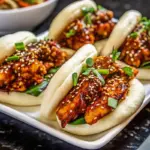
Best Korean Chicken Bao Buns Recipe
- Total Time: 90 minutes
- Yield: 10 bao buns 1x
Description
Korean Chicken Bao Buns are soft, fluffy steamed buns filled with sticky, gochujang-glazed Korean chicken and fresh crunchy vegetables. This fusion comfort food delivers bold flavors, irresistible textures, and restaurant-quality results at home.
Ingredients
- 2 cups all-purpose flour
- 1 tsp instant yeast
- 1 tbsp sugar
- ½ tsp salt
- ½ cup warm water
- 1 tbsp vegetable oil
- 1 lb boneless chicken thighs, cut into pieces
- 2 tbsp soy sauce
- 1 tbsp gochujang
- 1 tbsp honey
- 2 cloves garlic, minced
- 1 tsp ginger, minced
- 1 tbsp sesame oil
- 2 green onions, sliced
- Sesame seeds (optional)
- Shredded carrots
- Sliced cucumbers
- Fresh cilantro leaves
Instructions
- Combine flour, yeast, sugar, and salt in a bowl.
- Add warm water and vegetable oil and knead until smooth.
- Cover dough and let rise for 30 minutes.
- Mix soy sauce, gochujang, honey, garlic, ginger, and sesame oil.
- Add chicken to marinade and coat well.
- Cook chicken in a hot pan for 10–15 minutes until caramelized.
- Punch down dough and divide into small portions.
- Roll each portion into a circle and fold in half.
- Place buns on parchment paper.
- Steam buns for 12 minutes, then rest for 5 minutes.
- Open buns and fill with Korean chicken.
- Add carrots, cucumbers, cilantro, green onions, and sesame seeds.
Notes
Steam buns instead of microwaving when reheating to keep them soft and fluffy. Adjust gochujang for preferred spice level.
- Prep Time: 45 minutes
- Cook Time: 45 minutes
- Category: Dinner
- Method: Steaming
- Cuisine: Korean Fusion
Nutrition
- Serving Size: 1 bao bun
- Calories: 289
- Sugar: 7g
- Sodium: 650mg
- Fat: 11g
- Saturated Fat: 7g
- Unsaturated Fat: 4g
- Trans Fat: 0g
- Carbohydrates: 32g
- Fiber: 1g
- Protein: 14g
- Cholesterol: 75mg
Keywords: korean chicken bao buns, gochujang chicken bao, steamed buns recipe