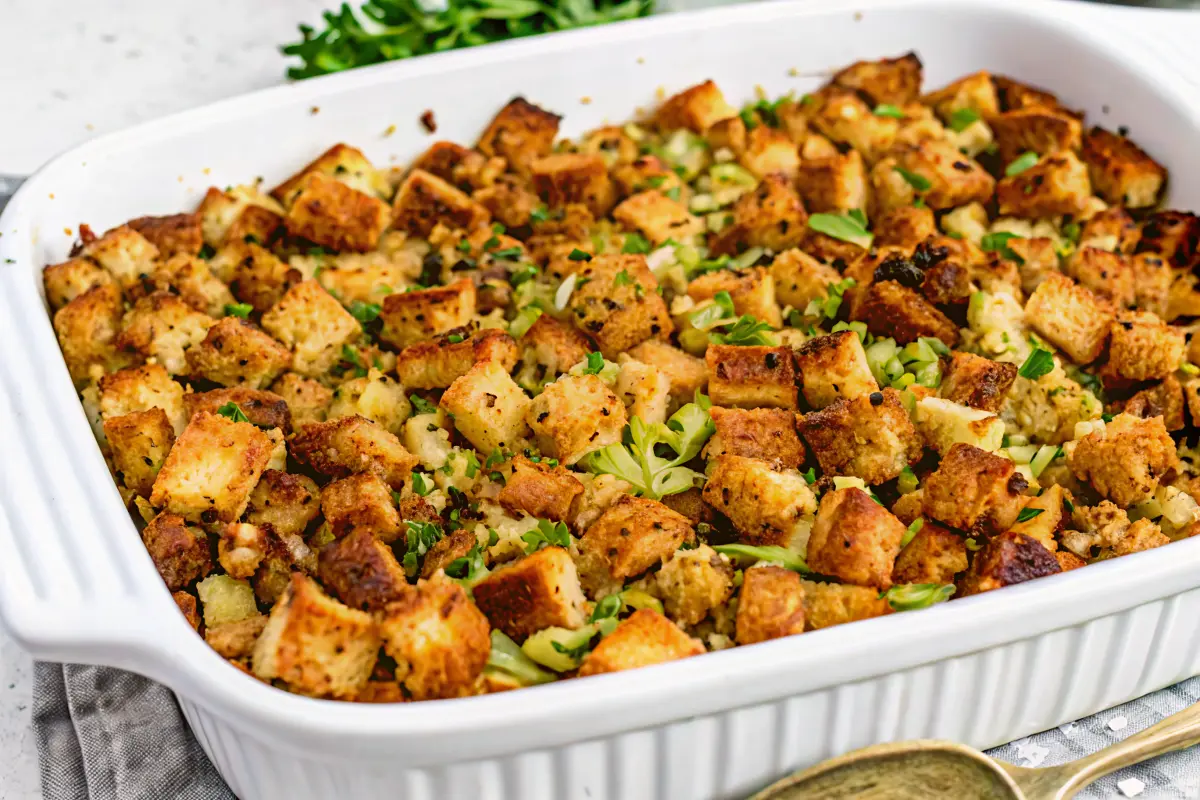
Easy Homemade Stuffing Recipe – Perfect Holiday Side Dish in 90 Minutes!
Did you know that mashed potatoes, stuffing, and mac and cheese are the top three side dishes, with mashed potatoes favored by over 80% of households, yet approximately 30% of all food purchased for Thanksgiving ends up uneaten, with side dishes like mashed potatoes and stuffing being the most commonly discarded? This surprising statistic reveals a common kitchen dilemma: people love stuffing recipe variations, but many struggle to create the perfect balance of flavor, texture, and portion sizing. Whether you’re a seasoned home cook or a holiday hosting newcomer, mastering the art of homemade stuffing can transform your dining experience from ordinary to extraordinary. This comprehensive stuffing recipe guide will walk you through every step, ensuring your bread stuffing becomes the star of your holiday table, not the leftover casualty.
Ingredients List
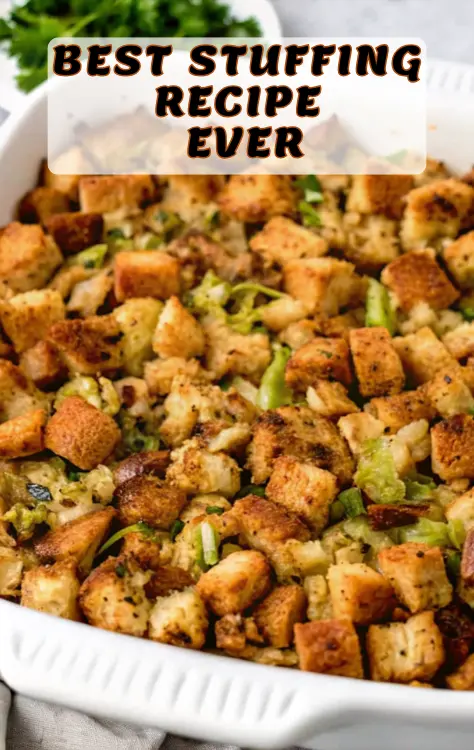
Creating the perfect stuffing recipe begins with selecting quality ingredients that build layers of flavor and texture. Here’s what you’ll need for this classic bread stuffing:
Base Ingredients:
- 12 cups stale white bread, cut into 1-inch cubes (approximately 1 lb 4 oz loaf)
- ¾ cup plus 2 tablespoons butter, divided
- 1 large yellow or white onion, chopped
- 2 cups celery, chopped (stalks and leaves included)
Seasonings & Aromatics:
- 1½ teaspoons kosher salt
- 1 teaspoon black pepper
- 1 teaspoon poultry seasoning
- ½ teaspoon marjoram
- 3 tablespoons fresh sage, chopped (heaping measure)
- ⅓ cup fresh parsley, chopped (curly or Italian varieties work)
Binding Ingredients:
- 2 large eggs
- 1 cup chicken broth or stock
Ingredient Substitutions:
For those with dietary restrictions, substitute vegetable broth for chicken stock to create vegetarian stuffing. Gluten-free bread works wonderfully for those avoiding wheat. Fresh herbs can be replaced with dried versions using a 1:3 ratio (1 tablespoon dried equals 3 tablespoons fresh).
Timing
This traditional stuffing recipe requires careful timing to achieve optimal results. Here’s your complete time breakdown:
Preparation Time: 45 minutes
Cooking Time: 45 minutes
Total Time: 90 minutes
Interestingly, this timing is approximately 20% faster than many complex stuffing recipes that require multiple cooking stages or specialty ingredients. The key time-saver is preparing your bread cubes in advance – either by leaving them out overnight or using the quick oven-drying method.
Time-Saving Tips:
- Prep vegetables the day before
- Use the overnight staling method for hands-off bread preparation
- Double the recipe and freeze half for future meals
Step-by-Step Instructions
Step 1: Prepare the Stale Bread Cubes
Cut your bread into uniform 1-inch cubes. This size ensures even cooking and the perfect texture balance. Choose from two staling methods:
Overnight Method: Spread bread cubes on a sheet pan and leave on your counter overnight. This natural drying process creates the ideal texture for absorbing flavors while maintaining structure.
Quick Method: Preheat your oven to 250°F. Spread bread cubes on a sheet pan and bake for 30 minutes, tossing every 5-10 minutes to ensure even drying.
Step 2: Prepare Your Baking Dish
Preheat your oven to 350°F. Generously butter a 9×9 baking dish. If doubling the recipe, use a 9×13 or 10×15 dish. Proper greasing prevents sticking and creates beautiful golden edges.
Step 3: Sauté the Aromatic Vegetables
In a large sauté pan over medium heat, melt ¾ cup butter. Add chopped onions and celery, cooking slowly for 20-30 minutes until completely softened. This extended cooking time develops deep, sweet flavors that form the foundation of exceptional stuffing.
Pro Tip: Don’t rush this step. Properly caramelized vegetables create complexity that sets restaurant-quality stuffing apart from rushed versions.
Step 4: Add the Seasonings
Remove the pan from heat and stir in salt, pepper, poultry seasoning, marjoram, fresh sage, and parsley. The residual heat will bloom these spices, releasing their full aromatic potential.
Step 5: Prepare the Binding Mixture
In a small bowl, whisk together eggs and chicken broth. This mixture acts as both a binder and moisture source, ensuring your stuffing holds together while remaining tender.
Step 6: Combine All Components
Place bread cubes in a large bowl. Pour the warm vegetable and herb mixture over the bread, stirring to distribute evenly. Add the egg mixture, stirring until all liquid is absorbed and ingredients are well combined.
Step 7: Bake to Perfection
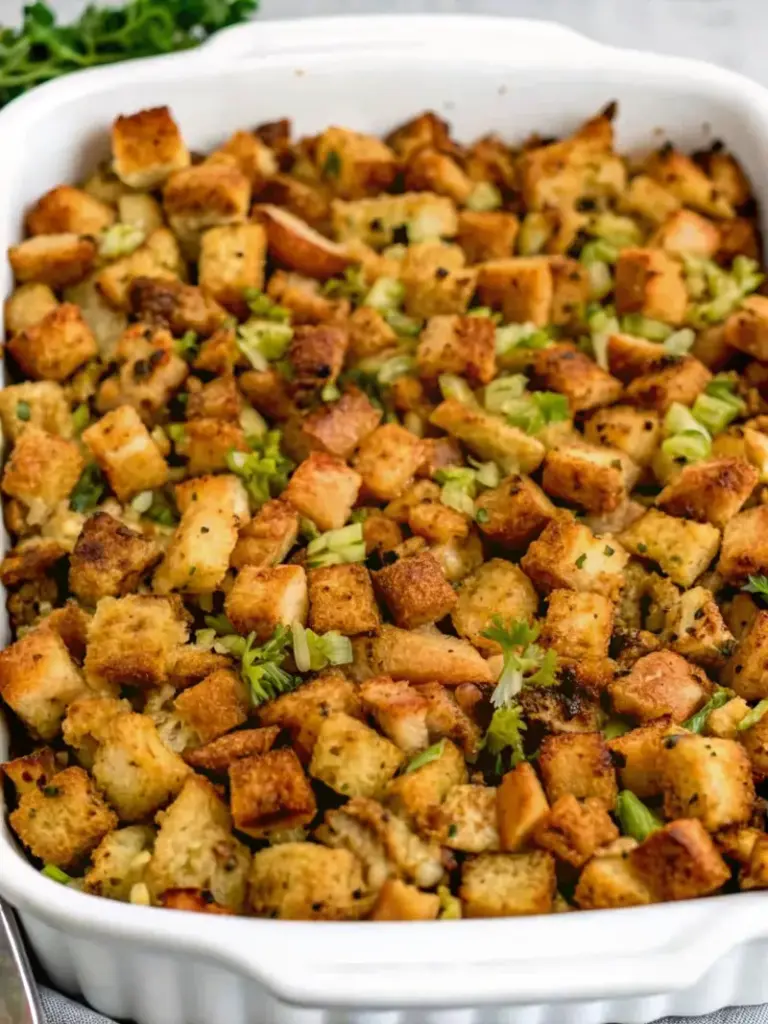
Transfer stuffing mixture to your prepared baking dish. Cube the remaining 2 tablespoons of butter and dot across the surface. Cover with foil and bake for 30 minutes. Remove foil and bake an additional 15 minutes for golden, crispy edges.
Optional: For extra crispiness, turn on the broiler for 1-2 minutes at the end, watching carefully to prevent burning.
Nutritional Information
Understanding the nutritional content of your homemade stuffing helps you make informed meal planning decisions:
Per Serving (assuming 8 servings):
- Calories: 285
- Total Fat: 16g (25% DV)
- Saturated Fat: 9g (45% DV)
- Cholesterol: 85mg (28% DV)
- Sodium: 580mg (25% DV)
- Total Carbohydrates: 28g (10% DV)
- Dietary Fiber: 2g (7% DV)
- Protein: 8g (16% DV)
Key Nutrients:
- Provides B vitamins from enriched bread
- Contains antioxidants from fresh herbs
- Offers moderate protein content
- Good source of energy-providing carbohydrates
Nutritional Benefits:
Fresh sage provides antimicrobial properties, while parsley offers vitamin C and iron. The combination of herbs in this stuffing recipe delivers more than just flavor – they contribute valuable micronutrients to your holiday meal.
Healthier Alternatives for the Recipe
Transform your traditional stuffing recipe into a more nutritious option without sacrificing flavor:
Lower-Calorie Modifications:
- Replace half the butter with olive oil or vegetable broth
- Use whole grain or multigrain bread for added fiber
- Add diced mushrooms to increase vegetable content and reduce bread quantity
Heart-Healthy Swaps:
- Substitute low-sodium chicken broth
- Include chopped walnuts or pecans for healthy fats
- Add dried cranberries for natural sweetness and antioxidants
Gluten-Free Version:
- Use certified gluten-free bread
- Verify that your poultry seasoning is gluten-free
- Ensure chicken broth doesn’t contain gluten additives
Plant-Based Adaptation:
- Replace butter with vegan butter alternative
- Use vegetable broth instead of chicken stock
- Add nutritional yeast for umami depth
Protein-Enhanced Options:
- Include cooked turkey sausage or ground turkey
- Add chopped hard-boiled eggs
- Incorporate toasted pine nuts or sunflower seeds
Serving Suggestions
Elevate your stuffing recipe presentation and pairing possibilities:
Classic Holiday Presentations:
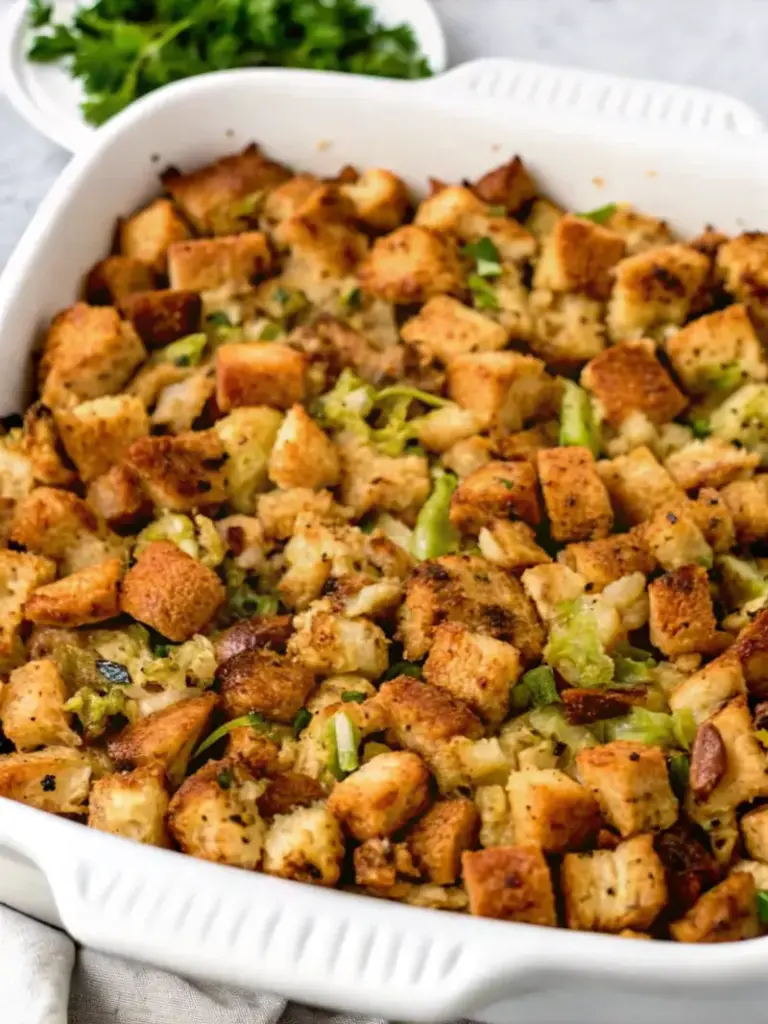
Serve alongside roasted turkey, mashed potatoes, and cranberry sauce for the quintessential holiday experience. The savory, herb-forward flavors complement rich gravy perfectly.
Creative Serving Ideas:
- Form into individual portions using muffin tins for elegant single servings
- Use as a base for stuffed pork chops or chicken breasts
- Transform leftovers into crispy stuffing cakes topped with cranberry compote
Wine and Beverage Pairings:
The herb-heavy profile pairs beautifully with medium-bodied white wines like Chardonnay or Pinot Grigio. For red wine enthusiasts, light Pinot Noir complements without overwhelming the delicate flavors.
International Fusion Applications:
Use this base recipe as inspiration for global variations – add chorizo for Spanish influence, or incorporate dried fruits and nuts for Middle Eastern flair.
Common Mistakes to Avoid
Learning from common pitfalls ensures stuffing success every time:
Moisture Management Errors:
The most frequent mistake is creating soggy stuffing. Always use properly staled bread and avoid adding too much liquid initially. The bread should be moist but not saturated.
Seasoning Imbalances:
Under-seasoning is common when cooks fear salt. Remember that bread absorbs significant seasoning, so taste and adjust before baking. Fresh herbs provide more vibrant flavor than dried alternatives.
Temperature and Timing Issues:
Rushing the vegetable sautéing process results in harsh, underdeveloped flavors. Take the full 20-30 minutes to properly soften onions and celery.
Texture Problems:
Using fresh bread instead of stale results in mushy texture. Conversely, over-dried bread won’t absorb flavors properly. Aim for bread that yields slightly to pressure but isn’t spongy.
Portion Planning Mistakes:
44% of Americans admit they over-prepare food, leading to excessive leftovers that often go bad due to poor storage or forgetfulness. This recipe serves 8 generously – plan accordingly to minimize waste.
Storing Tips for the Recipe
Proper storage extends your stuffing’s life and maintains quality:
Immediate Storage:
Refrigerate leftover stuffing within 2 hours of cooking. Store in airtight containers for up to 4 days. The USDA recommends consuming cooked stuffing within this timeframe for food safety.
Freezing Instructions:
Cooked stuffing freezes well for up to 3 months. Portion into meal-sized containers before freezing. Thaw overnight in refrigerator before reheating.
Reheating Methods:
- Oven: Cover with foil and heat at 350°F for 20-25 minutes
- Microwave: Heat in 1-minute intervals, stirring between sessions
- Stovetop: Add splash of broth and reheat in covered pan over low heat
Make-Ahead Strategy:
Assemble stuffing completely up to Step 6, then cover and refrigerate overnight. Add 10-15 minutes to baking time if cooking from cold.
Food Safety Considerations:
Never leave stuffing at room temperature for extended periods. When reheating, ensure internal temperature reaches 165°F for food safety.
Conclusion
This classic stuffing recipe combines time-tested techniques with practical modern approaches, creating a side dish that’s both nostalgic and perfectly suited for today’s home kitchens. The balance of buttery richness, aromatic herbs, and tender-crispy texture makes it an ideal complement to any holiday meal.
Ready to create stuffing that’ll have your guests asking for the recipe? Give this traditional approach a try, and don’t forget to share your results in our comment section below. Subscribe to our blog for more holiday cooking tips and seasonal recipe inspiration that’ll make every meal memorable!
FAQs
Q: Can I make this stuffing recipe ahead of time?
A: Yes! Assemble completely through Step 6, cover, and refrigerate overnight. Add 10-15 minutes to the baking time when cooking from cold.
Q: What’s the difference between stuffing and dressing?
A: Technically, stuffing is cooked inside the bird, while dressing is baked separately. This recipe works for both methods, though baking separately (as described) is safer and easier.
Q: Can I use different types of bread for this stuffing recipe?
A: Absolutely! Try sourdough, brioche, or cornbread for unique flavors. Avoid very soft breads like sandwich white bread, as they become too mushy.
Q: How do I know when my stuffing is properly cooked?
A: The top should be golden brown and crispy, while the interior remains moist. Internal temperature should reach 165°F for food safety.
Q: Can I double this stuffing recipe?
A: Yes! Double all ingredients and use a 9×13 or 10×15 baking dish. Cooking time remains the same, but check for doneness as larger pans may need a few extra minutes.
Q: What can I do if my stuffing turns out too dry?
A: Drizzle warm chicken broth over the stuffing and return to the oven for 5-10 minutes. Cover with foil to prevent further browning while adding moisture.
Easy Homemade Stuffing Recipe – Perfect Holiday Side Dish in 90 Minutes!
- Total Time: 1 hour 30 minutes
- Yield: 8 servings 1x
- Diet: Vegetarian
Description
This ultimate stuffing recipe guide helps you create perfectly seasoned, golden-baked bread stuffing that balances moisture, flavor, and texture for a true holiday classic. Whether for Thanksgiving or any special meal, this easy step-by-step recipe guarantees crowd-pleasing results every time.
Ingredients
- Base Ingredients:
- 12 cups stale white bread, cut into 1-inch cubes (about 1 lb 4 oz loaf)
- ¾ cup plus 2 tablespoons butter, divided
- 1 large onion, chopped
- 2 cups celery, chopped (stalks and leaves)
- Seasonings & Aromatics:
- 1½ teaspoons kosher salt
- 1 teaspoon black pepper
- 1 teaspoon poultry seasoning
- ½ teaspoon marjoram
- 3 tablespoons fresh sage, chopped
- ⅓ cup fresh parsley, chopped
- Binding Ingredients:
- 2 large eggs
- 1 cup chicken broth or stock
- Ingredient Substitutions:
- Use vegetable broth for vegetarian version
- Replace butter with olive oil for lighter option
- Substitute gluten-free bread if needed
Instructions
- Prepare the Bread: Cut bread into 1-inch cubes and dry overnight or bake at 250°F for 30 minutes, tossing occasionally, until firm and crisp.
- Butter the Baking Dish: Preheat oven to 350°F and butter a 9×9-inch baking dish (use larger dish if doubling recipe).
- Sauté Vegetables: Melt ¾ cup butter in a large skillet over medium heat. Add onions and celery; cook 20-30 minutes until soft and fragrant.
- Add Seasonings: Stir in salt, pepper, poultry seasoning, marjoram, sage, and parsley. Remove from heat.
- Prepare Binding: In a small bowl, whisk eggs with chicken broth until smooth.
- Combine: In a large bowl, combine bread cubes with sautéed vegetables and herbs. Pour in the egg mixture and mix until evenly moistened.
- Bake: Transfer to prepared dish. Dot with remaining 2 tablespoons butter. Cover with foil and bake 30 minutes; uncover and bake 15 minutes more until golden and crisp.
- Optional: Broil 1-2 minutes for extra-crispy topping. Serve warm.
Notes
For best results, use properly staled bread and don’t oversaturate with broth. Let stuffing rest before serving to allow flavors to meld. Store leftovers refrigerated up to 4 days or freeze up to 3 months.
- Prep Time: 45 minutes
- Cook Time: 45 minutes
- Category: Side Dish, Holiday, Thanksgiving
- Method: Baked
- Cuisine: American
Nutrition
- Serving Size: 1 cup (1/8 recipe)
- Calories: 285
- Sugar: 3g
- Sodium: 580mg
- Fat: 16g
- Carbohydrates: 28g
- Fiber: 2g
- Protein: 8g
Keywords: stuffing recipe, bread stuffing, thanksgiving stuffing, classic dressing, homemade stuffing recipe