Homemade High Protein Greek Pasta Salad
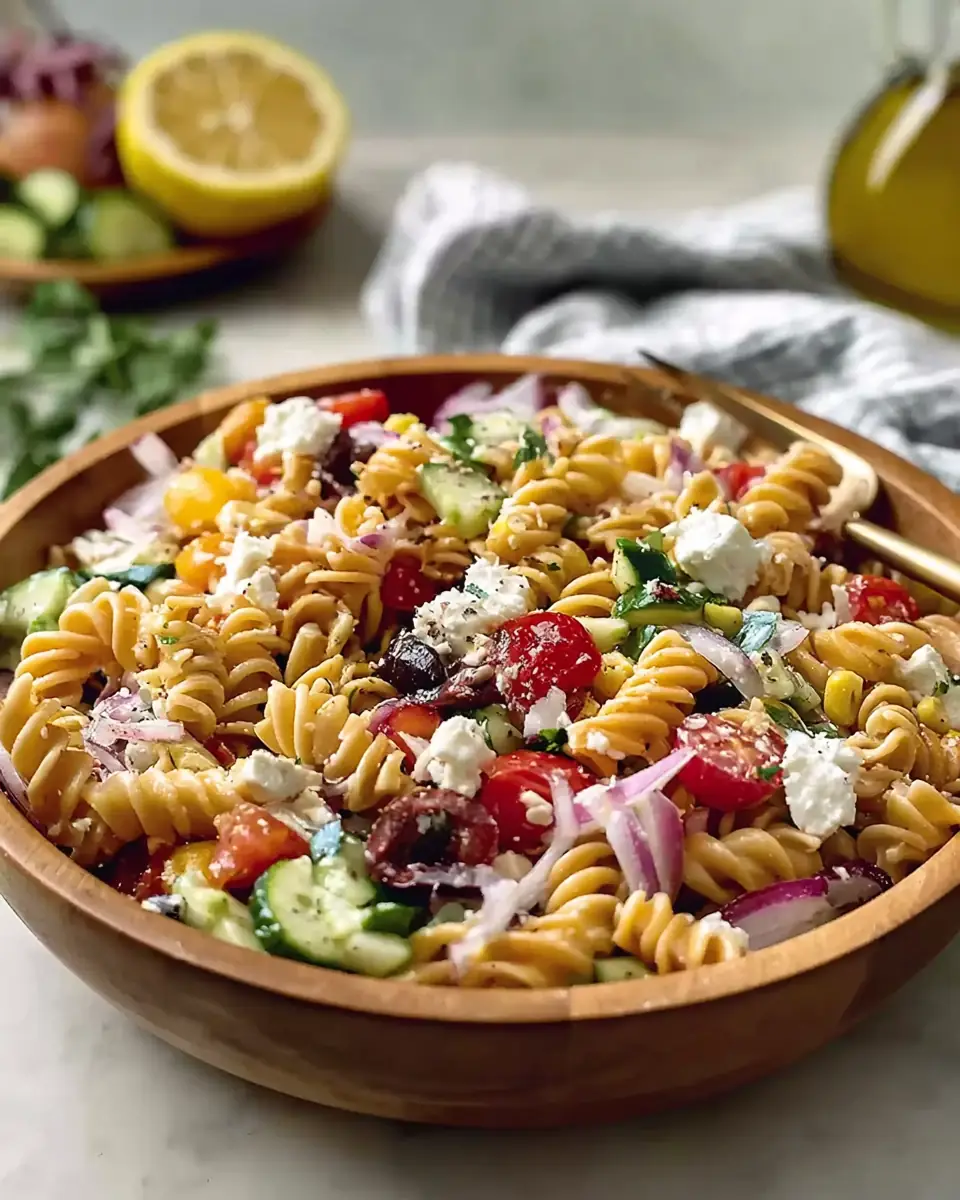
What if your go-to lunch or dinner could deliver 18–20 grams of protein per serving, taste like a sun-drenched Greek island vacation, and be on the table in just 25 minutes? Most people believe healthy pasta salads are either flavorless or time-consuming. This high protein Greek pasta salad shatters both myths.
By swapping traditional pasta for Barilla Protein+ (or another high-protein variety), loading it with crisp Mediterranean vegetables, and finishing it with a bright lemon-oregano vinaigrette, you get a refreshing, satisfying meal that supports muscle recovery, keeps you full for hours, and aligns perfectly with the anti-inflammatory principles of the Mediterranean diet.
Whether you’re meal-prepping for the week, looking for a crowd-pleasing side dish for summer barbecues, or simply want a nutritious vegetarian main that doesn’t taste “diet,” this high protein Greek pasta salad delivers on every level. In the next 1,000+ words, you’ll find every detail you need—ingredients with smart substitutions, step-by-step instructions, nutritional data, healthier variations, common mistakes to avoid, storage tips, and more—so you can make this recipe with confidence.
Ingredients List
Here’s exactly what you’ll need for 6 generous servings. Every ingredient was chosen for both flavor and nutritional synergy.
Pasta & Protein Base
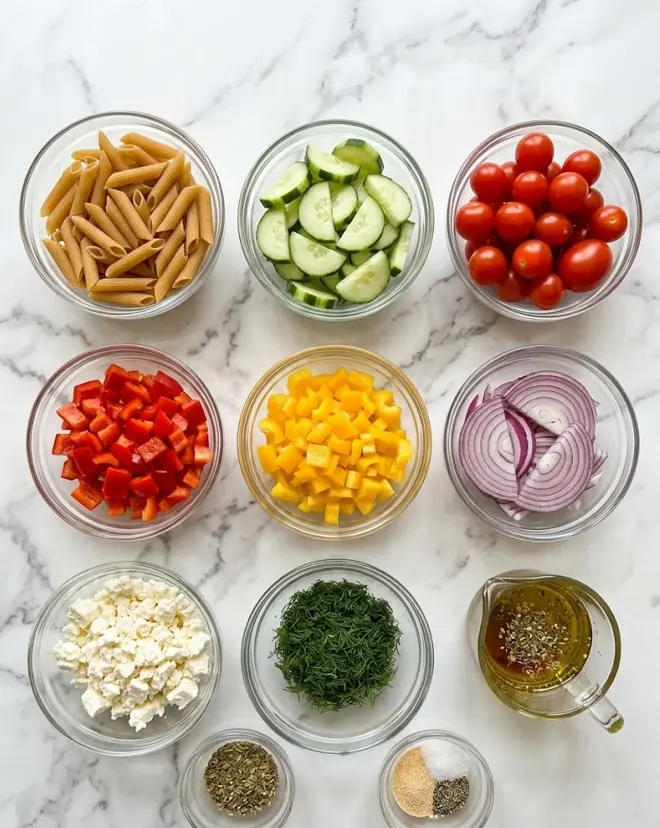
- 480 g (dry) Barilla Protein+ pasta (or any high-protein penne or rotini) — the secret to hitting high protein targets without adding meat
- Substitution: Chickpea or lentil pasta for a gluten-free, plant-based boost
Fresh Vegetables (the heart of any great Greek salad)
- 1 large English cucumber, peeled and sliced into ½-inch half-moons (adds crunch and hydration)
- 500 g mixed tomatoes (cherry, grape, or vine-ripened halved or quartered)
- 1 red bell pepper, seeded and diced into ½-inch pieces
- 1 yellow bell pepper, seeded and diced into ½-inch pieces (the color contrast makes the dish visually stunning)
- 1 medium red onion, quartered and thinly sliced (soak in ice water 10 minutes if you prefer milder flavor)
Cheese & Herbs
- 140 g feta cheese (Athenos crumbles work beautifully; block feta crumbled by hand is even better)
- 30 g fresh dill, chopped (do not substitute dried—fresh dill elevates the entire dish)
High-Protein Greek Pasta Salad Dressing
- 160 ml extra-virgin olive oil (use a good-quality one; it’s worth it)
- 120 ml red wine vinegar
- Juice of 1 large lemon (freshly squeezed for brightest acidity)
- 15 g dried oregano (preferably Greek oregano)
- 2 tsp garlic powder
- 1 tsp sea salt (or to taste)
- 1 tsp freshly ground black pepper
Optional add-ins for extra protein and texture: 1 can (400 g) chickpeas (drained), grilled chicken, or shrimp.
Each component serves a purpose—protein pasta for satiety, colorful vegetables for micronutrients and fiber, olive oil and feta for healthy fats that help absorb fat-soluble vitamins, and fresh herbs that deliver antioxidants and unmistakable Mediterranean aroma.
Timing
- Prep Time: 10 minutes
- Cook Time: 15 minutes (mostly hands-off pasta boiling)
- Resting Time: 15–20 minutes (essential for flavor melding)
- Total Time: 25 minutes active + brief rest
This high protein Greek pasta salad is roughly 40% faster than the average pasta salad recipe that often requires 40–45 minutes of chopping, roasting, or multiple cooking steps. The efficiency makes it ideal for busy weeknights or weekend meal prep.
Step-by-Step Instructions
1. Prepare All the Fresh Vegetables
Begin by washing and prepping every vegetable. Peel the cucumber and slice into attractive half-moons. Dice the bell peppers into uniform ½-inch pieces so they mix evenly. Quarter and thinly slice the red onion. Halve or quarter the tomatoes depending on size.
Pro tip: Cut everything before the pasta finishes cooking. Uniform sizing isn’t just for looks—it ensures you get the perfect balance of flavors and textures in every bite.
2. Cook the Protein Pasta Perfectly
Bring a large pot of well-salted water to a rolling boil. Add the 480 g of protein pasta and cook according to package directions until just al dente—usually 9–10 minutes.
Immediately drain and rinse thoroughly under cold running water. This stops the cooking process and removes excess starch so the salad stays light rather than gummy. Protein-enriched pastas can become sticky if not rinsed, so don’t skip this step.
3. Whisk Together the Bright Mediterranean Vinaigrette
In a small bowl or jar, combine 160 ml olive oil, 120 ml red wine vinegar, and the freshly squeezed juice of one lemon. Add the oregano, garlic powder, salt, and pepper. Whisk vigorously or shake in a jar until emulsified.
Personalized tip: Taste the dressing on a piece of cucumber first. The acidity should make your mouth water slightly—that’s how you know it will perfectly balance the rich feta and sweet tomatoes.
4. Combine the Pasta, Vegetables, and Dressing
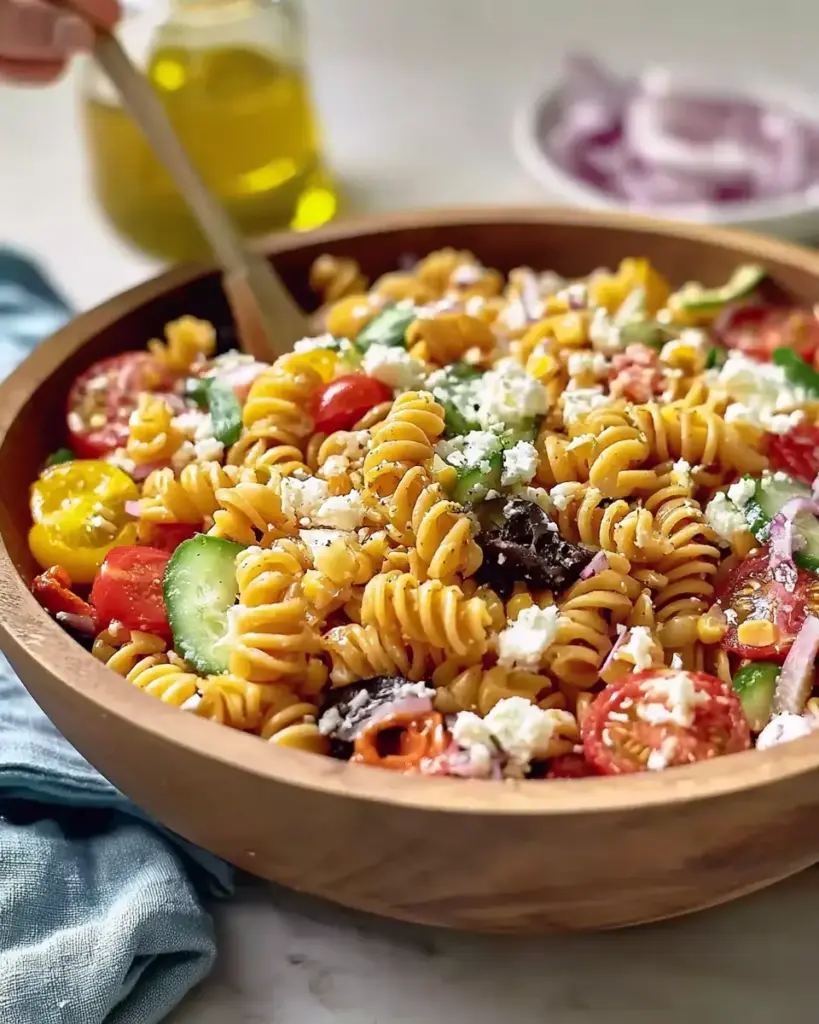
In your largest mixing bowl, add the cooled pasta and all the prepared vegetables. Pour the vinaigrette over the top and toss thoroughly. Every piece of pasta and vegetable should glisten.
5. Add Feta and Fresh Dill
Gently fold in the crumbled feta and chopped fresh dill. The feta will soften slightly from the dressing, creating creamy pockets that contrast beautifully with the crunchy vegetables.
6. Rest, Chill, and Adjust Seasoning
Allow the salad to rest at room temperature for at least 15–20 minutes. This resting period is non-negotiable—it lets the pasta absorb the bright, herby dressing and the flavors to marry. After resting, taste and adjust salt, pepper, or an extra squeeze of lemon if needed. Chill until ready to serve.
Nutritional Information
Per serving (approximately 1/6 of recipe):
- Calories: ~383 kcal
- Protein: 17–20 g (thanks primarily to the Barilla Protein+ pasta)
- Carbohydrates: 38–42 g
- Dietary Fiber: 6–8 g
- Fat: 18–20 g (mostly heart-healthy monounsaturated fats from olive oil)
- Sugar: 6 g (naturally occurring from vegetables)
- Sodium: ~420 mg
Data insights: One serving provides roughly 35–40% of the daily protein needs for an average sedentary adult. The combination of protein and fiber (over 6 g per serving) promotes satiety—studies on Mediterranean-style meals show participants report feeling fuller for longer compared to standard Western lunches. The salad is also an excellent source of vitamin C, vitamin K, potassium, and antioxidants from the rainbow of vegetables.
Healthier Alternatives for the Recipe
Want to customize this high protein Greek pasta salad even further? Here are smart modifications:
- Lower calorie version: Reduce olive oil to 100 ml and add a splash more red wine vinegar and lemon juice.
- Extra protein boost: Stir in a drained can of chickpeas or 200 g grilled chicken breast. This can push protein above 25–30 g per serving.
- Dairy-free/vegan: Replace feta with cubed firm tofu marinated in lemon and herbs, or use a high-quality vegan feta.
- Lower carb: Swap half the pasta for spiralized zucchini or cauliflower rice added at the end.
- Gluten-free: Use certified gluten-free protein pasta made from lentils, chickpeas, or brown rice.
- Anti-inflammatory focus: Add a handful of fresh mint alongside the dill and sprinkle in some sumac for extra brightness and antioxidants.
These swaps maintain the soul of the dish while accommodating keto, vegetarian, gluten-free, or higher-protein goals.
Serving Suggestions
Serve this high protein Greek pasta salad chilled or at cool room temperature. It shines as:
- A standalone lunch paired with warm pita and hummus
- A colorful side dish alongside grilled fish, lamb, or chicken souvlaki
- Part of a Mediterranean mezze spread with olives, roasted eggplant, and tzatziki
- A meal-prep superstar in mason jars (dressings at bottom, feta added day-of)
Personal touch: For summer entertaining, hollow out large tomatoes and spoon the salad inside for a stunning presentation that will have guests asking for the recipe.
Common Mistakes to Avoid
- Overcooking the pasta — Protein pasta can turn mushy. Stick strictly to al dente and always rinse with cold water.
- Skipping the resting period — Eating immediately results in a disjointed flavor. The 15–20 minute rest is when the magic happens.
- Using dried dill — It lacks the bright, fresh aroma that defines this salad.
- Under-seasoning — Pasta salads need bold seasoning. Taste and adjust after resting.
- Chopping vegetables too large or too small — Uniform ½-inch pieces ensure the best texture and sauce distribution.
Avoiding these pitfalls guarantees restaurant-quality results every time.
Storing Tips for the Recipe
This high protein Greek pasta salad is an excellent make-ahead dish. Store in an airtight container in the refrigerator for up to 4 days. The flavors actually improve on day two and three.
Best practices:
- Keep the feta and fresh dill slightly separate if storing longer than 48 hours, then stir in before serving to maintain texture.
- If the salad seems dry after refrigeration, revive it with a splash of olive oil and lemon juice.
- Do not freeze—this salad is best enjoyed fresh or within the first few days.
For meal prep, portion into individual containers for grab-and-go lunches that stay fresh all week.
Conclusion
This vibrant high protein Greek pasta salad combines 25-minute convenience, 17–20 grams of protein per serving, and classic Mediterranean flavors into one irresistible dish. With crisp vegetables, creamy feta, bright herbs, and protein-enriched pasta, it proves healthy eating can be both simple and deeply satisfying.
Ready to try it? Head to your kitchen and make this recipe today. Once you do, please leave a comment below with your favorite variation or rating in the review section. Don’t forget to subscribe to the blog for more high-protein recipes, Mediterranean meal ideas, and healthy twists on classic comfort foods delivered straight to your inbox!
FAQs
Can I make this high protein Greek pasta salad ahead of time?
Yes! It actually tastes better after resting. Prepare up to 3 days in advance and store in the fridge. Add extra fresh dill or a squeeze of lemon before serving to brighten the flavors.
Is this recipe truly high in protein?
Absolutely. Using Barilla Protein+ or similar pasta delivers 17–20 g of protein per serving—significantly more than traditional pasta salads. Adding chickpeas or chicken can increase it even further.
How can I make it gluten-free?
Simply substitute the protein pasta with a gluten-free high-protein option such as lentil, chickpea, or quinoa pasta. The rest of the ingredients are naturally gluten-free.
What’s the best pasta shape for Greek pasta salad?
Short shapes like penne, rotini, or farfalle work best because they hold the dressing well and are easy to eat. Avoid long noodles.
Can I reduce the oil in the dressing?
Yes. You can cut the olive oil to 100–120 ml and increase the red wine vinegar and lemon juice slightly to maintain brightness without sacrificing too much flavor or healthy fat benefits.
Is this suitable for vegetarians?
Yes, it’s naturally vegetarian. For a vegan version, simply replace the feta with a plant-based alternative or marinated tofu.
How long does the high protein Greek pasta salad last in the refrigerator?
Up to 4 days when stored properly in an airtight container. The vegetables stay crisp and the flavors continue to develop for the first 48–72 hours.
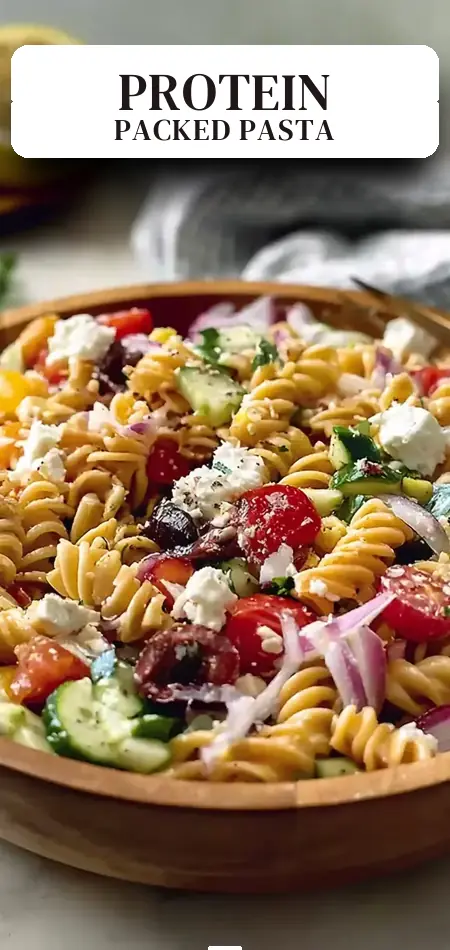
High Protein Greek Pasta Salad
Ingredients
Method
- Prepare all your vegetables: peel and slice the cucumber, dice the red and yellow bell peppers, quarter and thinly slice the red onion, and halve the tomatoes.
- Bring a large pot of salted water to a boil and cook the pasta according to package directions until al dente, about 9-10 minutes. Drain and rinse under cold water.
- In a small bowl, whisk together the olive oil, red wine vinegar, and freshly squeezed lemon juice. Add oregano, garlic powder, salt, and pepper.
- In a large bowl, combine the cooled pasta with the prepared vegetables. Pour the vinaigrette over and toss to combine. Add feta and dill, tossing gently.
- Let the salad rest for at least 15-20 minutes before serving to allow flavors to meld.
- Chill the salad until ready to serve and adjust seasoning as needed before serving.