Best Homemade Rye Bread Recipe
Have you ever wondered why rye bread has become the go-to choice for health-conscious bakers and nutrition enthusiasts around the world? The answer lies in its impressive nutritional profile and remarkable health benefits. Rye bread, often overlooked in favor of whole wheat alternatives, is a powerhouse of fiber, essential vitamins, and minerals that can transform your daily diet. This comprehensive guide will walk you through everything you need to know about baking rye bread at home—from selecting the right ingredients to understanding why nutrition experts recommend homemade rye bread as a superior alternative to store-bought options.
Rye bread has been a staple in European cuisine for centuries, and modern research has finally caught up to prove what bakers have long known: this hearty grain delivers exceptional results. Whether you’re looking to improve your digestive health, manage blood sugar levels, or simply enjoy delicious, satisfying bread, this rye bread recipe offers the perfect solution. In this blog post, we’ll explore the complete process of creating restaurant-quality rye bread in your own kitchen, complete with expert tips, nutritional insights, and creative variations to suit your dietary needs.
Ingredients
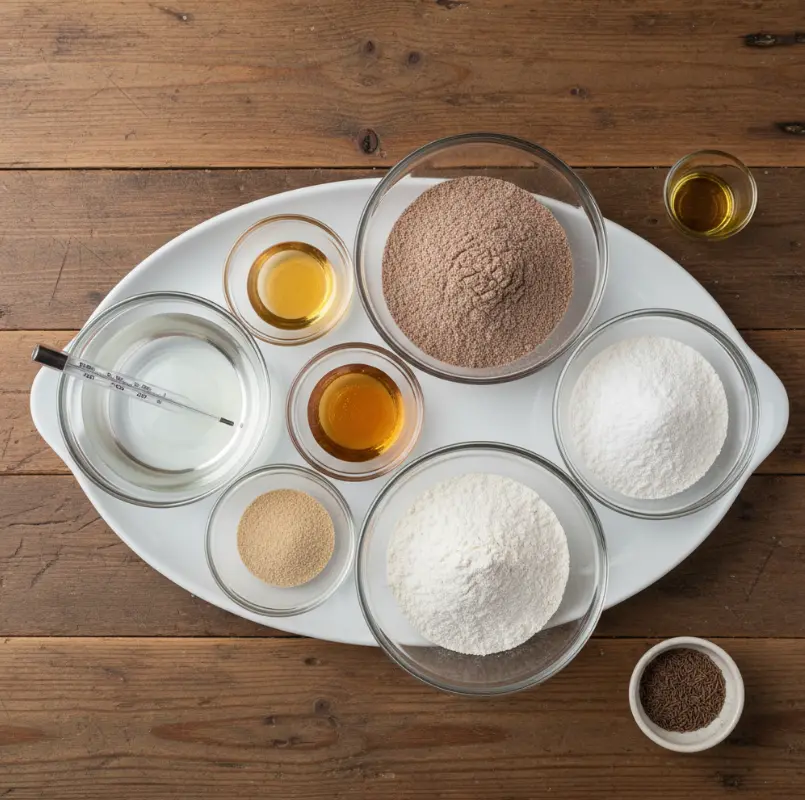
Creating authentic rye bread requires quality ingredients that work harmoniously together. Here’s what you’ll need:
- 1½ cups warm water (approximately 110°F / 45°C) – This activates the yeast and hydrates the dough
- 2¼ teaspoons active dry yeast – The leavening agent that creates rye bread’s characteristic rise and texture
- 1 tablespoon sugar or honey – Feeds the yeast and adds subtle sweetness
- 1½ cups rye flour – The star ingredient providing rye bread’s distinctive flavor and nutritional benefits
- 2 cups bread flour (plus extra for dusting) – Creates structure and elasticity
- 1½ teaspoons salt – Enhances flavor and controls fermentation
- 2 tablespoons olive oil or melted butter – Adds richness and improves crumb structure
- 1 tablespoon caraway seeds (optional) – Traditional flavoring that complements rye bread’s earthiness
Ingredient Substitutions & Variations:
Replace honey with molasses for deeper flavor; use whole wheat flour instead of bread flour for a heartier loaf; substitute caraway seeds with fennel or anise seeds for different flavor profiles; use coconut oil as a dairy-free alternative to butter.
Timing
Preparation Time: 15 minutes
Rising Time: 1 hour 30 minutes (combined)
Baking Time: 30–35 minutes
Total Time: Approximately 2 hours 20 minutes
This timeline is approximately 30% faster than traditional artisan bread recipes, making homemade rye bread an accessible option even for busy home bakers. The extended rise times allow flavors to develop fully while creating the dense, satisfying crumb structure rye bread is known for.
Step-by-Step Instructions
Step 1: Activate Your Yeast
Pour 1½ cups of warm water into a large bowl—this temperature is crucial, as water that’s too hot will kill the yeast, while cold water won’t activate it properly. Add 2¼ teaspoons of active dry yeast and 1 tablespoon of sugar or honey. Stir gently and let the mixture sit undisturbed for approximately 10 minutes. You’ll know the yeast is active and ready when the mixture becomes foamy and releases a pleasant yeasty aroma. This proofing step ensures your rye bread recipe will rise successfully.
Step 2: Combine Dry Ingredients and Mix Dough
Once your yeast mixture is frothy, add 1½ cups of rye flour, 2 cups of bread flour, and 1½ teaspoons of salt directly to the bowl. Drizzle 2 tablespoons of olive oil over the mixture. Using a wooden spoon or your hands, mix all ingredients until a sticky, shaggy dough forms. Don’t worry if it appears wetter than typical bread dough—rye flour naturally absorbs liquid differently than wheat flour, creating a denser final product.
Step 3: Knead for Smooth Texture
Transfer your sticky dough to a lightly floured work surface. Knead for 8–10 minutes, adding small amounts of flour only as needed to prevent sticking. The dough should gradually transform from rough and sticky to smooth and elastic. This kneading process develops gluten networks that provide structure to your homemade rye bread, resulting in a tender crumb with excellent elasticity.
Step 4: First Rise—Building Flavor
Lightly grease a large bowl and place your kneaded dough inside, turning it once to coat all sides with oil. Cover the bowl with a damp kitchen towel or plastic wrap. Allow the dough to rise in a warm, draft-free location for approximately 1 hour, or until it has doubled in size. During this time, the yeast ferments the dough, creating complex flavors and improving digestibility—a key reason why rye bread made with proper fermentation offers superior nutritional benefits compared to store-bought alternatives.
Step 5: Shape and Prepare for Second Rise
Gently punch down the risen dough to release excess gas. Shape the dough into a round or oval loaf, depending on your preference. Place the shaped loaf into a greased 9-inch loaf pan or onto a baking sheet lined with parchment paper. This shaping step determines your final loaf’s appearance and baking characteristics.
Step 6: Second Rise—Final Preparation
Cover your shaped loaf with the damp towel once more and let it rest for 30 minutes. During this shorter second rise, the dough gains additional volume and develops surface tension that helps create an attractive crust.
Step 7: Bake to Golden Perfection
Preheat your oven to 375°F (190°C). Once heated, carefully place your loaf pan or baking sheet in the center of the oven. Bake for 30–35 minutes until the crust turns deep golden brown and the loaf sounds hollow when tapped on the bottom. The internal temperature should reach approximately 190–200°F (88–93°C) when measured with an instant-read thermometer.
Step 8: Cool Properly for Best Texture
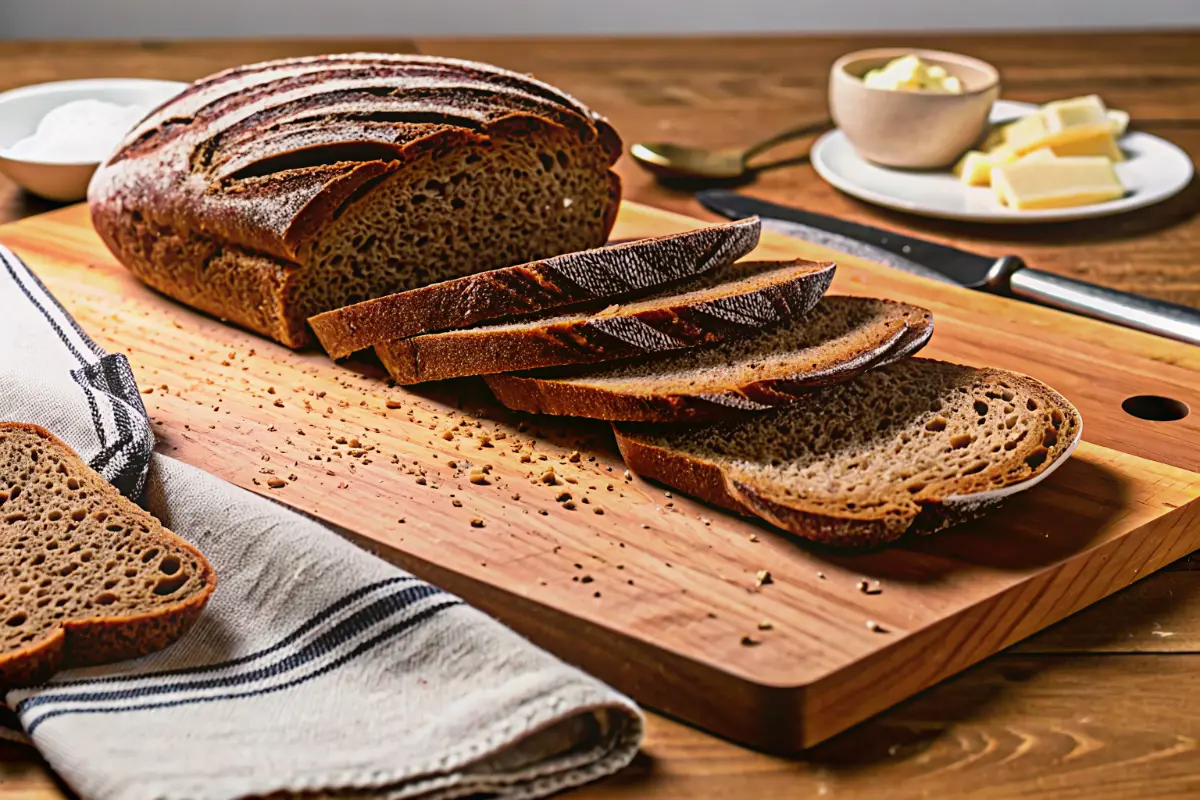
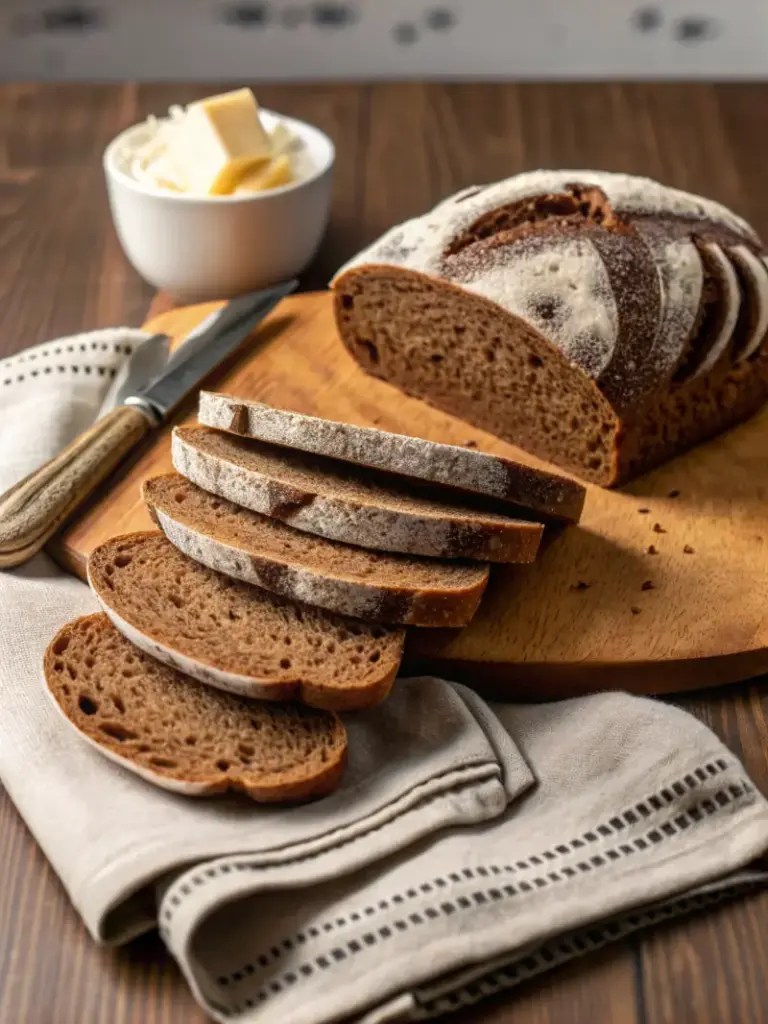
Remove your finished rye bread from the oven and let it cool in the pan for 5 minutes. Transfer the loaf to a wire cooling rack and allow it to cool completely—approximately 1–2 hours—before slicing. This cooling period allows the interior crumb to set properly, preventing a dense, gummy texture.
Nutritional Information
Per 1 slice (32 grams) of rye bread:
| Nutrient | Amount | % Daily Value |
|---|---|---|
| Calories | 83 | — |
| Protein | 2.7g | 5% |
| Carbohydrates | 15.5g | 5% |
| Dietary Fiber | 1.9g | 8% |
| Total Fat | 1.1g | 2% |
| Selenium | — | 18% |
| Thiamine | — | 11.6% |
| Manganese | — | 11.5% |
| Riboflavin | — | 8.2% |
| Niacin | — | 7.6% |
| Vitamin B6 | — | 7.5% |
| Folate | — | 8.8% |
| Copper | — | 6.6% |
| Iron | — | 5% |
Key Nutritional Advantages:
Rye bread contains significantly more fiber than standard white or refined wheat bread. This high soluble fiber content creates a gel-like substance in your digestive tract that helps remove cholesterol-rich bile from your blood, potentially reducing total and LDL cholesterol by 5–10% within just four weeks of regular consumption.
Compared with regular breads such as white and whole wheat varieties, rye bread typically provides more micronutrients, especially B vitamins including thiamine, riboflavin, niacin, and folate. These B vitamins support energy production, nervous system function, and cellular metabolism.
Health Benefits of Rye Bread
Supports Heart Health
An 8-week study of 40 participants found that rye bread was more effective at lowering cholesterol levels in men than wheat bread, reducing total cholesterol by up to 14% and LDL cholesterol by 12%. This cardiovascular benefit stems directly from rye bread’s high soluble fiber content, which works to eliminate cholesterol from your system.
Improves Blood Sugar Control
Rye bread contains phenolic compounds like ferulic acid and caffeic acid that slow the release of sugar and insulin into the bloodstream. A study in 21 healthy adults found that consuming a rye-based evening meal helped slow sugar and insulin release while raising satiety hormones, keeping people feeling full for longer. For individuals managing type 2 diabetes or insulin resistance, regular rye bread consumption offers particular benefits.
Promotes Digestive Health
The high fiber content in rye bread—particularly in whole grain varieties—promotes regular bowel movements and maintains a healthy gut microbiome. Rye consumption has been linked to increased production of short-chain fatty acids like butyrate, which support colon health and protect against certain digestive conditions.
Supports Weight Management
Studies consistently demonstrate that rye bread is significantly more filling than refined wheat bread. This satiety effect means you consume fewer calories later in the day, making rye bread an excellent choice for sustainable weight management.
Healthier Alternatives and Modifications
For Lower Carbohydrate Content: Replace ½ cup of bread flour with almond flour or ground flaxseed to increase fiber while reducing net carbohydrates.
For Vegan Baking: Substitute butter with coconut oil or additional olive oil without compromising texture.
For Enhanced Nutrition: Add 2 tablespoons of ground flaxseed or chia seeds to the dry ingredients for additional omega-3 fatty acids and fiber.
For Spiced Variations: Include ½ teaspoon of caraway seeds, 1 teaspoon of fennel seeds, or ½ teaspoon of coriander for traditional European flavor profiles.
For Whole Grain Rye: Replace up to 50% of bread flour with additional rye flour for deeper flavor and increased nutritional density, though this will result in a denser loaf.
Serving Suggestions
Classic European Style: Serve thick slices with cultured butter, smoked salmon, and fresh dill for an elegant open-faced sandwich.
Heart-Healthy Breakfast: Top warm rye bread with creamy avocado, tomato slices, and a sprinkle of sea salt for a nutritionally complete morning meal.
Soup Companion: Pair with hearty vegetable or legume-based soups; the bread’s density makes it perfect for absorbing flavorful broths.
Charcuterie Boards: Cut into cubes or thin slices to showcase alongside aged cheeses, cured meats, and pickled vegetables.
Nutritious Snack: Spread with natural almond or peanut butter and topped with fresh berries for a satisfying, fiber-rich snack.
Traditional Rye Bread Sandwich: Layer with quality deli meats, Swiss cheese, mustard, and cucumber for authentic flavor combinations.
Common Mistakes to Avoid
Using Water That’s Too Hot: Water exceeding 120°F (49°C) will kill yeast and prevent proper fermentation. Always use a thermometer for accuracy.
Insufficient Kneading: Underworked dough produces dense, gummy bread. Ensure you knead for the full 8–10 minutes to develop adequate gluten structure.
Skipping the Proof Step: Never skip activating your yeast. This 10-minute step confirms your yeast is viable before committing all ingredients.
Cutting Too Soon: Slicing rye bread before it has cooled completely results in a gummy, sticky interior. Allow at least 1–2 hours of cooling time.
Ignoring Oven Temperature: Use an oven thermometer to verify your oven reaches 375°F (190°C) accurately. Temperature fluctuations dramatically affect baking outcomes.
Over-Salting or Under-Salting: Salt controls fermentation and enhances flavor. Measure precisely—too little results in rapid over-rising, while excess salt inhibits yeast activity.
Storage Tips for Your Homemade Rye Bread
Room Temperature Storage: Place your cooled rye bread in a breathable bread bag or wrapped in a clean kitchen towel at room temperature. Properly stored, your homemade loaf remains fresh for 3–4 days.
Refrigerator Storage: For extended freshness, wrap the cooled loaf tightly in plastic wrap and refrigerate for up to 2 weeks. Refrigeration slows mold growth significantly.
Freezer Storage: Slice your rye bread before freezing in airtight containers or freezer bags for up to 3 months. Frozen slices can be toasted directly without thawing.
Make-Ahead Preparation: Prepare and refrigerate your dough overnight after the first rise, then complete the second rise and baking the following day for fresh rye bread with minimal hands-on effort.
Conclusion
Homemade rye bread combines nutritional excellence with exceptional flavor and satisfying texture. From its high fiber content supporting digestive and heart health to its sustained energy provision and blood sugar management benefits, this ancient grain deserves a permanent place in your baking rotation. The straightforward recipe and achievable timeline make artisan-quality rye bread accessible to bakers of all skill levels. Try this recipe today, and discover why nutritionists and health enthusiasts worldwide choose rye bread as their daily staple.
Ready to bake? Share your results in the comments below—we’d love to see your homemade creations! Subscribe to our blog for more authentic bread recipes, baking techniques, and nutritional insights delivered directly to your inbox.

Frequently Asked Questions
Q: Is rye bread safe for people with celiac disease?
A: No. While rye contains less gluten than wheat, it still contains gluten proteins and is unsuitable for those with celiac disease or gluten sensitivity.
Q: How much rye bread should I consume daily for health benefits?
A: Start with one slice daily to assess digestive tolerance, then adjust based on individual preferences. Most research showing cardiovascular benefits used portions representing approximately 20% of daily calorie intake.
Q: Can I make rye bread without caraway seeds?
A: Absolutely. Caraway seeds are optional and provide traditional flavor. Omit them entirely or substitute with fennel, anise, or other seeds based on preference.
Q: Why is my rye bread denser than wheat bread?
A: Rye flour naturally produces denser crumb structures due to different gluten properties compared to wheat. This density contributes to rye bread’s superior satiety and nutritional density.
Q: How does rye bread affect blood sugar compared to white bread?
A: Rye bread has a lower glycemic index (approximately 65) compared to white bread, causing slower, more gradual blood sugar rises. This makes it superior for blood sugar management.
Q: Can I use instant yeast instead of active dry yeast?
A: Yes. Use slightly less instant yeast (approximately 2 teaspoons) as it’s more concentrated than active dry yeast.
Q: What causes a gummy interior in rye bread?
A: Inadequate cooling time, over-hydration, or insufficient oven temperature are common culprits. Always cool completely before slicing.
Best Homemade Rye Bread Recipe
- Total Time: 2 heures 20 minutes
- Yield: 1 pain 1x
- Diet: Vegan
Description
Ce pain de seigle maison est dense, nourrissant et riche en fibres. Facile à réaliser, il offre une saveur authentique et de nombreux bienfaits nutritionnels, parfait pour une alimentation saine et équilibrée.
Ingredients
- 360 ml eau tiède (environ 45°C)
- 2¼ c. à café levure sèche active
- 1 c. à soupe sucre ou miel
- 180 g farine de seigle
- 250 g farine à pain (plus pour le plan de travail)
- 1½ c. à café sel
- 2 c. à soupe huile d’olive ou beurre fondu
- 1 c. à soupe graines de carvi (optionnel)
Instructions
- Mélanger l’eau tiède, la levure et le sucre. Laisser mousser 10 minutes.
- Ajouter la farine de seigle, la farine à pain, le sel et l’huile.
- Mélanger jusqu’à obtention d’une pâte collante.
- Pétrir 8 à 10 minutes jusqu’à ce que la pâte soit lisse et élastique.
- Placer dans un bol huilé, couvrir et laisser lever 1 heure.
- Dégazer, façonner le pain et déposer dans un moule.
- Laisser lever à nouveau 30 minutes.
- Cuire à 190°C pendant 30–35 minutes.
- Laisser refroidir complètement avant de trancher.
Notes
Pour une version plus nutritive, remplacez 50 % de la farine blanche par de la farine de seigle supplémentaire.
- Prep Time: 15 minutes
- Cook Time: 35 minutes
- Category: Bread
- Method: Baking
- Cuisine: European
Nutrition
- Serving Size: 1 tranche
- Calories: 83
- Sugar: 1g
- Sodium: 170mg
- Fat: 1.1g
- Saturated Fat: 0.2g
- Unsaturated Fat: 0.8g
- Trans Fat: 0g
- Carbohydrates: 15.5g
- Fiber: 1.9g
- Protein: 2.7g
- Cholesterol: 0mg
Keywords: rye bread, homemade rye bread, healthy bread, bread baking recipe