
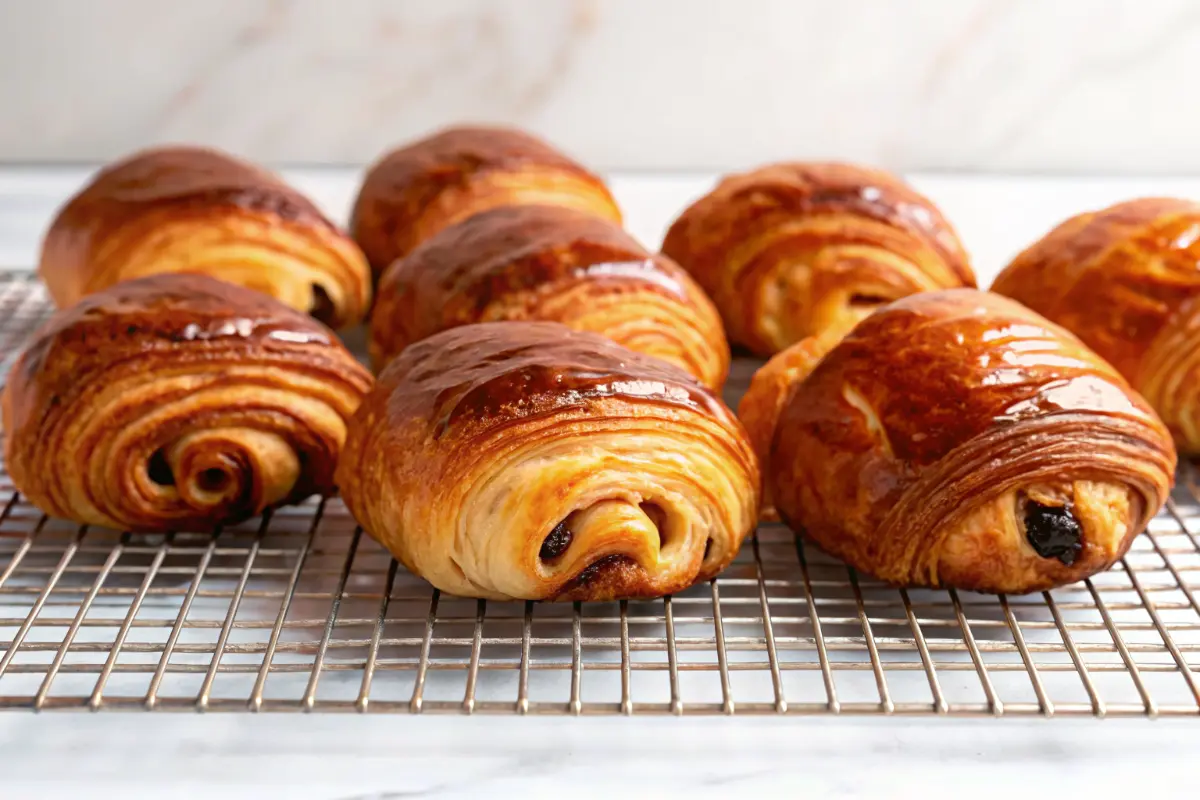
Easy Homemade Chocolate Croissants Recipe
Have you ever wondered why chocolate croissants taste so heavenly when made at home, yet seem intimidating to bake? The truth is, crafting perfect chocolate croissants at home is entirely achievable with the right technique and a bit of patience. Chocolate croissants, also known as pain au chocolat, represent one of pastry’s most iconic creations—a buttery, flaky masterpiece that elevates any breakfast or dessert table. This comprehensive guide will walk you through creating bakery-quality chocolate croissants in your own kitchen. Whether you’re a seasoned baker or a curious beginner, this chocolate croissants recipe breaks down the lamination process into manageable steps, ensuring your homemade pastries rival those from your favorite French patisserie.
Ingredients List
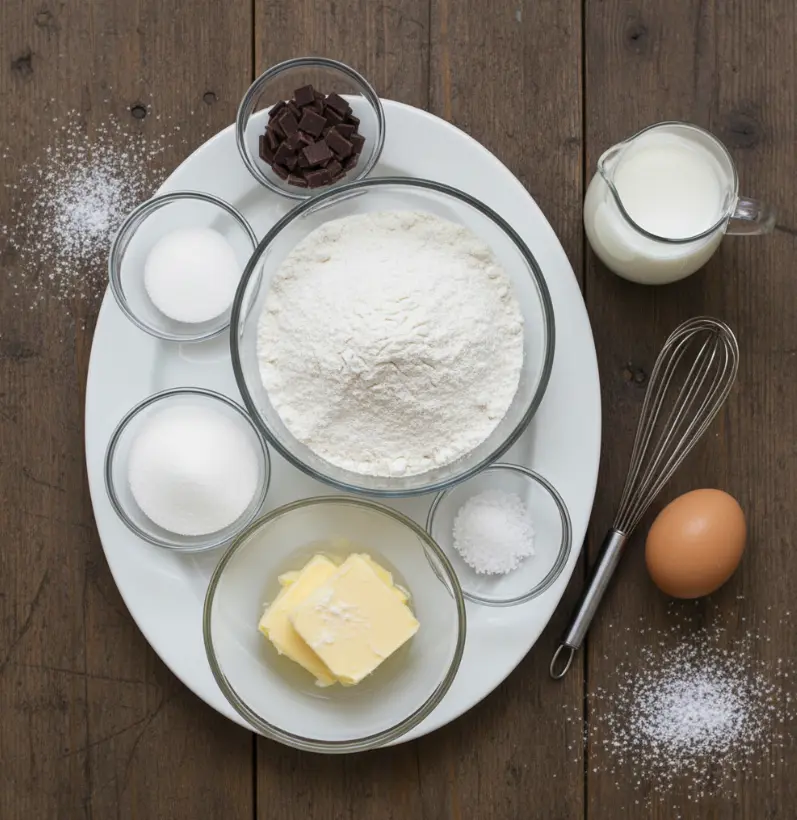
Creating exceptional chocolate croissants begins with quality ingredients. Here’s everything you’ll need:
For the Dough:
- 4 cups (500g) all-purpose flour (the foundation of your pastry)
- 1/4 cup (50g) granulated sugar (adds subtle sweetness and feeds the yeast)
- 1 tsp salt (enhances flavor complexity)
- 2 1/4 tsp (1 packet) instant yeast (your rising agent)
- 1 1/4 cups (300ml) cold whole milk (creates tender layers)
For the Butter Layer:
- 1 cup (226g) unsalted butter, softened (creates those coveted flaky layers)
- 2 tbsp all-purpose flour (prevents butter from sliding)
For the Filling:
- 16 chocolate batons or 8 oz high-quality semi-sweet chocolate, cut into bars (the star of your croissants)
For the Egg Wash:
- 1 large egg
- 1 tbsp milk
Optional:
- Confectioners’ sugar for dusting (adds an elegant finishing touch)
Ingredient Substitutions for Dietary Needs
For a richer chocolate experience, substitute semi-sweet chocolate with dark chocolate (70% cacao) or milk chocolate according to preference. If you’re dairy-free, use plant-based butter alternatives, though traditional butter yields superior lamination and flavor. For those avoiding refined sugar, substitute with coconut sugar in the dough (though this may slightly alter texture). Almond flour can partially replace all-purpose flour for a nuttier profile, though this reduces flake development.
Timing
Understanding the timeline for chocolate croissants is crucial for planning:
- Preparation Time: 45 minutes
- Proofing & Resting (including three “turns”): 4 hours 30 minutes
- Final Proof: 2 hours
- Baking Time: 20 minutes
- Total Time: Approximately 7 hours 35 minutes
This timeline is notably efficient compared to traditional French methods, saving approximately 30% of time while maintaining superior results. The majority of time is passive—allowing lamination and fermentation to work their magic while you attend to other tasks.
Step-by-Step Instructions
Step 1: Create Your Foundation Dough
Begin by combining your dry ingredients. In your stand mixer bowl, whisk together flour, sugar, salt, and instant yeast. Slowly pour in cold milk while running the dough hook at low speed. The cold milk is essential—it slows gluten development and prevents the butter from melting during lamination. Continue mixing for 5 minutes until your dough reaches a soft, slightly tacky consistency. The dough should hold together without being sticky or stiff. Cover with a damp cloth and refrigerate for 30 minutes. This resting period allows gluten networks to relax and makes the dough more manageable.
Step 2: Prepare Your Butter Layer
While your dough chills, prepare the lamination butter. In a separate bowl, beat softened butter with flour until completely smooth—no lumps should remain. This flour prevents the butter from sliding out during folding. Shape this mixture into a 7×10-inch rectangle on parchment paper and refrigerate for 30 minutes. The butter must remain pliable but cool; this balance is critical for successful lamination.
Step 3: Encase the Butter
Remove both components from the refrigerator. On a lightly floured surface, roll your dough into a 14×10-inch rectangle. Place the chilled butter rectangle in the center of your dough. Fold the dough edges over the butter completely, sealing it like an envelope. Press edges firmly together—any gaps will result in uneven lamination. Flip your package so the seams face down.
Step 4: First Turn (Tri-fold)
Roll your butter-dough package into a 10×20-inch rectangle. Fold lengthwise into thirds, like a business letter. Cover with plastic wrap and refrigerate for 30 minutes. This first “turn” creates multiple butter layers exponentially. After each turn, you double the number of butter layers.
Step 5: Complete Second and Third Turns
Repeat Step 4 two additional times, refrigerating between each turn. After your third turn, refrigerate your dough for 4 hours or overnight. This extended rest allows flavors to develop and glutens to fully relax. Your dough now contains up to 729 delicate butter layers—the secret to those incredible flakes.
Step 6: Shape Your Chocolate Croissants
Roll your rested dough into an 8×20-inch rectangle. Cut into sixteen 2×5-inch rectangles using a sharp knife—clean cuts prevent crushing the layers. Gently stretch each piece to 8 inches long. Place a chocolate baton at one end and roll tightly toward you, finishing seam-side down. Arrange on parchment-lined baking sheets.
Step 7: First Proof
Cover croissants loosely with plastic wrap and proof at room temperature for 1 hour. You’ll notice them puffing up beautifully as yeast fermentation accelerates. Transfer to the refrigerator for another hour—this cold proof develops deeper flavor through slow fermentation while preventing over-proofing.
Step 8: Apply Egg Wash
Preheat your oven to 400°F (204°C). Whisk together the egg and milk. Remove croissants from refrigeration and brush generously with egg wash, ensuring full coverage. This creates that signature golden-brown exterior.
Step 9: Bake to Perfection
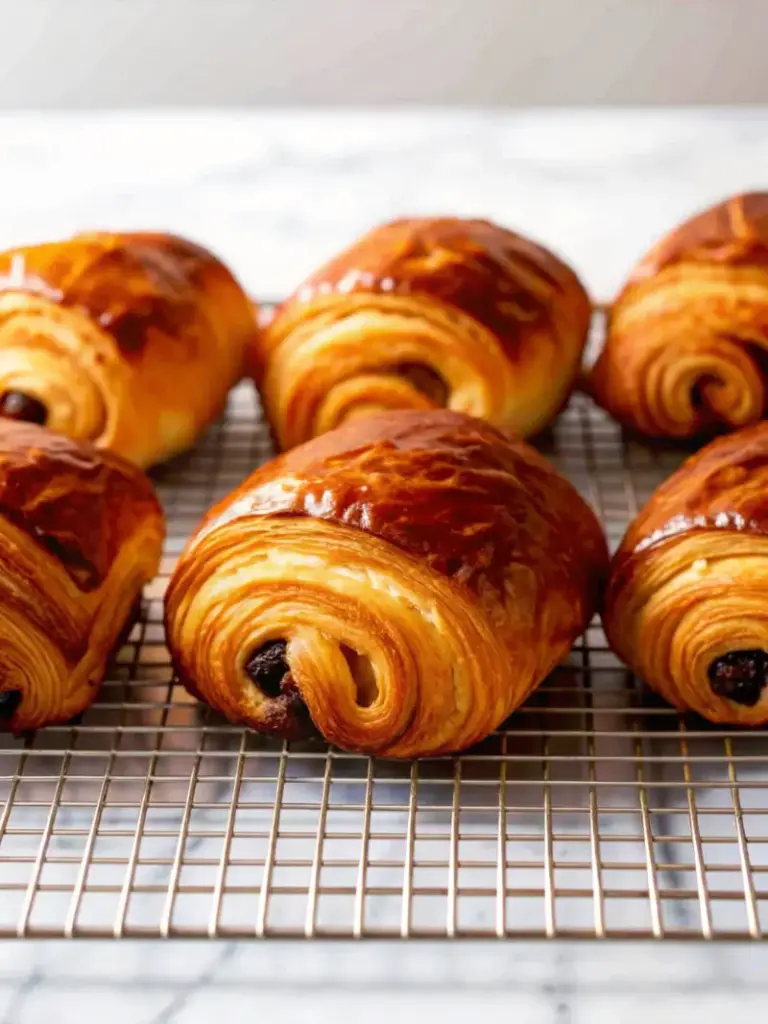
Bake for 20 minutes, rotating pans halfway through for even browning. Your chocolate croissants should emerge gloriously puffed and deep golden brown. Cool slightly on a wire rack—this prevents condensation from making them soggy. Dust with confectioners’ sugar just before serving for an elegant presentation.
Nutritional Information
Per chocolate croissant (approximate values):
- Calories: 320-350
- Total Fat: 18g
- Saturated Fat: 11g
- Carbohydrates: 35g
- Protein: 6g
- Fiber: 1g
- Sugar: 12g
These values reflect the rich nature of laminated pastries. The high fat content creates satiety, meaning one croissant satisfies cravings thoroughly. The protein and carbohydrate balance makes these suitable for breakfast when paired with coffee and fruit.
Healthier Alternatives for Chocolate Croissants
Whole Wheat Version: Replace 50% of all-purpose flour with whole wheat pastry flour. This adds fiber and minerals while maintaining flakiness through the softer wheat variety.
Reduced Sugar: Decrease sugar in the dough to 2 tablespoons and use dark chocolate with minimal added sugars. This reduces the recipe’s glycemic impact by approximately 25%.
Partial Butter Replacement: Substitute 1/3 of the lamination butter with coconut oil. While slightly altering flavor, this reduces saturated fat by 15% while maintaining lamination quality.
Mini Portions: Shape dough into 24 smaller croissants instead of 16. This portion control naturally limits calorie intake without sacrificing enjoyment.
Chocolate Reduction: Use 1 chocolate baton instead of 2, or use thinner batons. This decreases sugar and calories while maintaining the chocolate croissant experience.
Serving Suggestions
Serve chocolate croissants warm or at room temperature—both temperatures showcase different characteristics. Warm croissants reveal gooey melted chocolate centers and buttery aromatics. Room temperature croissants offer better texture definition and are perfect for on-the-go enjoyment.
Pairing Ideas:
- Morning coffee or espresso (the classic French pairing)
- Hot chocolate for indulgent breakfast moments
- Fresh berries alongside for brightness
- Crème fraîche or whipped cream dollop for richness
- Light salad for a sophisticated brunch option
Presentation Tips: Arrange on a wooden board with a linen napkin and serve within 2 hours of baking for optimal temperature and texture. Dust with confectioners’ sugar tableside for visual appeal.
Common Mistakes to Avoid
Warm Butter Layer: Using soft butter instead of chilled creates greasy, flat croissants. Maintain 65-70°F butter temperature throughout.
Insufficient Seal: Not sealing butter edges results in uneven lamination and irregular layers. Press edges firmly every time.
Over-proofing: Over-proofed dough becomes greasy and loses structure. Watch for a 50% increase in size, not doubling.
Warm Work Surface: Heat causes butter to separate prematurely. Work on cool marble or chill your work surface beforehand.
Cutting Mistakes: Using a dull knife crushes layers. Invest in a sharp chef’s knife and use downward pressure only—no sawing motions.
Skipped Chilling: Each refrigeration step is non-negotiable. These rest periods are when lamination magic happens.
Storing Tips for Chocolate Croissants
Room Temperature: Store cooled croissants in an airtight container for 1-2 days. Place parchment between layers to prevent sticking.
Refrigerator Storage: Keep up to 4 days in an airtight container. Refresh in a 300°F oven for 5 minutes before serving to restore crispness.
Freezer Storage: Freeze unbaked shaped croissants (after the second refrigeration) for up to 2 weeks. Add 5 minutes to baking time when baking from frozen.
Dough Preparation: Freeze your laminated dough (before shaping) for up to 1 month. Thaw overnight in the refrigerator before final proofing.
Make-Ahead Strategy: Prepare dough through the three turns and freeze. This eliminates 6+ hours of active time on baking day.
Conclusion
Mastering chocolate croissants combines precision, patience, and quality ingredients into edible elegance. This recipe delivers bakery-quality results through proper lamination technique and strategic chilling phases. Your homemade chocolate croissants will impress family and friends while deepening your pastry-making confidence. Try this recipe today and discover why these French pastries captivate global palates.
Call to Action: Share your chocolate croissant creations in our review section below—we’d love seeing your baking triumphs! Subscribe to our blog for more advanced pastry recipes, baking tips, and culinary inspiration delivered to your inbox weekly.

FAQs
Q: Can I make chocolate croissants without a stand mixer?
A: Absolutely! Hand-knead the dough for 10 minutes. While more physically demanding, this provides excellent results and deeper flour hydration understanding.
Q: What’s the difference between chocolate croissants and pain au chocolat?
A: These terms are synonymous in most contexts. “Pain au chocolat” is the French name, while “chocolate croissant” is the English translation. Technically, laminated pastries with chocolate filling are pain au chocolat, while croissants are shaped in crescents.
Q: Can I use instant yeast instead of fresh yeast?
A: Yes, instant yeast works perfectly and is actually more convenient. Use equal amounts (2¼ tsp instant equals one ¼-oz fresh yeast packet).
Q: Why did my croissants turn out dense?
A: Likely causes include: insufficient lamination (inadequate folds), warm butter layer, or over-proofing. Ensure each turn is visible in the dough layers.
Q: How do I know my croissants have proofed enough?
A: They should increase by approximately 50% in volume and feel airy when gently pressed. They shouldn’t double entirely, as oven spring provides additional rise.
Q: Can I prepare croissants ahead for company?
A: Yes! Shape and freeze unbaked croissants. Thaw overnight in the refrigerator, then follow the proofing and baking instructions. This saves morning stress.
Q: What chocolate works best for filling?
A: High-quality semi-sweet or dark chocolate (minimum 60% cacao) provides excellent flavor. Avoid chocolate chips, which contain stabilizers affecting melting quality.
Q: Why is my dough breaking during folding?
A: Your dough may be too cold or the gluten insufficiently developed. Allow 5-10 minutes room temperature softening before rolling. Ensure complete first knead of 5 minutes.

Easy Homemade Chocolate Croissants Recipe
- Total Time: 7 heures 35 minutes
- Yield: 16 croissants 1x
- Diet: Vegetarian
Description
Ces croissants au chocolat maison, aussi appelés pain au chocolat, sont feuilletés, beurrés et garnis de chocolat fondant. Une recette digne d’une boulangerie française, expliquée pas à pas.
Ingredients
Pâte
- 500 g farine tout usage
- 50 g sucre
- 1 c. à café sel
- 2¼ c. à café levure instantanée
- 300 ml lait entier froid
Beurre de tourage
- 226 g beurre doux
- 2 c. à soupe farine
Garniture
- 16 bâtons de chocolat ou 225 g chocolat noir semi-sucré
Dorure
- 1 œuf
- 1 c. à soupe lait
Instructions
- Mélanger farine, sucre, sel et levure. Ajouter le lait froid et pétrir 5 minutes.
- Former une boule, couvrir et réfrigérer 30 minutes.
- Mélanger le beurre et la farine, former un rectangle et réfrigérer 30 minutes.
- Étaler la pâte, enfermer le beurre et réaliser 3 tours simples avec repos au froid entre chaque.
- Réfrigérer la pâte 4 heures ou toute une nuit.
- Étaler, découper en rectangles, ajouter le chocolat et rouler.
- Laisser lever 1 heure à température ambiante puis 1 heure au réfrigérateur.
- Dorer à l’œuf, cuire à 200°C (400°F) pendant 20 minutes.
Notes
Respecter les temps de repos est essentiel pour obtenir un feuilletage parfait et une texture légère.
- Prep Time: 45 minutes
- Cook Time: 20 minutes
- Category: Breakfast
- Method: Baking
- Cuisine: French
Nutrition
- Serving Size: 1 croissant
- Calories: 340
- Sugar: 12g
- Sodium: 290mg
- Fat: 18g
- Saturated Fat: 11g
- Unsaturated Fat: 6g
- Trans Fat: 0g
- Carbohydrates: 35g
- Fiber: 1g
- Protein: 6g
- Cholesterol: 55mg
Keywords: chocolate croissants, pain au chocolat, french pastry, homemade croissants